


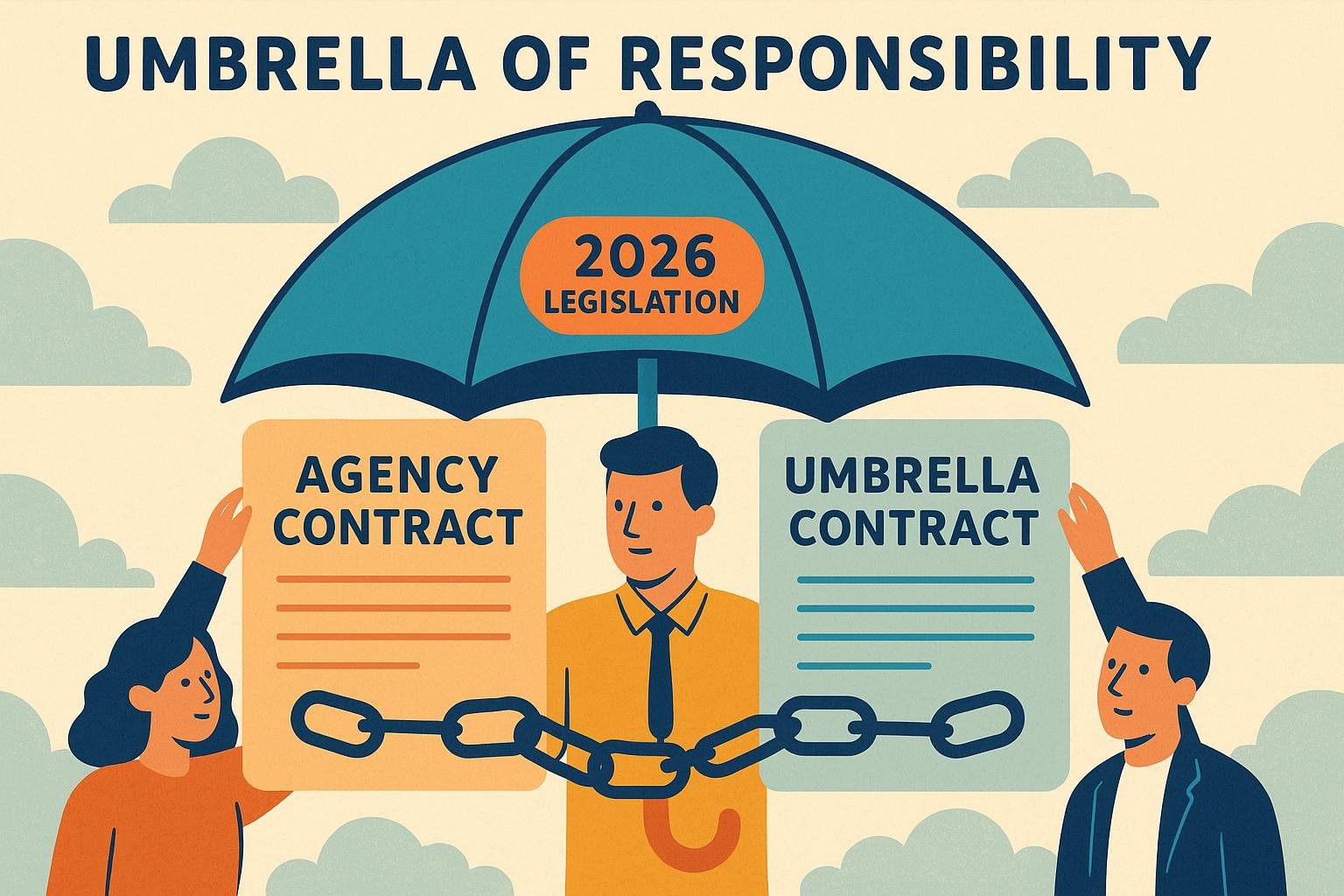
From April 2026, employment agencies and MSPs will be jointly liable for unpaid PAYE taxes within umbrella company supply chains under new legislation, prompting a shift towards enhanced compliance and transparency measures.

From April 2026, a significant shift in the UK taxation landscape will impose new responsibilities on recruitment agencies and Managed Service Providers (MSPs) involved in labour supply chains that include umbrella companies. Under the forthcoming J...
Continue Reading This Article
Enjoy this article as well as all of our content, including reports, news, tips and more.
By registering or signing into your SRM Today account, you agree to SRM Today's Terms of Use and consent to the processing of your personal information as described in our Privacy Policy.
The new rules mark a departure in tax accountability by extending liability beyond the umbrella companies themselves to recruitment agencies or end clients. Even if these intermediaries have exercised due diligence and acted in good faith, they may be held fully liable for the entire amount of unpaid PAYE if an umbrella company collapses or is found to be non-compliant. This principle of joint and several liability means that the full PAYE shortfall can be pursued without the need to apportion fault, a move designed to strengthen enforcement and improve tax collection.
The government guidance clarifies that this responsibility applies irrespective of whether the agency or MSP was directly at fault or whether thorough compliance checks were conducted. Traditional due diligence, such as reviewing payslips, Real Time Information (RTI) submissions, or eligibility certifications, will no longer guarantee protection against liability. Umbrella companies can appear compliant until sudden financial failure or HMRC intervention reveals unpaid taxes, meaning that agencies and MSPs must adopt ongoing compliance measures that provide continuous visibility and proof of PAYE payment.
The risks associated with non-compliant umbrella companies are manifold. Common pitfalls include the misuse of untaxed expenses payments to workers without proper eligibility checks, financial instability within umbrella companies leading to unpaid tax liabilities, and employment models deemed tax avoidance schemes by HMRC, such as “mini-umbrellas,” loan schemes, offshore entities, or misclassification under the Construction Industry Scheme (CIS). For MSPs, limited visibility into downstream umbrella operations compounds the risk, often leaving them without a clear audit trail when investigations occur.
To address these challenges, some compliance-first payroll providers have developed innovative solutions. One such example is Giant, which offers its CompliancePro portal, a technology platform enabling line-by-line monthly reconciliations, real-time dashboards, and independent verification of every payslip through its SafeRec system. This portal provides transparent audit reports and validates tax deductions against live HMRC data feeds, giving agencies and MSPs far greater certainty about the PAYE liabilities within their supply chains. With over 35 years of experience and an annual payroll exceeding £1 billion, Giant positions itself as a financially stable and HMRC-compliant partner focused on governance by design.
Industry experts and government bodies alike stress the importance of agencies and MSPs reassessing their umbrella supply chains well in advance of the 2026 deadline. The recommendation is to mandate preferred supplier lists featuring financially sound and fully compliant umbrella companies, demand concrete evidence of PAYE compliance rather than verbal assurances, and rigorously educate internal teams about the new liabilities and compliance requirements. The shift in accountability also encourages agencies and end clients to forge stronger, more transparent partnerships with payroll providers who adhere strictly to supervision, direction, and control (SDC) rules and tax deductions.
The broader implications of the Joint and Several Liability legislation reflect a governmental push towards increased transparency and enforcement in the labour supply sector. It is anticipated that these reforms will lead to significant increases in revenue recovered from PAYE underpayments, helping to curtail the use of non-compliant or abusive umbrella payroll models. However, they also require recruitment agencies and MSPs to elevate their operational standards markedly, prioritising robust due diligence frameworks and real-time compliance monitoring.
In conclusion, while the 2026 legislative changes present substantial new risks for recruitment agencies and MSPs, they simultaneously offer an opportunity to enhance trust and reliability in supply chain partnerships through improved governance and compliance infrastructure. Adapting to these demands with advanced technology solutions and stringent supplier scrutiny will be essential for agencies aiming to avoid costly liabilities and maintain their reputations in an increasingly regulated market environment.
Source: Noah Wire Services
Subscribe to Industry Updates

