


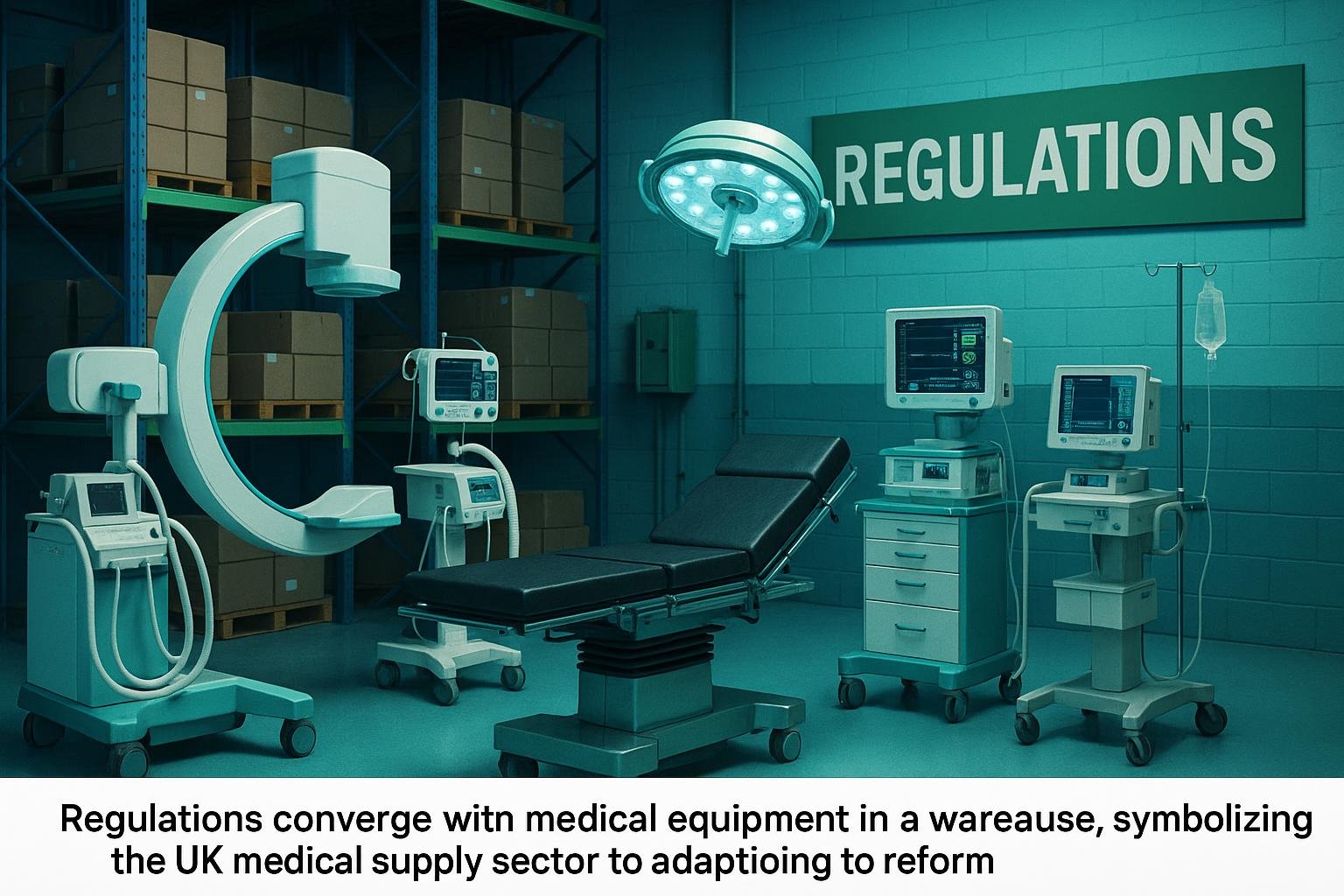
As UK regulatory and procurement landscapes evolve, medical supply firms must showcase regulatory compliance, diversify revenue streams, and craft detailed investor narratives to maximise valuation and secure competitive deals, according to Aviaan.

The medical supply sector in the United Kingdom is increasingly being shaped by regulatory reform, shifting procurement practices within the NHS and a continued move towards higher-tech consumables. For owners seeking to sell...
Continue Reading This Article
Enjoy this article as well as all of our content, including reports, news, tips and more.
By registering or signing into your SRM Today account, you agree to SRM Today's Terms of Use and consent to the processing of your personal information as described in our Privacy Policy.
Valuation in this market demands more than simple rule-of-thumb multiples. Industry practice combines Discounted Cash Flow analysis with earnings-multiple approaches, but deal value is routinely driven by sector-specific factors. NHS framework agreements, long-term contracts with Integrated Care Boards and diversified customer bases materially lift multiples; conversely, single-account concentrations, non-compliance with ISO 13485 or gaps against the UK Medical Devices Regulations materially depress value. Aviaan’s material highlights , and the broader market confirms , that intellectual property or exclusive distribution rights for differentiated devices command premiums compared with commodity distribution models.
Pitch decks must translate clinical utility into investable financial narratives. Investors in the UK expect a deck to set out the clinical problem and solution, map the addressable market using NHS spending and demographic trends, explain procurement and margin mechanics, and demonstrate regulatory defensibility through MHRA registrations and quality-management systems. Aviaan positions its pitch-deck work to foreground recurring revenue, scalability and risk-mitigating controls so that clinical complexity does not obscure pricing power and growth levers.
Financial due diligence remains the stage at which transactions live or die. Buyers and lenders focus on quality of earnings (stripping out one-off pandemic distortions), working-capital dynamics (notably inventory shelf-life and sterile-product turnover), VAT and customs treatment post‑Brexit and contract assignability clauses that can be triggered by change of control. Aviaan says it conducts pre‑sale vendor due diligence to limit “price chipping” late in processes; in one client case it identified and corrected a potential international VAT exposure that might otherwise have reduced proceeds by an estimated £200,000, helping the seller secure competing bids and a final price 20% above the initial asking level.
Regulation is a critical and evolving backdrop. Government strategy documents set out an ambition to support medical-technology innovation while ensuring patient safety through a robust regulatory framework and more efficient procurement. The Medicines and Healthcare products Regulatory Agency has launched consultations on pre‑market device rules that cover UKCA marking, unique device identification, post‑market surveillance and international recognition aimed at improving patient access and strengthening safety. Industry participants and advisers must therefore model not just current compliance costs , including responsibilities such as the “Responsible Person” for UK market access and UKCA transition requirements , but also the impact of coming legislative changes on time to market and on the cost base of device portfolios.
These regulatory shifts affect valuations and transaction structuring. Buyers will ascribe discounts for uncertain compliance transition costs and potential re‑testing or relabelling requirements, while sellers with demonstrable preparedness for UKCA, unique device identification and robust post‑market surveillance will argue for a regulatory moat. Transaction mechanics such as earn‑outs, locked‑box structures and completion accounts remain widely used to bridge valuation gaps where future regulatory or commercial performance is judged uncertain; specialist advisers increasingly recommend incorporating contingency mechanisms that reflect regulatory milestones.
Operational levers that frequently feature in sell-side value enhancement programmes include securing place(s) on NHS framework agreements, strengthening quality systems to ISO 13485 standards, diversifying the client base across multiple trusts and ICBs, and converting ad‑hoc channels into recurring, contractually protected revenue. Buyers, for their part, focus diligence on supplier concentration, margin drivers (for example, direct-manufacturer relationships in Asia versus intermediary networks) and the true cost of compliance and logistics in post‑Brexit trade.
The practical consequence for market participants is clear: generic financial advice is insufficient. According to the UK government’s medical-technology strategy, a competitive, diverse market and efficient procurement are policy priorities, but industry success depends on firms’ ability to demonstrate both clinical value and financial sustainability. Advisers and transaction teams that can weave together robust quality‑of‑earnings work, regulatory readiness and a compelling investment narrative are best placed to extract maximum value.
Aviaan positions its services around these integrated needs, offering valuation reports that it says use real‑time UK market comparables, pitch decks tailored to UK investor expectations and both buy‑side and vendor due diligence that accounts for VAT, inventory risk and contract assignability. While such firms present themselves as one-stop partners, editorial distance is warranted: claims about outcomes and pricing should be tested in specific transactions, and potential buyers will continue to rely on independent verification of earnings, compliance and contractual transferability.
For owners and investors navigating an era of regulatory change and concentrated procurement power, the prescription is practical: quantify and de‑risk the business’s recurring revenue; evidence quality systems and regulatory readiness; and present a clear, data‑driven growth and margin story. Those steps determine not only whether a business can be sold, but at what multiple and on what terms the market will transact.
Source: Noah Wire Services
Subscribe to Industry Updates

