


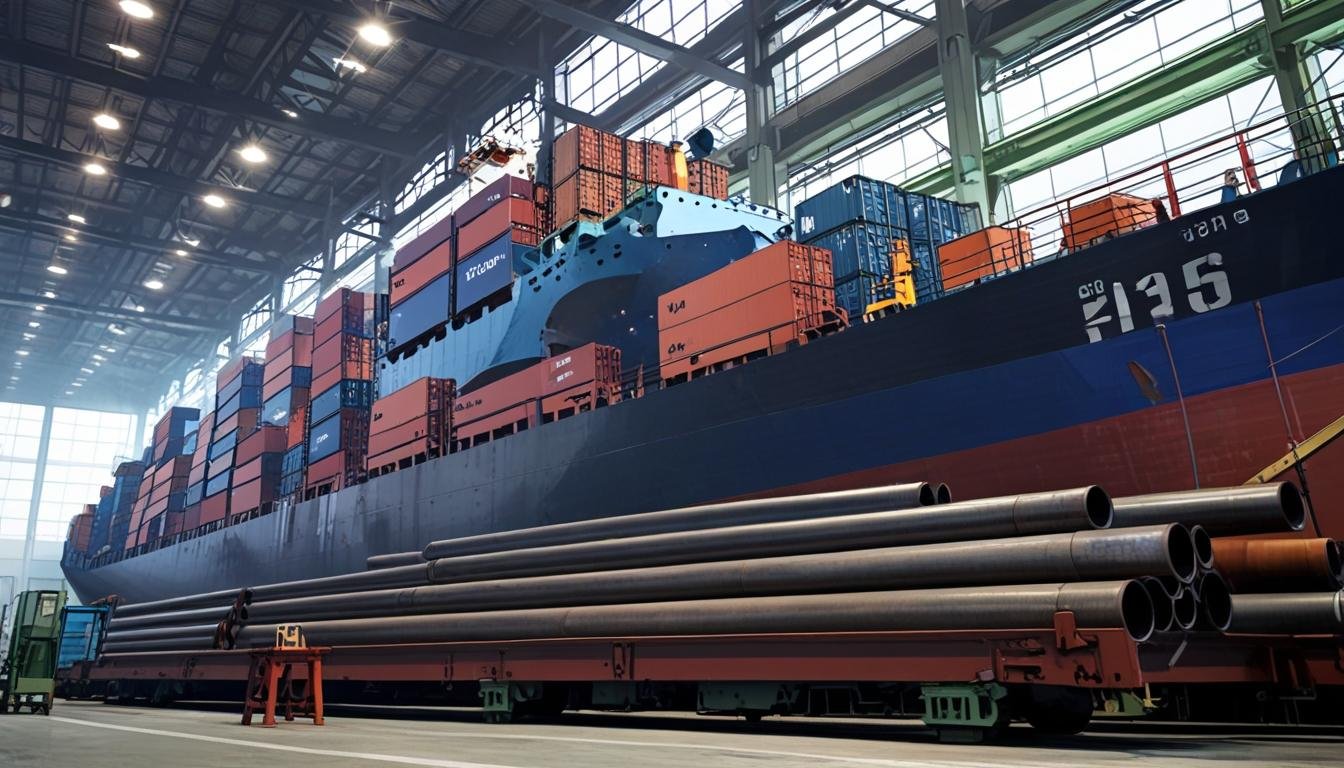
**Washington, D.C.:** New trade proposals from the USTR target China’s shipbuilding supremacy, potentially imposing significant levies on foreign vessels. The implications for shipping costs, American consumers, and domestic production capabilities spark concerns among industry stakeholders as a public hearing unfolds amidst ongoing geopolitical tensions.
The current landscape of global trade is at a critical juncture, stirred by new proposals from the Office of the U.S. Trade Representative (USTR) aimed at addressing China’s extensive dominance in the shipbuilding and maritime sectors. A significant case exemplifying the wider ramifications of these proposals involves a shipment of 16,000 metric tons of steel pipes, destined for an energy project in Louisiana but currently languishing in a German warehouse due to potential new levies on Chinese-built vessels docking in the United States.
The USTR’s proposals, first disclosed on February 21, are designed to impose million-dollar levies on foreign ships, particularly those constructed in China. As noted by Jose Severin, a business development manager at Mercury Group, the logistics partner for the deal, 80% of the ships operating in this maritime route are Chinese-built, which implies that costs could rise by $1 million to $3 million per cargo. If the measures are fully realised, the financial implications for shipping will drastically inflate—the anticipated shipping rates for these steel pipes could effectively double or triple.

This proposal is part of a broader ambition by U.S. authorities to curtail China’s burgeoning control over global shipping, a sector where Chinese output has surged from just 5% of the world’s total cargo ship production in 1999 to now over 50%. The USTR has staunchly emphasised that China’s market power could affect global supply chains, pricing, and access to essential goods, prompting a two-day public hearing that opened in Washington, D.C. on Monday. Stakeholders across diverse sectors, from agriculture to shipping, are expressing concerns about the far-reaching consequences of these proposals.
Jonathan Gold, the vice president for supply chains at the National Retail Federation, highlighted the perceived threat posed by these measures, likening their potential disruptive effects on the supply chain to those of the tariffs introduced during Donald Trump’s presidency. Gold conveyed that shipping companies have indicated that they might not only pass the levies onto consumers but may also retract certain routes from smaller ports, consequently impacting economies in places such as Oakland, Charleston, and Philadelphia.
The hearing also saw testimonies from members of Congress, including Representative Debbie Dingell, who drew attention to the decline in U.S. shipbuilding. Dingell noted that the U.S. currently manufactures fewer than ten oceanic commercial vessels annually, in stark contrast to China’s capability of producing over 1,000. She expressed support for USTR’s intent to mandate U.S. goods to be shipped on American-flagged vessels.
Concerns amongst business owners are escalating as they fear that the proposals may not only embolden existing tariffs but could also shift international trade patterns away from U.S. ports toward Canada and Mexico, all while inflating costs for American consumers. Joe Kramek, the CEO of the World Shipping Council, has cautioned that the proposed fees could severely penalise U.S. businesses, farmers, and consumers unable to absorb the increased costs.
Despite the potential to raise substantial revenue for the U.S. — estimated between $40 billion and $52 billion — many in the industry are apprehensive. A number of stakeholders voiced skepticism over the effectiveness of the plan in revitalising American shipbuilding capabilities, suggesting that any long-term solution should also involve bolstering international partnerships without alienating crucial trading relationships.
The USTR’s investigation was initially instigated under the Biden administration in response to requests from major labour unions, indicating a shift towards prioritising national security through maritime strength. The proposals include not just the levies but also stipulations for a portion of U.S. goods to be transported on vessels built, crewed, and flagged in the United States, thus aiming to bolster domestic shipbuilding.
As the shipping industry grapples with geopolitical tensions and economic uncertainties, the potential delineation of a two-tier shipping market is becoming more pronounced. Concerns over leasing dealings involving Chinese vessels have emerged, illustrating a significant ripple effect on long-term contracts and chartering practices as stakeholders seek to navigate the unpredictable regulatory landscape.
The ultimate decision by USTR is expected shortly, and with critical cargo still needed for ongoing projects, industry players will be closely monitoring outcomes—both for immediate implications and for potential shifts in the broader landscape of international trade.
Source: Noah Wire Services

