


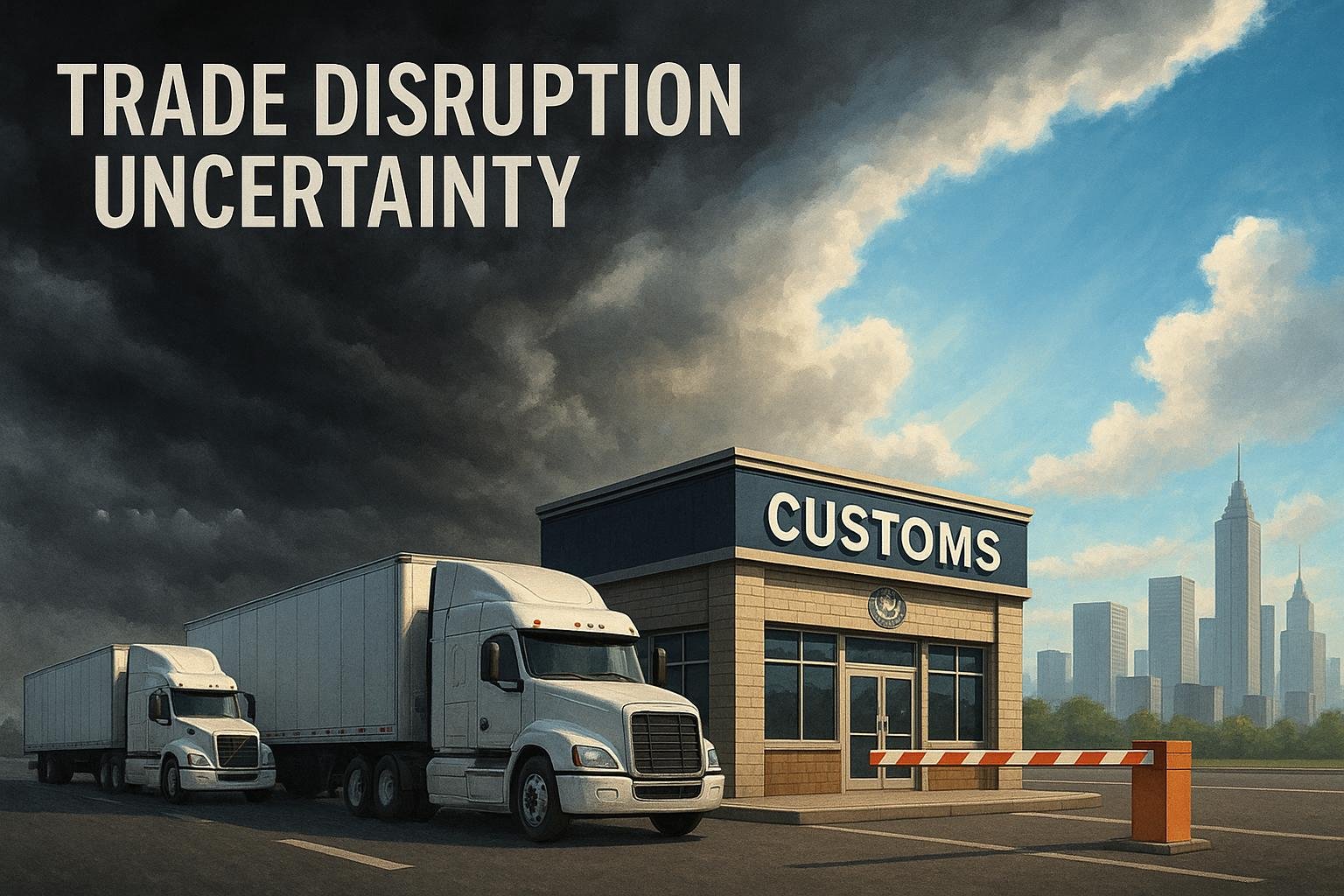
A US Supreme Court decision has invalidated several Trump-era tariffs, creating legal and logistical uncertainty for billions of dollars worth of imports and prompting a complex, ongoing adaptation in customs and trade practices.

About $8.2 billion of imported cargo remains embroiled in legal and logistical uncertainty after the U.S. Supreme Court struck down key tariffs previously imposed by the Trump administration, leaving customs systems, importers and global supply...
Continue Reading This Article
Enjoy this article as well as all of our content, including reports, news, tips and more.
By registering or signing into your SRM Today account, you agree to SRM Today's Terms of Use and consent to the processing of your personal information as described in our Privacy Policy.
The court found that the International Emergency Economic Powers Act did not grant the president authority to impose broad, economy-wide import duties. The levies, first rolled out in early 2018 and embedded directly in U.S. Customs and Border Protection’s electronic cargo-tracking and tariff-classification systems, were therefore deprived of their legal underpinning. According to reporting by Cryptopolitan, that decision instantly placed billions of dollars’ worth of shipments in a legal grey area as automated systems continued to apply the now-invalid charges.
Importers have reported delays, unexpected assessments and additional reviews while CBP’s systems are updated. Some companies have lodged formal protests or filed corrections of entry to preserve their rights; others are withholding action until tariff classifications are revised. Business groups warn that if customs cannot move quickly to reconfigure its systems, the disruption could cascade into longer transit times, higher storage charges and missed deliveries.
The administration moved swiftly to replace the voided measures. President Trump announced a new global ad valorem duty under Section 122 of the Trade Act of 1974. Industry and trade reporting differ slightly on the new rate: several outlets, including UHY and other trade observers, put the replacement at 15% and said it takes effect on 24 February 2026 and may remain for up to 150 days unless Congress grants an extension. Other coverage notes a temporary 10% alternative under Section 122 in some government communications. The differing accounts underscore the fragile legal and administrative footing of the substitute tariff and the likelihood of further litigation, experts say.
Section 122 provides a time-limited tool intended to address balance-of-payments concerns, not a sweeping permanent tariff regime. Legal analysts quoted in the coverage caution that the statute’s narrower purpose and temporary nature could make it a poor fit for the broad reciprocal duties the administration previously asserted under IEEPA, and raise fresh judicial challenges.
CBP itself has begun changing course. According to International Trade Insights and related industry updates, the agency will stop collecting IEEPA-based duties as of 24 February 2026 and is revising the list of executive orders and tariff codes affected. Industry briefings compiled by Gava and trade newsletters confirm the cessation date and note that some other U.S. tariffs, such as those imposed under Section 232 and Section 301, remain in force. GlobalTradeAlert’s modelling of post-ruling scenarios, examining the tariff regime across more than 274,000 trade flows, illustrates how different ad valorem rates would reshape protection levels and trade costs across sectors.
Questions about refunds and reconciliations remain central for affected firms. Companies that already remitted IEEPA duties are seeking clarity on eligibility for reimbursement and the practical steps for claiming repayments. Customs has been urged by trade bodies to publish explicit guidance on refunds, reclassifications and transit procedures while its IT systems are adjusted.
The ruling’s reverberations extend beyond U.S. borders. Trade monitors in Europe, Africa and Asia are watching the United States’ response for signals about market access and tariff unpredictability. For exporters and global supply-chain managers the immediate task is operational: determine whether goods are held up at ports because of legacy tariff entries, pursue formal protest or correction where appropriate, and plan for a temporary, possibly shifting, tariff environment over the coming months.
Until CBP completes system updates and issues clear instructions on classifications and reimbursement, businesses will confront an uneven transition. Industry analysts advise firms to document charges carefully, engage counsel on protest procedures and track official notices closely as the 150-day clock on Section 122, and the prospect of further litigation, set the timetable for the next phase of this dispute.
Source: Noah Wire Services
Subscribe to Industry Updates

