


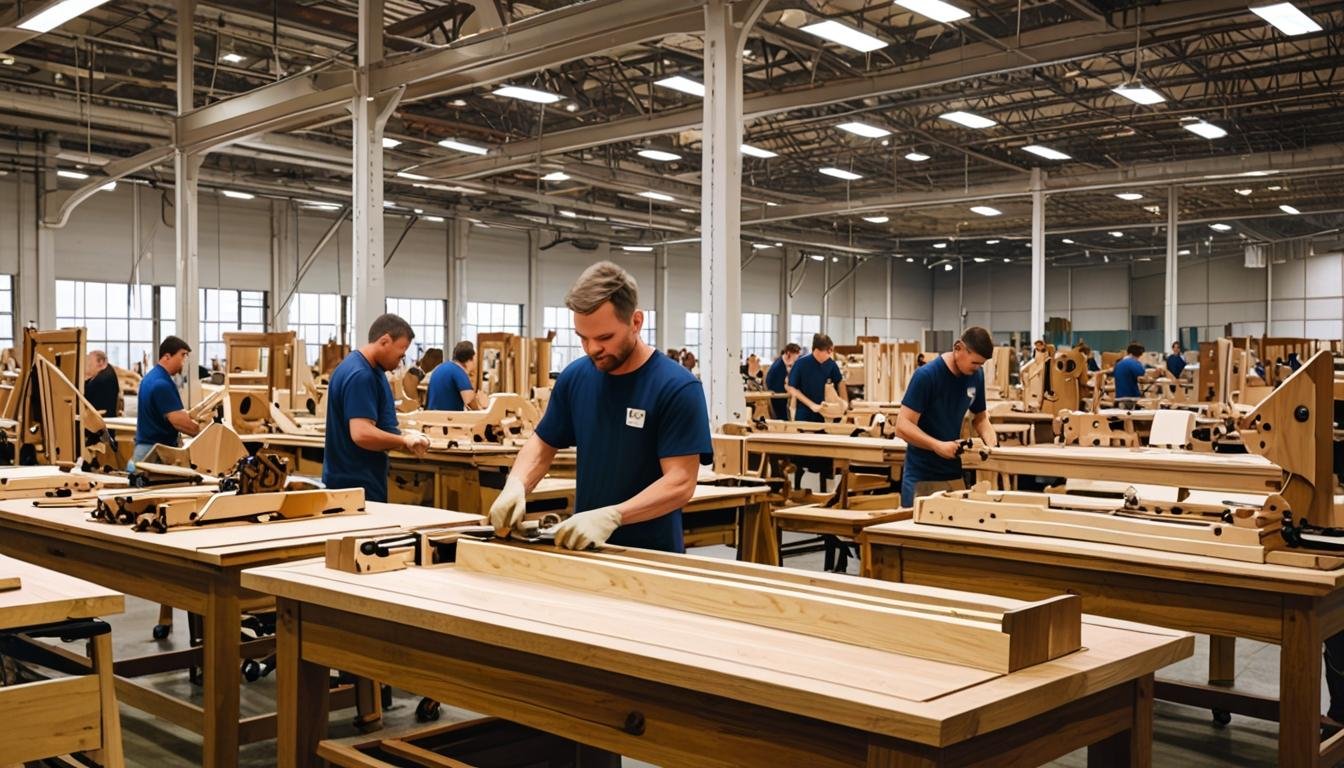
**USA**: Amid ongoing challenges such as tariffs and supply chain disruptions, U.S. furniture manufacturers are increasingly investing in domestic production to enhance competitiveness. Industry leaders highlight the benefits of American-made products and staying adaptive to evolving market demands, ensuring long-term success in a volatile environment.
U.S. manufacturers of case goods are strategically leveraging their domestic production capabilities to remain competitive, expand their market reach, and secure new business amidst ongoing challenges posed by tariffs, supply chain disruptions, and uncertainties in international trade. Many American-made brands are increasingly finding favour among retailers and consumers for their ability to provide flexibility and proximity.
The move towards domestic production is especially significant given the recent geopolitical climate, as companies are able to offer tariff-free products. Notably, Vaughan-Bassett and Copeland Furniture are tapping into the advantages of strong, U.S.-based manufacturing. Doug Bassett, president of Vaughan-Bassett, noted that the company’s 100% American-made product line ensures they remain unaffected by tariff fluctuations. “The tariffs being discussed by the Trump administration have caused some of our larger customers, who typically buy containers from Asia, to increase their orders with us,” Bassett said, emphasising the appeal of their risk-free offerings.

Ashley Furniture Industries, the world’s largest manufacturer of home furnishings, is well-prepared to navigate these challenges. According to Todd Wanek, the company’s president and CEO, they have consistently reinvested in both domestic and global manufacturing operations to maintain their versatility. “Our extensive domestic manufacturing capabilities allow us to respond to tariff uncertainties more effectively than others in the market,” he stated. Through continual innovations and improvements in manufacturing, Ashley maintains a robust stance amid changing global dynamics.
The impact of tariffs varies substantially across the sector. Manufacturers such as Copeland Furniture experience minimal effects due to their low reliance on imported materials. “The effect of tariffs, both new and since 2017, has been minimal for us,” president Ben Copeland remarked, noting that they perform final assembly within the U.S. Moreover, Gat Creek’s CEO, Gat Caperton, stated that their flexible business model keeps them largely insulated from broader tariff impacts.
Conversely, some companies with heavy reliance on imported components are facing more significant challenges. Sherrill Furniture’s senior vice president of sales, Tom Zaliagiris, highlighted how maintaining a domestic supply chain has allowed them to navigate volatility successfully. “The Sherrill Companies maintain a supply chain almost entirely within a 30-mile radius of our factories in Hickory, N.C.,” he explained.
As the tariffs and supply chain disruptions involve complex considerations, many U.S. furniture manufacturers are also adapting by diversifying their product offerings and improving manufacturing capacities. Copeland Furniture, for example, is shifting its market perception from a bedroom line to a whole-home line, expanding into upholstered seating to bolster its presence in the living room category.
Ashley Furniture has similarly focused on broadening its product range and manufacturing improvements, continuing to innovate to meet evolving market needs. Wanek mentioned the recent acquisition of Resident Home in March 2024, which has allowed Ashley to enhance its product portfolio across 20 categories.
The adjustment to changing consumer demands is critical for success within the industry. Sherrill Furniture’s Zaliagiris pointed out the importance of adapting to a retail environment that is both consolidating and fragmenting, as they offer value-driven collections for larger retailers and high-end customizable pieces for design trade.
As manufacturers set their sights on the future, they continue to prepare for potential uncertainties by investing in both technology and human resources. Gat Caperton of Gat Creek indicated they have integrated world-class CNC machinery and developed robust recruitment and retention programmes to support future growth. Meanwhile, David Wallace from Mavin expressed confidence in ongoing investments helping to maintain a steady growth trajectory.
For Tim Donk, Vice President of Sales at Legends Home, recognising the necessity of continual innovation is vital in overcoming industry challenges. “You can’t get too comfortable because in this business, things change fast,” he stated, underscoring a broader theme of resilience through adaptability reflected across the industry.
With a collective focus on flexibility, innovation, and investment in manufacturing capabilities, U.S. furniture manufacturers are positioned not only to survive but to potentially thrive amid the ongoing challenges within the global market. As they embrace change as an opportunity for growth, these companies are laying a foundation for long-term success in an unpredictable environment.
Source: Noah Wire Services

