


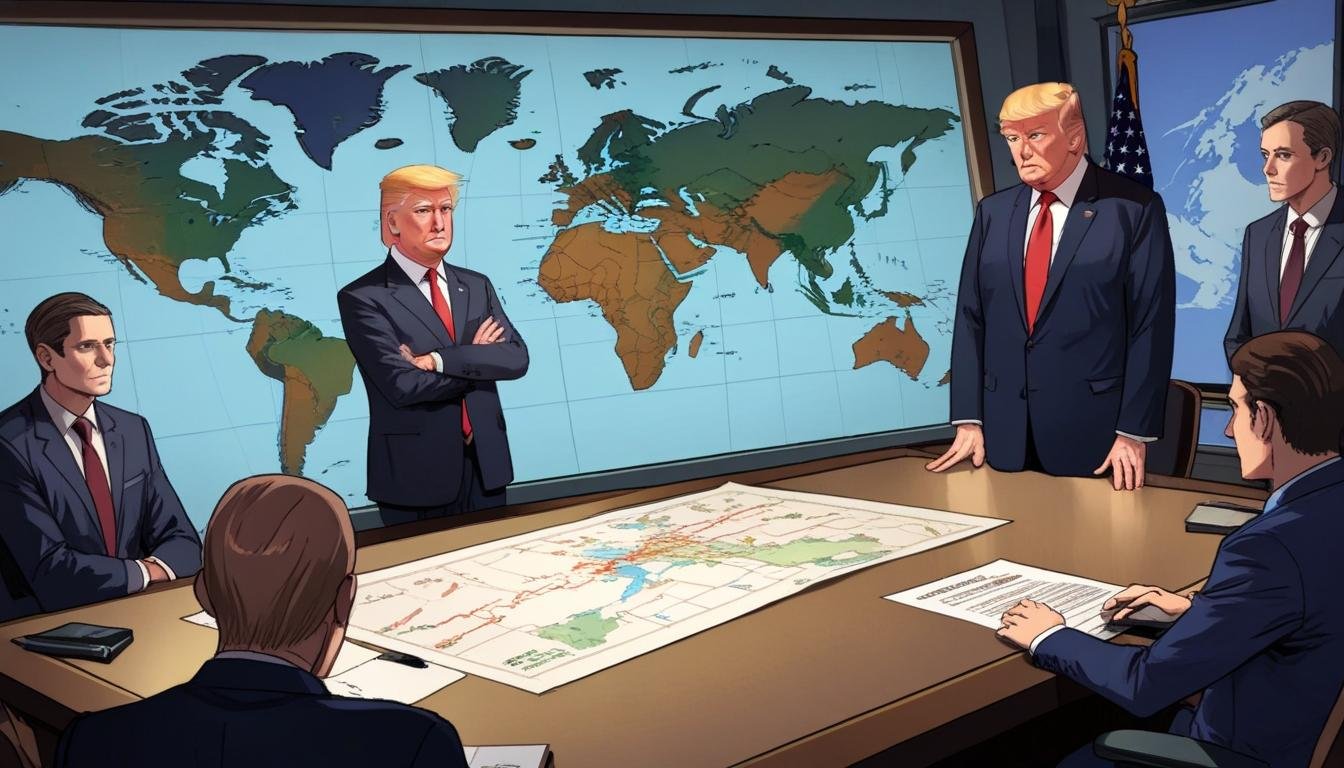
**Washington**: U.S. President Donald Trump has indicated a willingness to negotiate trade deals with nations looking to avoid upcoming tariffs, particularly as the EU contemplates potential retaliatory measures in light of escalating trade tensions. Details on specific tariffs remain unclear.
U.S. President Donald Trump has affirmed his openness to prospective trade deals with nations eager to bypass impending American tariffs, stating that negotiations would commence following the announcement of retaliatory tariffs scheduled for 2 April. Speaking to journalists aboard Air Force One last Friday, Trump disclosed plans to unveil tariffs specifically aimed at the pharmaceutical sector but refrained from providing precise details on the timeline or the percentage of these tariffs.
Trump noted that several countries, including the United Kingdom, have reached out to negotiate agreements to avert these tariffs. “They want to strike deals; this is possible if we can get something in return,” he explained. However, when asked if such deals could be established before 2 April, Trump indicated that it was unlikely, suggesting, “No, perhaps later; it’s an ongoing process.”

Amid these developments, the European Union is evaluating its strategy in response to the escalating trade tensions with the United States. According to the German network Deutsche Welle, Maroš Šefčovič, the EU’s chief trade official, forecasted that Trump might introduce comprehensive tariffs of up to 20% on all EU goods imported into the U.S. by early April, which would considerably elevate the prices of European products in the American market. The exact scope of these tariffs—whether they will focus on individual countries or apply to the EU as a whole—remains uncertain.
Current tariffs imposed by the U.S. include a 25% levy on EU steel and aluminium imports, with additional tariffs affecting the European automotive sector having been instituted in recent months. In light of these potential changes, the European Commission is contemplating countermeasures, which may include targeting the U.S. services sector, potentially impacting American firms operating within the EU.
Discussions have emerged around restricting the intellectual property rights of major U.S. companies, such as Apple and Google, regarding their cloud services, or limiting Elon Musk’s Starlink satellite network’s ability to compete for contracts with European governments. The EU has traditionally enjoyed a significant surplus in its goods balance with the United States, amounting to €157 billion (approximately $170 billion) in 2023, where imports from the U.S. fall short of exports. Conversely, in the services sector, the U.S. registered a surplus of €109 billion against the EU.
Up until now, European retaliatory tariffs have largely been symbolic, affecting products like Harley Davidson motorcycles and Levi’s jeans. With a demand for new tariffs, the focus is shifting to different sectors. Such retaliatory actions require a qualified majority approval from EU member states, complicating the political dynamics within Brussels. Notably, France has proposed suspending tariffs on bourbon whiskey to shield its wine industry from possible American reprisals.
Another critical consideration for the EU is the potential application of its Anti-Coercion Instrument (ACI), which was initiated in 2023 in retaliation to China’s trade restrictions on Lithuania. This mechanism—often referred to as the EU’s “trade bazooka”—provides various tools that could be employed if the EU determines that Trump’s trade policies represent economic coercion. The ACI could enable the EU to impose limitations on U.S. banking operations within the bloc, invalidate U.S. patents, or restrict access to revenues from online broadcasting services.
In addition to tariffs, discussions are also occurring regarding stricter enforcement of existing EU regulations on American technology companies. Experts suggest that the EU may impose significant penalties according to the Digital Services Act (DSA) and the Digital Markets Act (DMA), targeting social media platforms failing to promptly mitigate misleading information.
As these negotiations and trade responses unfold, both the U.S. and the EU are navigating a complex landscape of economic diplomacy, each side weighing the implications of forthcoming trade policies and retaliatory measures.
Source: Noah Wire Services

