


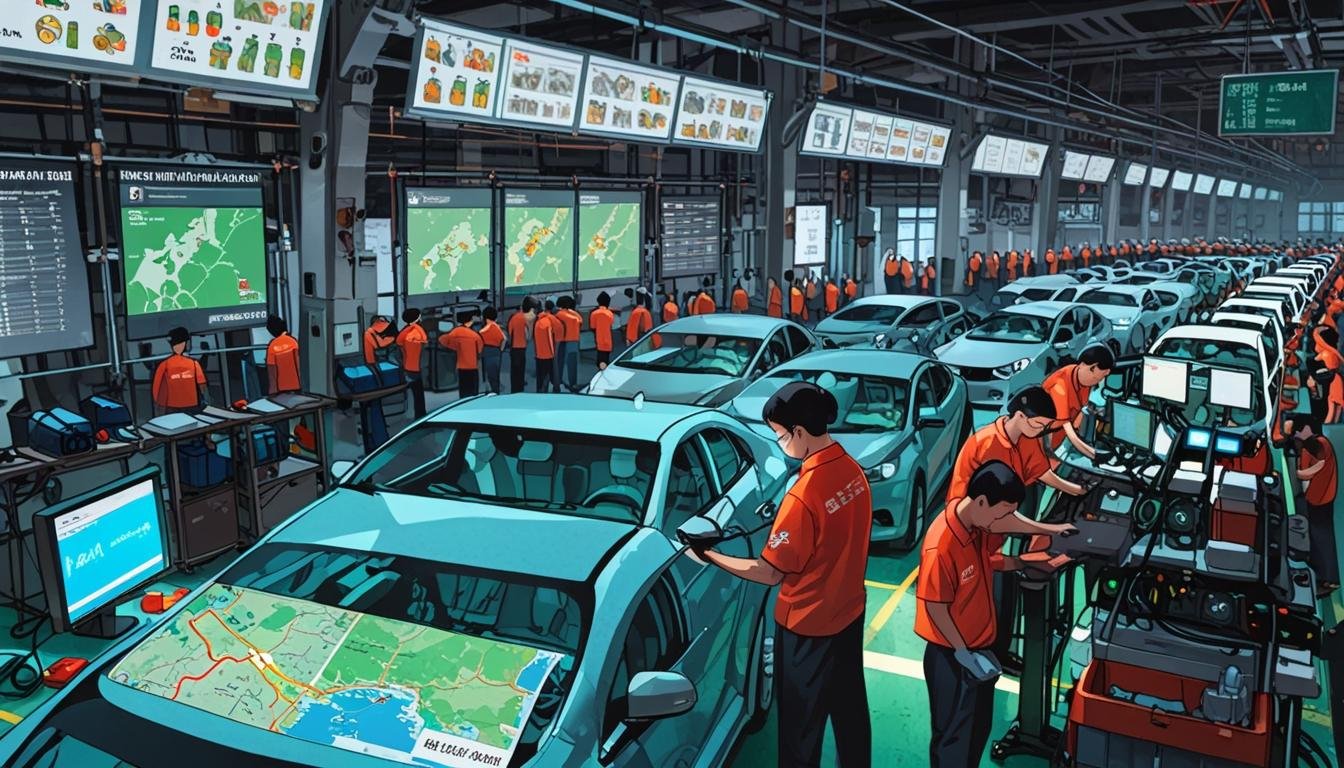
**Washington**: President Trump’s administration intensifies trade measures with new tariffs on Canada, Mexico, and China, as companies navigate evolving supply chains and relocate production in response to ongoing trade policies. Industry analysts anticipate further reciprocal tariffs amidst shifting dynamics in the global manufacturing landscape.
In a significant move during his second presidential term, President Donald Trump has increased tariffs on imports from Canada, Mexico, and China, marking a continued effort to reshape global manufacturing and spur domestic production. Trump’s administration initially implemented tariffs on Chinese goods in 2018, aimed at addressing perceived unfair trade practices and reducing the U.S. trade deficit. Now, these measures have escalated further with new tariffs imposed on various imports, including a 25% tax on steel and aluminium and an additional 25% if not a 10% tariff on Chinese goods.
This latest round of taxation extends to auto imports, with Trump announcing a new 25% tariff on March 24. Industry analysts are anticipating further plans for “reciprocal” tariffs, which could include additional countries as targets. The landscape reflects a complex web of global manufacturing dynamics where companies are now faced with a guessing game regarding future trade policy.

Robin Song, a specialist in supply chains within China and Asia at Kuehne+Nagel, shared insights into the ongoing implications of these tariffs. Speaking to the Los Angeles Times, Song highlighted that the first wave of tariffs in 2018 primarily impacted appliances and mechanical parts, prompting many manufacturers to relocate production to Southeast Asia, including countries like Thailand and Vietnam. Notably, the renewable energy sector, particularly solar panels, has experienced similar shifts as U.S. tariffs led to Chinese companies considering production options in Vietnam, Thailand, and Cambodia.
The situation has further evolved with the Biden administration applying tariffs on Southeast Asian goods, which has curtailed investments in those markets. In response, solar panel manufacturers have adjusted their operations, some even moving production lines to the United States.
As for the new round of tariffs, Song described a “catch-me-if-you-can” situation in which some businesses are relocating to countries not affected by the tariffs, such as Indonesia, Saudi Arabia, Oman, and Egypt, indicating a strategic shift away from China and the U.S. tariffs’ direct impact.
The auto industry, particularly in relation to electric vehicles (EVs), has also been significantly affected. With European nations imposing tariffs on Chinese EVs ranging from 10% to 30%, companies such as BYD have begun establishing factories in Hungary, while others like Chery and Geely are forming joint ventures and acquisitions across Europe and beyond. These partnerships aim to leverage established production facilities for the development of new electric models.
The situation regarding EV battery production indicates a different trajectory, with a growing interest in regions like Indonesia and Morocco, rich in nickel and other mineral resources essential for battery manufacturing. Meanwhile, Vietnam has emerged as a popular alternative for manufacturers aiming to step away from China; however, challenges remain, including a significant trade imbalance with the U.S. and dependency on Chinese exports. Song noted that some Taiwanese firms are starting to test the waters by shifting production modules to Vietnam as a precaution against future uncertainties.
The complexities of the current global manufacturing landscape are evident, as companies navigate their supply chains in an environment filled with volatility and evolving trade policies. The implications of these strategic relocations and the shifting focus of industries will likely continue to unfold in the coming years.
Source: Noah Wire Services

