


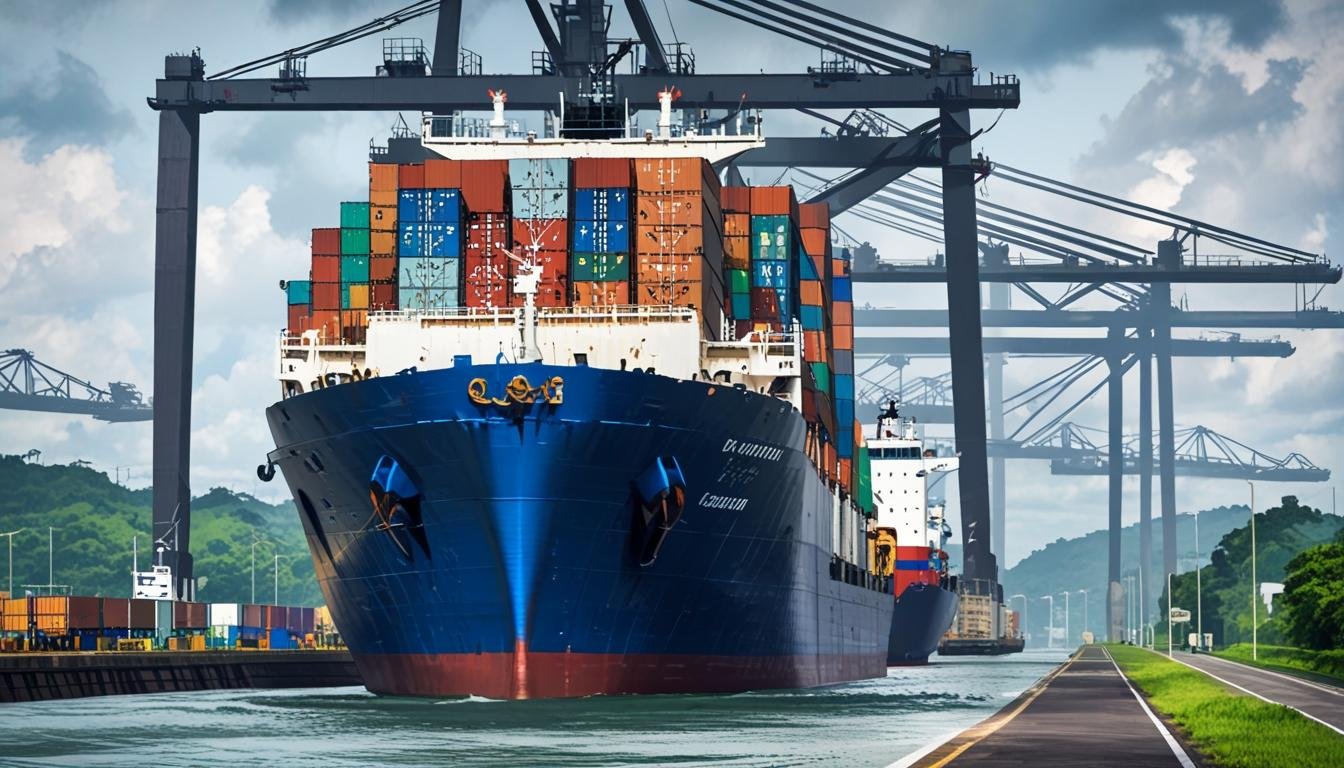
**Washington**: President Donald Trump unveils plans for tariffs on Chinese-made ships entering U.S. ports, aiming to impact supply chains, particularly affecting Latin America and Mexico. Experts warn of rising costs for American consumers and potential retaliatory measures from China, while new opportunities may arise for regional ports.
In a significant move with potential global repercussions, President Donald Trump has announced plans to impose new tariffs on ships built in China that enter U.S. ports. This proposal, revealed during the last week of February 2025, bases the tariffs on the percentage of ship orders placed with Chinese shipyards by operators. Additionally, Trump suggested imposing extra tariffs on Chinese-flagged vessels that traverse the Panama Canal and dock at American ports.
The measures, heavily influenced by protectionist, geopolitical, and national security considerations, could have a profound impact on the global supply chain, particularly affecting commerce in Latin America and bilateral trade between Mexico and the United States. Should these tariffs be enacted, experts predict they could lead to increased shipping costs, which would ultimately burden American consumers as higher logistics fees are likely to be passed down in the form of elevated retail prices.

The economic implications of such tariffs are considerable. Enhanced shipping costs are expected to inflate operational expenses for various sectors, especially manufacturing and retail. This could result in declining retail sales and significant job losses within logistics and international trade companies.
Furthermore, restrictions on Chinese vessels passing through the Panama Canal may provoke retaliatory actions from China, which in turn could disrupt Pacific shipping routes and diminish Panama’s toll revenues. This situation might compel businesses to seek out more costly and less efficient transport alternatives. Conversely, it could present new opportunities for strategic ports throughout Latin America, including those on the Pacific coast in South America and Caribbean terminals. Nations such as the Dominican Republic, Colombia, and Panama may capitalise on this scenario to establish trade agreements and transportation links to capture some of the maritime traffic affected by the restrictions targeting China.
Trade partners with robust connections to China, especially Mexico and other Latin American countries, could find themselves in a challenging position as the U.S. pushes for tighter regulations on these relationships. This dynamic risks straining commercial agreements and creating uncertainty around foreign investments.
Particularly noteworthy is the potential impact on the Mexico-U.S. bilateral trade relationship. Mexico relies heavily on intermediate goods from China, particularly in sectors such as automotive, electronics, and manufacturing. An increase in import costs could elevate production expenses, thereby placing Mexican exports to the U.S. at a disadvantage.
As companies anticipate possible increases in maritime transport expenses, a shift towards more reliance on land transport via key border crossings—such as Nuevo Laredo-Port Laredo, Ciudad Juárez-El Paso, and Nogales MX-Nogales US—could lead to increased congestion at customs, necessitating investments in logistical infrastructure. This predicament also opens opportunities for land ports between Mexico and the United States. Key Mexican Pacific ports, such as Manzanillo, Lázaro Cárdenas, and Ensenada, might see a rise in cargo transported by rail and road to the United States. Furthermore, critical customs points like Port-Laredo could emerge as essential hubs for the distribution of goods, fostering growth in land trade and attracting investment in logistics infrastructure.
The automotive sector stands to be significantly affected by these developments. Rising costs for components, including batteries, semiconductors, and wiring harnesses imported from China, could elevate operating costs for automotive manufacturers, hampering their profitability. The just-in-time production model employed by many automakers relies on precise delivery of parts; interruptions due to these tariffs could disrupt assembly lines, compelling manufacturers to stockpile inventories.
However, there could be a positive aspect in the form of a boost to the nearshoring trend. To mitigate logistical issues, numerous companies are considering relocating component production from China to either Mexico or the U.S., thus benefiting industrial regions like the Bajío and northern Mexico by attracting investments in advanced manufacturing, including technologies aligned with the transition to electric vehicles.
While the proposed tariffs on Chinese-manufactured, operated, or flagged ships pose significant challenges for the supply chain and bilateral commerce, they simultaneously offer possibilities for enhanced economic integration among Latin America, Mexico, and the U.S. Ports like Manzanillo and Lázaro Cárdenas, as well as terrestrial logistics hubs like Port-Laredo in the Gulf of Mexico and Tijuana along the Pacific, may experience heightened commercial traffic. This uptick could stimulate infrastructure investment and solidify Mexico’s role as a critical player in trade with the United States.
Moreover, strategic ports in Latin America, such as those in the Dominican Republic, Colombia, and Panama, could establish themselves as key alternative points for international commerce by facilitating the transit of goods and attracting new investments in logistics and transportation. As stakeholders navigate the potential impacts of these tariffs, both challenges and opportunities abound, shaping the landscape of international trade in the coming years.
Source: Noah Wire Services

