


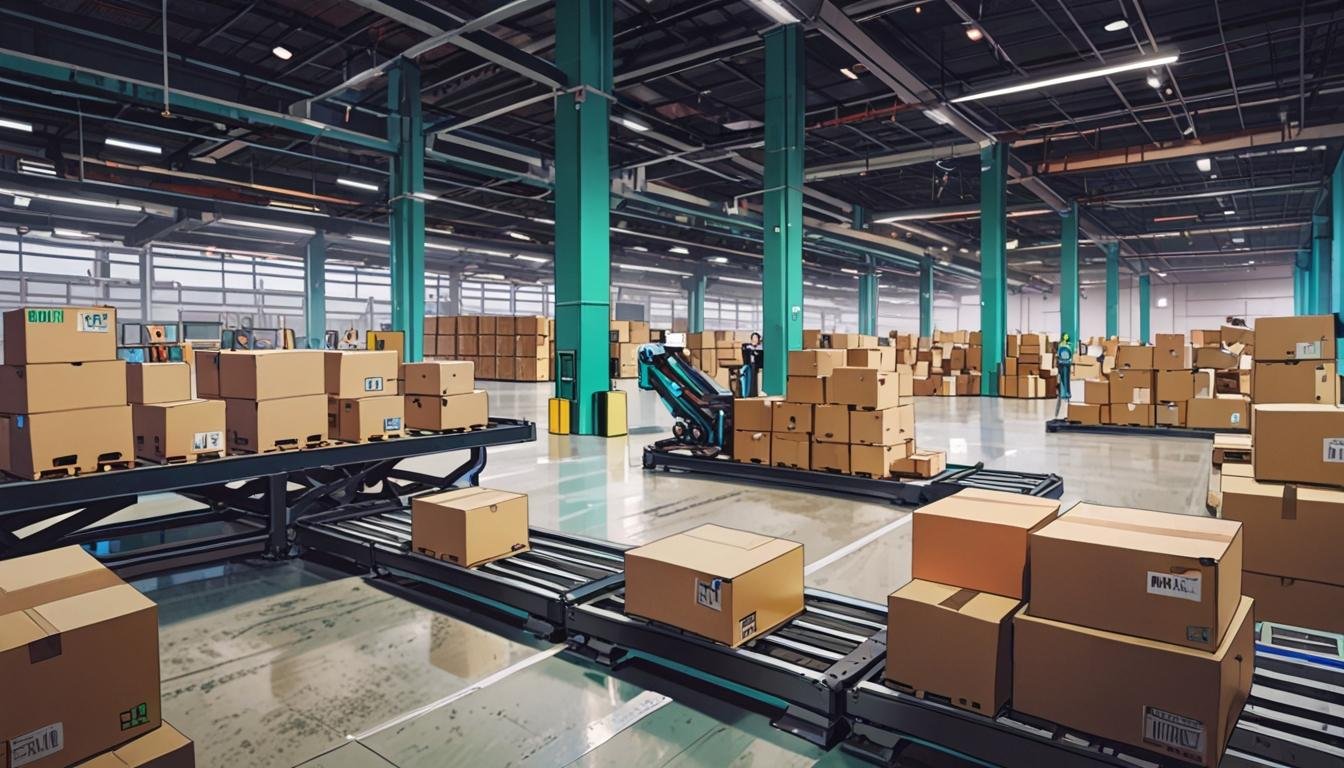
**London**: As businesses adapt to evolving consumer demands, a report by Inside Retail reveals key trends reshaping supply chain management, including robotic automation, distributed warehousing, enhanced cybersecurity, multi-courier shipping models, and a growing focus on sustainability to ensure efficiency and customer satisfaction.
The retail landscape is undergoing significant transformation as companies adapt to evolving consumer demands and technological advancements. A recent report by Inside Retail highlights several key trends shaping supply chain management, focusing on the future strategies businesses are employing to enhance efficiency and customer satisfaction.
Robotic automation has become increasingly essential as retail firms look to streamline their operations. By employing robots to handle repetitive tasks, companies can boost efficiency, reduce costs, and minimise human error. This allows employees to concentrate on more complex problem-solving and management activities. As the demand for faster order fulfillment grows, the reliance on robotic assistance in various warehouse processes is expected to be a crucial element in maintaining a competitive edge in the market.

A noteworthy shift in supply chain dynamics is the rise of distributed warehousing. By strategically positioning smaller warehouses closer to consumer locations, brands can improve delivery reliability, cut shipping costs, and enhance overall customer satisfaction. With prompt shipping now regarded as a standard expectation, rather than a luxury, minimising transit times has emerged as an essential goal for companies looking to thrive in the modern retail environment.
In conjunction with these logistical advancements, companies are increasingly prioritising cybersecurity. As technology becomes more integral to supply chains, businesses are investing in robust security measures to guard against the rising threat of cyberattacks. The surge in data breaches underscores the need for secure cloud storage, multi-factor authentication, and regular system audits to protect sensitive information and sustain customer trust.
Another trend gaining traction is the adoption of multi-courier shipping models. This approach allows retailers to partner with various courier services, each excelling in different areas, such as rural versus urban delivery. By leveraging multiple carriers, companies can optimise shipping costs and achieve consistent delivery performance. Advanced shipping software further enhances this process, enabling dynamic selection of the most suitable courier for each shipment.
In light of potential changes to import taxes and trade policies, especially with the political landscape in the United States shifting, many companies are re-evaluating their supply chain strategies. Businesses trading in the US may consider diversifying their supplier base or exploring near-shoring options. For instance, in response to higher import duties, American firms have turned to manufacturing partners in countries like Vietnam, India, or Japan, or are relocating their production closer to home. This diversification not only mitigates tariff-related risks but also fortifies supply chain resilience by reducing dependency on a single region.
Sustainability is also emerging as a focal point within supply chain management, driven by an increasing consumer consciousness around environmental impact. Companies are adopting eco-friendly practices, such as utilising recycled materials for packaging and reducing waste. Additionally, initiatives aimed at achieving carbon-neutral shipping and utilizing renewable energy-powered facilities signal a commitment to environmental responsibility. These efforts not only cater to an eco-aware customer base but also align with regulatory trends pushing for greener practices.
In summary, the supply chain of 2025 is anticipated to embody innovation, flexibility, and a commitment to sustainable practices. As customer expectations rise, businesses that adopt advanced technologies, diversify their operations, and balance efficiency with environmental responsibilities are likely to distinguish themselves in a competitive market. By embracing these progressive trends, brands can create resilient supply chains that foster growth and elevate customer satisfaction. This report is part of Inside Retail’s 2025 Australian Retail Outlook, powered by KPMG.
Source: Noah Wire Services

