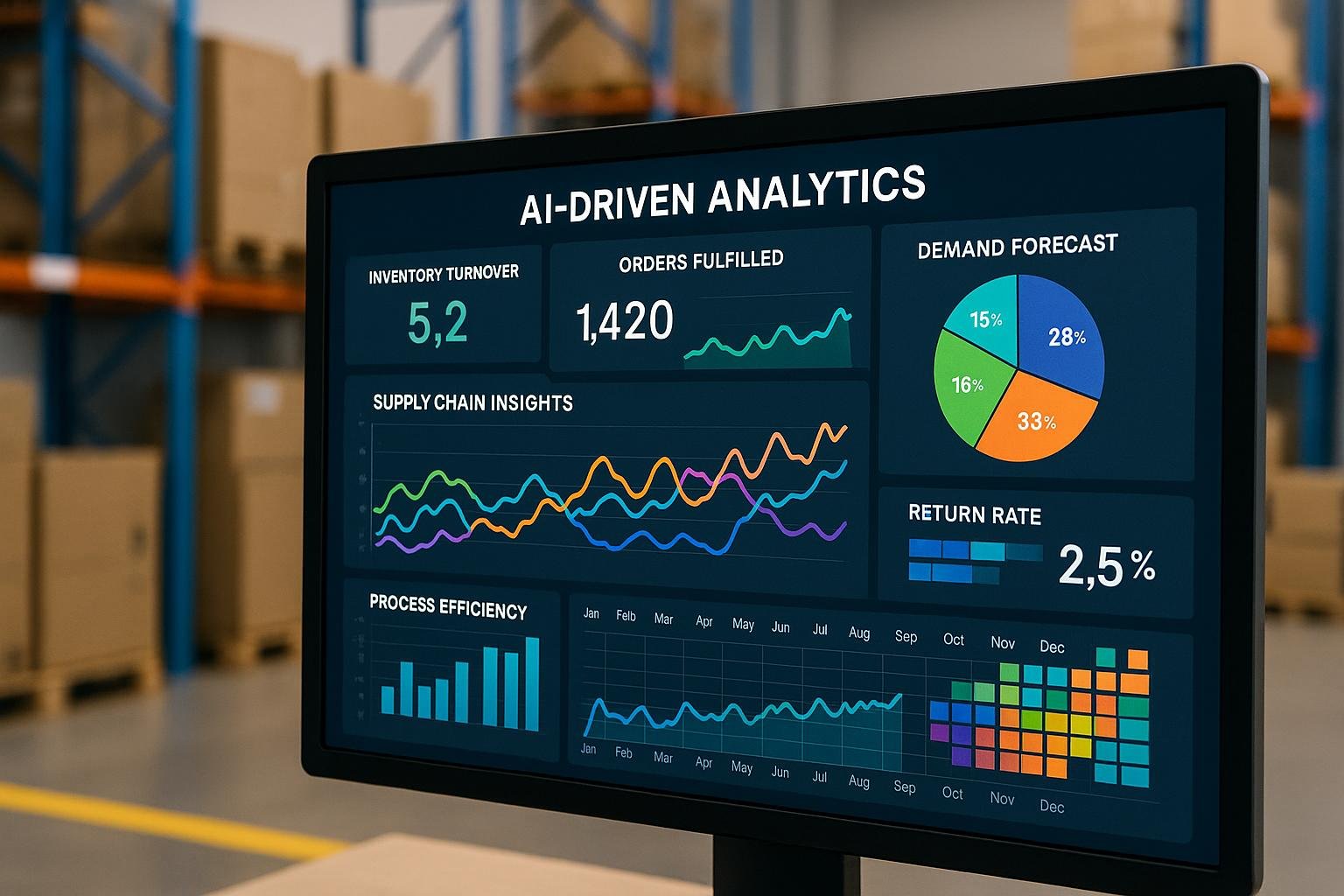
Companies that treat supply chain data as an operational engine, integrating AI and real-time systems, are significantly reducing costs, enhancing service, and boosting agility by turning insights into rapid, measurable actions.
According to the original report, turning supply‑chain data into profit is less about collecting more information and more about connecting the right signals to faster, measurable action. Companies that treat data as an operational engine , no...
Continue Reading This Article
Enjoy this article as well as all of our content, including reports, news, tips and more.
By registering or signing into your SRM Today account, you agree to SRM Today's Terms of Use and consent to the processing of your personal information as described in our Privacy Policy.
t just a reporting tool , see improvements across costs, service and agility.
Smarter forecasting sits at the heart of that transformation. The lead article argues that AI‑driven demand forecasting reduces overstocks, stockouts and emergency freight; industry analysis supports this, finding AI approaches can cut forecast error by roughly 20–50% and materially reduce lost sales and inventories. According to a major consultancy, those improvements can translate into halving inventory and sharply reducing unavailability, which together lower carrying costs and protect margins.
Real‑time visibility converts latent risk into opportunity. The lead piece highlights IoT, telematics and WMS/TMS feeds as the sources of a live view of inventory and transit. Vendor and industry sources describe real‑time location systems that layer precise GPS and sensor data onto existing SCM and TMS platforms, enabling early detection of delays, improved OTIF performance and fewer chargebacks. That visibility also supports more honest customer communication and reduces premium shipping that erodes profit.
On the warehouse floor, analytics turn motion into productivity. Data‑driven optimisation of picking paths, storage locations and workforce deployment raises pick rates and reduces labour and equipment downtime. When coupled with predictive maintenance insights from telematics and IoT, warehouses operate with higher throughput and lower unplanned cost.
Transport analytics deliver another direct line to the bottom line. Telematics and routing data expose poor routing, long dwell times and under‑utilised assets; applying prescriptive optimisation reduces fuel use, improves carrier performance and shrinks transport spend. Providers report additional benefits such as predictive maintenance alerts and carbon tracking, which support both cost control and regulatory or customer reporting needs.
Supplier performance analytics close the loop on upstream variability. Scorecards and risk models surface quality, pricing and delivery issues before they cascade into returns and rework. The result is fewer defects, stronger negotiating positions and lower supplier‑related costs.
Crucially, data only becomes profitable when organisations act on it. High performers shift from monthly or quarterly reporting to daily KPIs , OTIF, perfect order rate, inventory accuracy, fill rate, cycle time and forecast accuracy , and embed automated workflows so insights trigger decisions. The lead article’s warning is clear: dashboards are wasted unless integrated with process and accountability.
The path to 2026 and beyond is therefore threefold: collect higher‑quality signals, analyse them with AI and real‑time systems, and convert insights into rapid operational change. Industry research and vendor experience show these steps reduce waste, speed cycles and protect margins , turning data from a supporting tool into the engine of profitability.
Source: Noah Wire Services