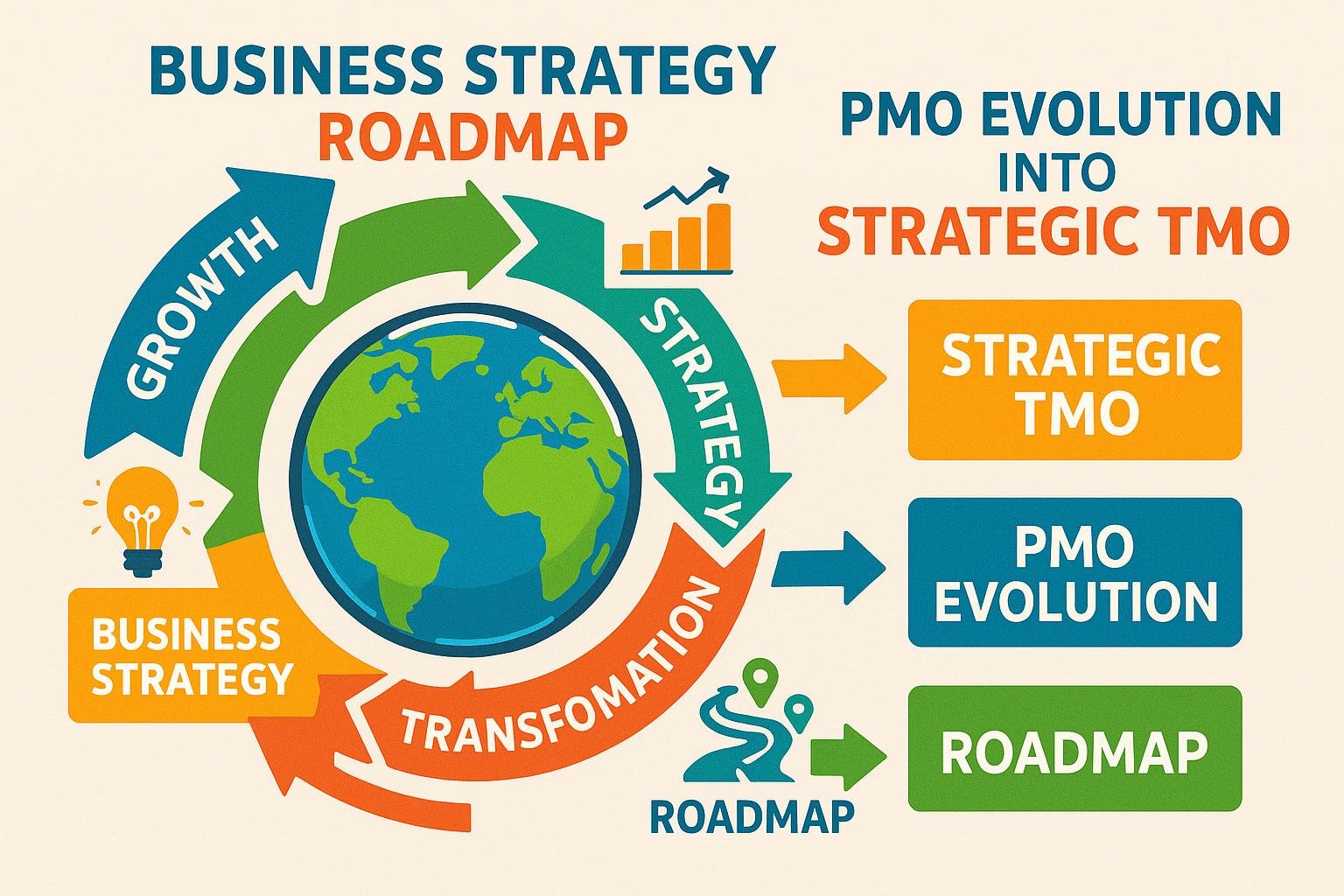
Pete Smyth from Leading Resolutions advocates for evolving traditional project management offices into strategic TMOs through a three-step framework, enabling organisations to lead enterprise-wide change and innovation effectively.

For organisations pursuing ambitious growth, effectively managing change across every facet, from IT systems to core business operations, is critical. Pete Smyth, CEO at Leading Resolutions, a respected UK technology consultancy, emphasises t...
Continue Reading This Article
Enjoy this article as well as all of our content, including reports, news, tips and more.
By registering or signing into your SRM Today account, you agree to SRM Today's Terms of Use and consent to the processing of your personal information as described in our Privacy Policy.
The initial step involves establishing a high-impact PMO foundation. While PMOs traditionally manage individual projects and portfolios, their scope is often limited to execution oversight, lacking strategic alignment and the ability to measure outcomes against business objectives. Smyth suggests a phased approach that begins with engaging stakeholders to understand strategic aims, reviewing the current portfolio, and documenting the organisation’s “As-Is” state. This analysis, paired with market best practices, guides the tailoring of a PMO framework that includes governance structures and standardised templates. Establishing core processes for project prioritisation and robust business case development is crucial at this stage, with an agreed implementation plan that suits each organisation’s scope, schedule, and budget. This foundational step delivers immediate value and clarifies the gap between managing projects and achieving business outcomes.
Once the foundation is in place, the second step is embedding new ways of working to mature the PMO. This means the PMO evolves from a mere execution manager to a collaborative enabler, driving leadership engagement and continuous improvement. Smyth outlines how implementing measurable key performance indicators (KPIs) and dashboards to track success, covering cost, schedule, scope, and quality, ensures projects deliver real value. Encouraging user feedback and conducting impact assessments support continuous refinement. This phase strengthens collaboration, standardises methodologies, and institutes transparent performance reviews, creating a more mature PMO poised for further strategic integration.
The final step involves scaling this matured PMO into a full-fledged TMO, a strategic partner that governs and oversees the entire transformation portfolio. According to Smyth, a TMO leverages data analytics and increasingly AI-driven technologies to offer deeper insights into investments and measure value creation in actionable terms. This expanded scope enables consistent alignment of transformation programmes with evolving business priorities, stronger governance, and more effective communication across all initiatives. The TMO acts as a central engine, accelerating cross-functional collaboration and optimising resource management. This role enables cultural change and employee engagement, positioning the TMO as a trusted advisor that underpins growth strategies by moving the organisation from managing projects to orchestrating strategic transformation.
Supporting these insights, industry research from the Project Management Institute (PMI) aligns with Smyth’s framework by underscoring the importance of PMOs in aligning projects with organisational strategy. PMI highlights that PMOs provide expertise, best practices, and knowledge sharing across departments while using structured methodologies to ensure projects meet strategic objectives. They also stress continuous maturity improvement processes, involving regular assessments and enhancements, which reinforce project management professionalism central to achieving strategic goals.
Moreover, PMI advocates for a strategic PMO role that bridges the gap between organisational project management knowledge and its practical application. A strategically positioned PMO customises governance, optimises investments, manages talent, secures stakeholder engagement, and drives change proactively while navigating risks, emphasizing the need for executive-level support to succeed. This broader perspective mirrors Smyth’s view of the TMO as a strategic partner rather than a mere project executor.
In sum, moving from a traditional PMO to a TMO is essential for organisations aiming to manage complex, enterprise-wide change effectively. By establishing a robust foundation, embedding new collaborative processes, and scaling to a strategic transformation partner, businesses can better align their projects with their strategic vision, maximise investment value, and foster cultural shifts necessary to sustain growth and innovation. As digital transformation and business complexity increase, the TMO model represents the future of enterprise change management, combining disciplined execution with strategic oversight powered by advanced analytics and collaboration.
Source: Noah Wire Services
Subscribe to Industry Updates