


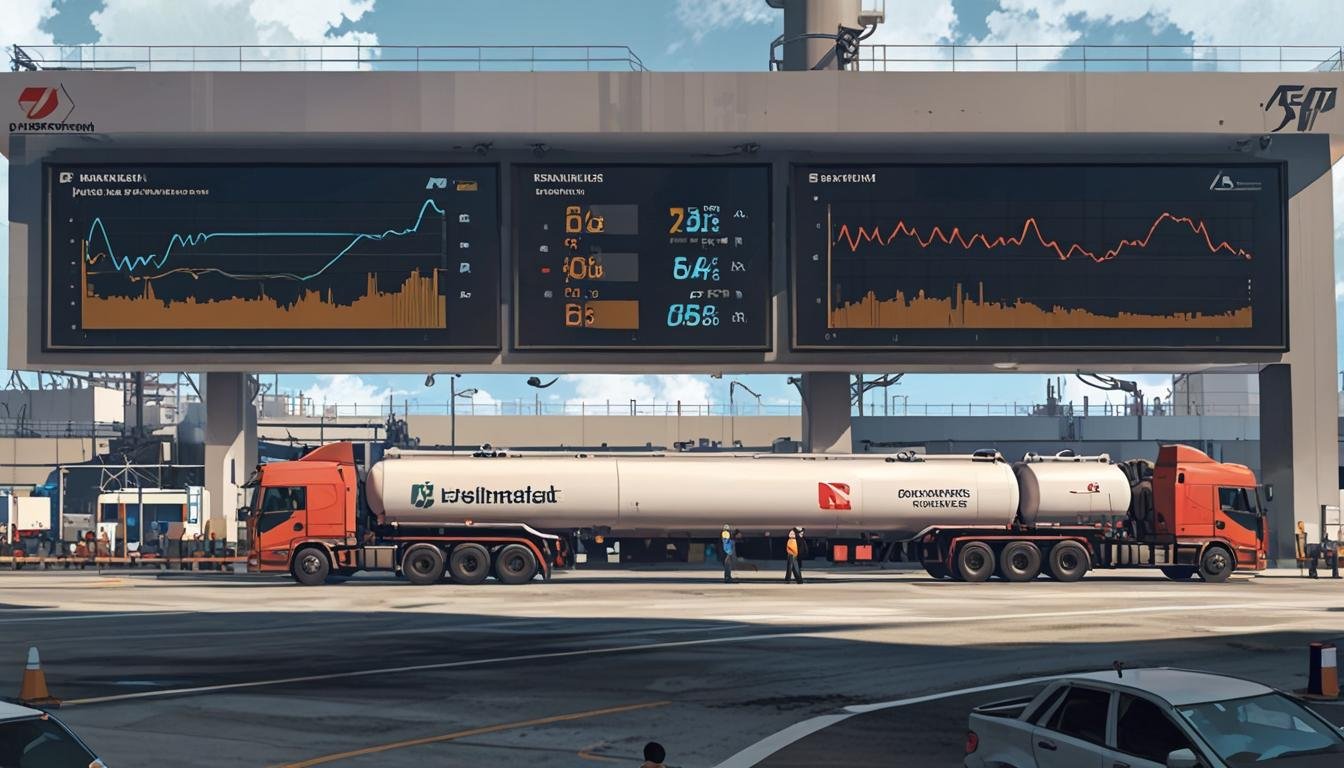
**United States**: The downstream wholesale market for refined fuels is grappling with significant challenges and shifts, driven by data opacity, market dynamics, and evolving strategies to enhance operational efficiency in a fragmented landscape that transacted 312 billion gallons in 2024.
The downstream wholesale market in the United States, a vital segment of the refined fuel supply chain, is experiencing significant challenges and transformations as it navigates evolving macroeconomic and geopolitical landscapes. This market, which facilitates the movement of fuel from refineries to end users, operates through a network of pipelines and secondary terminals across the country. Recent analysis by McKinsey Insights & Publications illustrates the complexities and trends that are shaping this sector, particularly the rack-to-retail segment.
The downstream market can be divided into two primary categories: the refinery-to-rack segment, which deals with direct transactions between refineries and larger consumers, and the rack-to-retail segment, which supplies fuel from secondary terminals to regional retailers and gas stations. The loading rack where fuel is transferred to tanker trucks is a key component in this process, and these racks are strategically located near consumer hubs and refinery sites.

In 2024, the United States downstream wholesale market transacted an impressive 312 billion gallons of refined fuels. Notably, approximately 77 percent of this volume was moving through the rack-to-retail segment across more than 350 rack hubs, supported by a network exceeding 1,300 terminals. Suppliers and wholesalers dominate these operations, with a primary focus on transportation fuels.
However, experts interviewed for this analysis noted that many companies in this sector are struggling with market opacity and a lack of timely access to critical data. This presents operational challenges such as responding to sudden fluctuations in volume and making informed decisions regarding supply distribution and pricing. The complexity is compounded by the difficulty in tracking the myriad transactions that occur as fuel moves from refineries to retail outlets, which can involve multiple exchanges of ownership.
Key insights gathered from interviews with industry professionals reveal that the fragmented nature of data access and insufficient transparency are significant obstacles. Participants highlighted a pressing need for improved operational efficiency. Inadequate integration across functions can lead to delays and inaccuracies, ultimately affecting customer experiences.
Market dynamics indicate that the leading 100 rack hubs account for approximately 63 percent of the total volume transacted in the US rack fuel market. These hubs play a crucial role in shaping overall market trends, with substantial growth observed particularly in metropolitan areas. Microeconomic factors, including shifts in population and changes in income levels, have led to considerable variations in product growth rates across different locations.
Regular gasoline, comprising about 60 percent of the total fuel volume from the top 100 rack hubs, saw a median growth rate of 3.1 percent between 2021 and 2024. Notably, Bainbridge, Georgia, and Louisville, Kentucky, exhibited remarkable growth rates of 17.8 percent and 16.8 percent, respectively. Conversely, markets in Colton, California, and Corpus Christi, Texas, recorded declines of 13.9 percent and 9.9 percent. Similar disparities were also noted for premium gasoline and ultralow-sulfur diesel (ULSD), underscoring the influence of localized economic and environmental factors.
To navigate the ongoing challenges, companies within the downstream sector are adopting three key strategies aimed at enhancing operational agility: integrating supply chain operations, dismantling silos within organisations, and leveraging predictive analytics to gain a competitive edge.
The integration of terminal automation with back-office operations is crucial for real-time data flow and efficient management. By creating centralised data hubs, companies can streamline operations, reduce errors, and facilitate quicker decision-making. Collaborative strategies across departments further enhance the potential for effective decision-making, enabling better alignment of sales and marketing with supply and logistics.
In addition, predictive analytics is emerging as a powerful tool for anticipating market trends and customer preferences. By utilising artificial intelligence and machine learning, firms are better positioned to forecast demand, manage inventory, and optimise pricing strategies. This forward-looking approach not only helps mitigate risks associated with supply chain disruptions but also allows for quick adjustments in response to dynamic market conditions. Companies that successfully integrate these advancements can potentially enhance their margins by several cents per gallon by utilising data-driven decision-making strategies.
Meanwhile, the macroeconomic environment continues to present uncertainties, prompting industry players to focus on long-term growth and resilience. As the downstream fuels industry adapts to these challenges, the integration of advanced technologies and collaborative practices is likely to play a pivotal role in shaping the future of the rack-to-retail market. In this complex landscape, operators are called to harness the potential of data and technology, ensuring that they remain competitive amidst fluctuating market dynamics.
Source: Noah Wire Services

