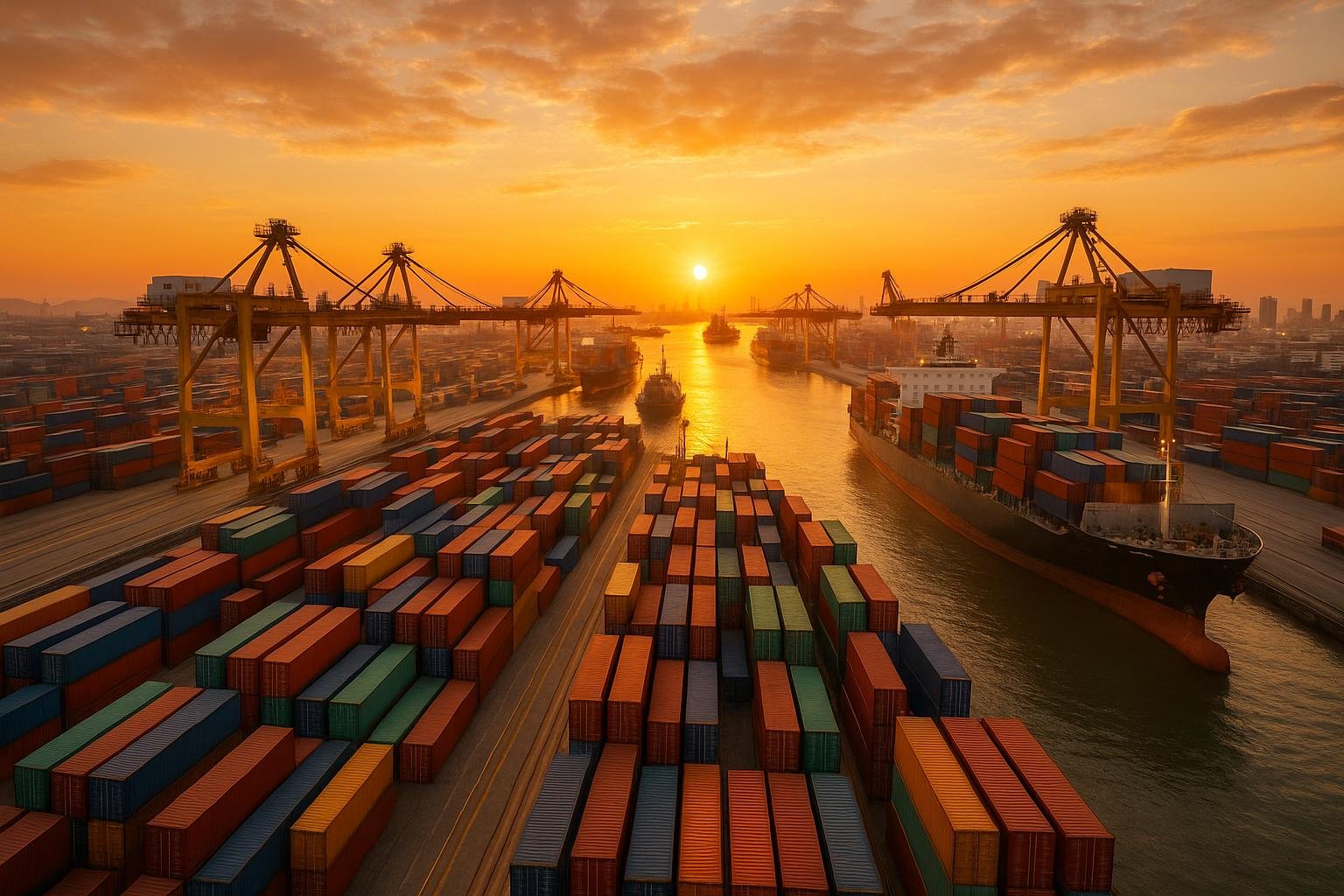
A new DP World study shows 94% of global trade leaders expect trade growth in 2026, with many forecasting acceleration despite rising geopolitical and policy uncertainties.
Global trade executives enter 2026 with notable optimism about trade expansion, even as they brace for heightened policy and geopolitical headwinds, according to a new DP World study.
The Global Trade Observatory Annual Outlook Report 2026, compiled by DP World from responses by some 3,500 sen...
Continue Reading This Article
Enjoy this article as well as all of our content, including reports, news, tips and more.
By registering or signing into your SRM Today account, you agree to SRM Today's Terms of Use and consent to the processing of your personal information as described in our Privacy Policy.
ior supply chain and logistics leaders across eight sectors and 19 countries, found that 94% of respondents expect trade next year to be at least as strong as 2025. More than half of those surveyed , 54% , foresee an acceleration in trade volumes, while 40% predict a steady pace. The survey was carried out ahead of the World Economic Forum annual meeting in Davos, the company said.
That upbeat sentiment sits alongside broad concerns about the operating environment. The report notes that 53% of executives expect high or very high policy uncertainty and that 90% anticipate trade barriers will either rise or remain unchanged. Despite those pressures, only about one in four respondents foresee a negative impact on their own business, with nearly half reporting they expect little or no material effect.
Geography features prominently in the outlook: Europe was singled out most frequently as offering the strongest growth potential in 2026, cited by 22% of participants, followed by China (17%), the wider Asia–Pacific region (14%) and North America (13%). The survey also highlights how firms are adjusting to continued volatility , common tactical responses include diversifying suppliers, building larger inventories, pursuing friend‑shoring strategies and increasing routing flexibility in response to cost, infrastructure and customs constraints.
Customs processing emerged as a persistent chokepoint, with 60% of executives identifying clearance procedures as a leading cause of delays and disruption, reinforcing calls for further investment in logistics hubs, road networks and border‑processing capacity, the report states.
The confidence captured by DP World contrasts with some independent macroeconomic forecasts. According to the International Monetary Fund, global trade growth by volume could slow next year, with the IMF projecting growth of 2.3% in 2026 compared with an estimated 3.6% in 2025, highlighting a gap between corporate sentiment and broader economic projections.
DP World itself has pointed to resilience in recent results as part of the backdrop to its survey findings. The company reported stronger first‑half 2025 performance, with revenue and adjusted EBITDA rising year‑on‑year and container throughput increasing, while maintaining substantial capital investment in strategic markets, according to the firm’s financial disclosures and reporting by industry press.
DP World’s Global Trade Observatory, which aggregates inputs from thousands of logistics executives, is offered as an ongoing resource for tracking shifting trade dynamics and corporate responses, the company says.
Source: Noah Wire Services