


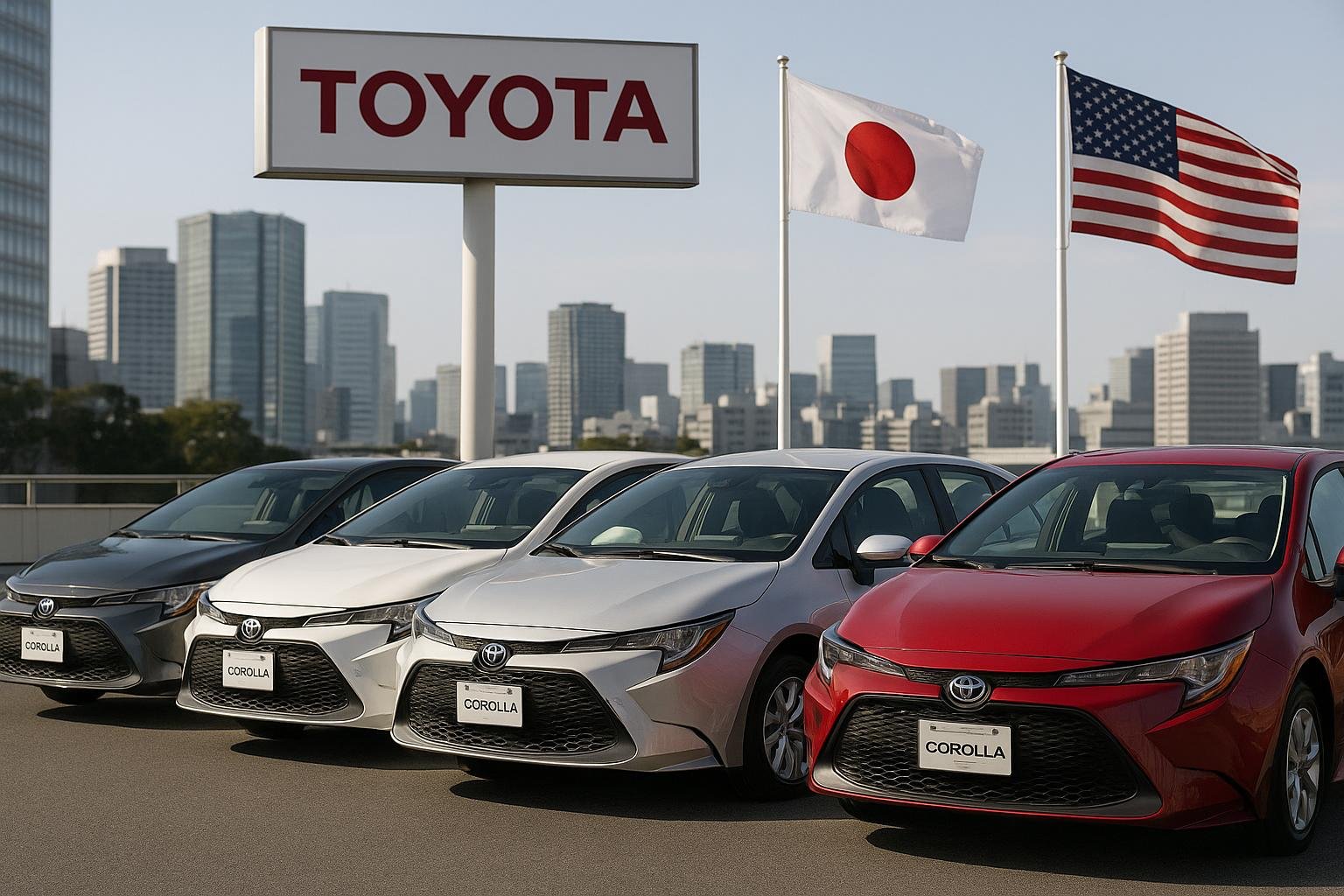
Toyota will begin selling three U.S.-manufactured models in Japan from 2026, blending commercial tactics with diplomatic signalling amid ongoing US-Japan trade discussions, reflecting shifting economic and political dynamics.

Toyota Motor Corporation will begin selling three U.S.-made models in Japan from 2026, a move that combines commercial strategy with clear diplomatic signalling amid renewed U.S. pressure on trade balances.
The company announced on 19 Decemb...
Continue Reading This Article
Enjoy this article as well as all of our content, including reports, news, tips and more.
By registering or signing into your SRM Today account, you agree to SRM Today's Terms of Use and consent to the processing of your personal information as described in our Privacy Policy.
While Toyota framed the decision as part of its global production strategy, the announcement arrives at a time of heightened political focus on trade. President Donald Trump has repeatedly criticised the longstanding pattern in which Japan exports far more vehicles to the United States than it imports, and administration officials have pressed major trading partners to expand purchases of American-made goods. Industry commentators say the shipments are unlikely to generate large near-term profits but carry symbolic weight: “The volumes will probably be modest,” an auto industry analyst told Africa Today News, “But politically, it sends a clear message that Toyota is willing to align with U.S. trade priorities.”
Market observers note several practical hurdles. U.S.-built cars have historically been rare in Japan because of differences in consumer preferences, road conditions and regulatory standards. Toyota has not disclosed pricing or expected sales volumes for the U.S.-made models, saying only that further details will be revealed closer to the 2026 launch.
The move also occurs against the backdrop of recent bilateral trade changes. According to Autoevolution, the U.S.–Japan trade agreement reduced tariffs on Japanese automobiles from 27.5% to 15%, a factor that analysts say has altered commercial calculations and diplomatic rhetoric on both sides. Car and Driver and Autoblog characterised Toyota’s step as part of a broader response to shifting political and economic pressures under the Trump administration, while The Japan Times described it as a gesture intended to strengthen Japan–U.S. ties.
Beyond immediate politics, the strategy helps Toyota hedge geopolitical risk by showcasing American production for global markets. The company is one of the largest manufacturers in the United States and emphasises its U.S. investment record when trade scrutiny rises. Senior executives have argued that demonstrating U.S. manufacturing for sale both at home and abroad may blunt arguments for tariffs or regulatory action aimed at foreign automakers.
Japan remains Toyota’s home market, but sales growth there has been constrained by demographic and economic headwinds. Introducing U.S.-built models will test whether Japanese consumers will embrace vehicles designed primarily for American tastes; industry coverage from Car and Driver and Autoblog suggests Toyota sees the initiative partly as an experiment in product and market alignment.
As the plan unfolds, Toyota will need to reconcile regulatory requirements, consumer expectations and the economics of exporting relatively large, U.S.-spec models to Japan. For Washington, however, the announcement provides a tangible example of a foreign manufacturer expanding the reach of American-made goods, an outcome the administration has sought to highlight as evidence of its trade agenda’s impact.
Source: Noah Wire Services
Subscribe to Industry Updates

