


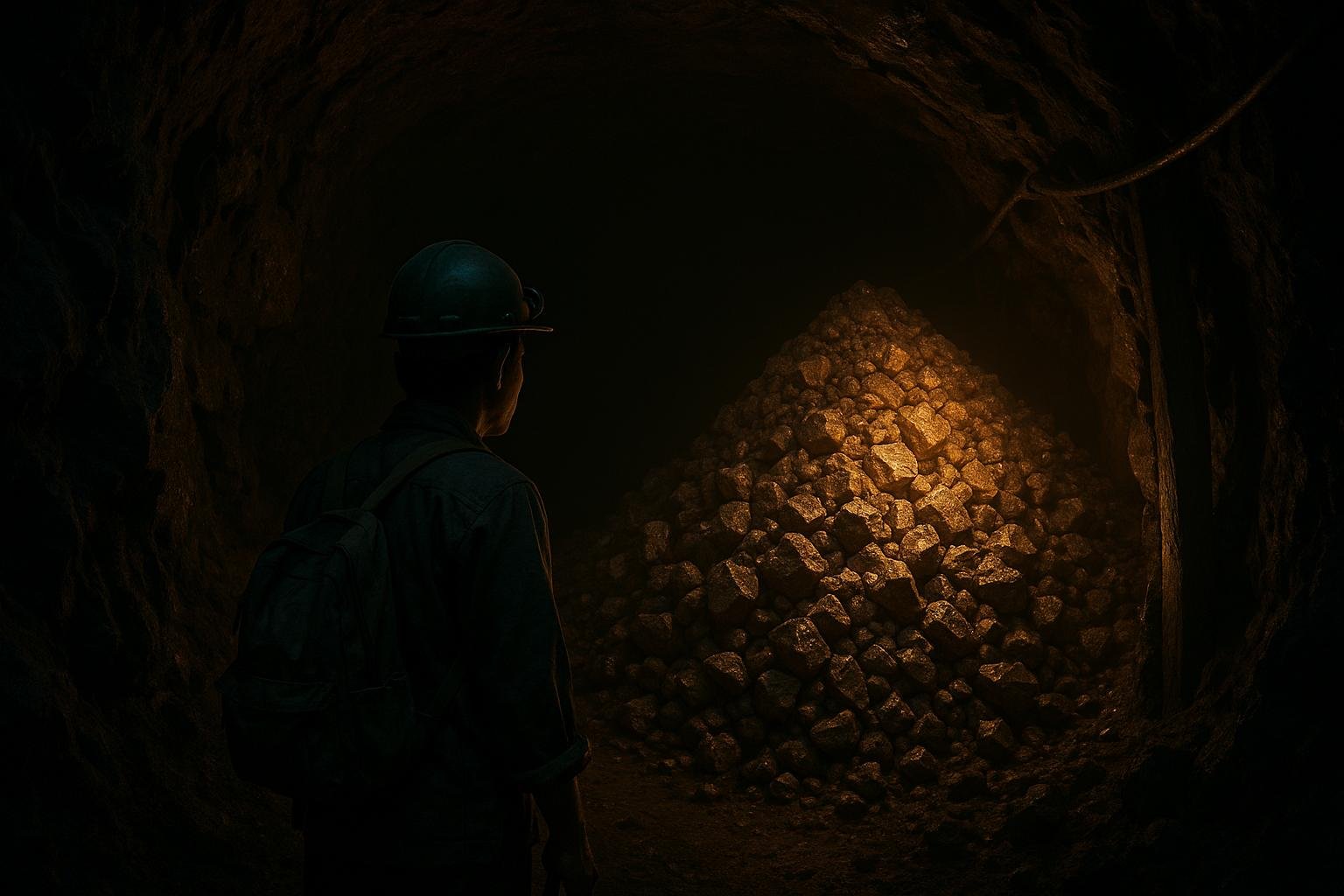
Tin prices surged to $38,000 per tonne in November 2025, driven by supply shortages in Myanmar and Indonesia amidst rising demand from electric vehicles and digital technologies, signalling a new phase of market scarcity and investment interest.

Tin prices surged to $38,000 per tonne in November 2025, marking the highest level in over three years, driven by acute supply disruptions in key producing regions, notably Myanmar and Indonesia. This price peak reflects a profo...
Continue Reading This Article
Enjoy this article as well as all of our content, including reports, news, tips and more.
By registering or signing into your SRM Today account, you agree to SRM Today's Terms of Use and consent to the processing of your personal information as described in our Privacy Policy.
The tin market, with an annual global consumption of approximately 400,000 tonnes, is exceptionally sensitive to supply shocks due to its concentrated production base and limited number of large-scale producers. Myanmar, Indonesia, and selected African and South American operations dominate output, meaning that disruptions in these regions provoke outsized effects. For instance, the prolonged suspension of Myanmar’s Man Maw mine, the country’s largest tin producer, following a regulatory resource audit, has removed a critical supply volume. This suspension has coincided with challenging weather and infrastructure limitations, leaving the market uncertain about when Man Maw might reopen. Similarly, Indonesia’s President Prabowo Subianto’s crackdown on illegal mining operations in tin-rich Bangka and Belitung islands has further tightened the market by targeting a shadow sector possibly responsible for up to 80% of local production. This enforcement has reduced concentrate inventories, constraining refined tin output and feeding the ongoing supply crunch.
In addition, the Democratic Republic of Congo (DRC), home to the Alphamin Resources-owned Bisie mine, which accounts for about 6% of global tin output, has faced operational halts due to rebel activity, compounding supply risks. While some recovery in supply was anticipated, including the expected resumption of shipments from Myanmar’s Wa State after a two-year hiatus, operational and regulatory hurdles continue to cloud the outlook. These factors converge amid historically low London Metal Exchange (LME) stockpiles, which fell to just 2,670 tonnes by September 2025, and a notable shift in market spreads indicating increasing supply tightness.
Demand-side dynamics reinforce the bullish outlook for tin. Essential for electronics manufacturing due to its use in solder, tin’s role is expanding rapidly with the rise of electric vehicles, solar photovoltaic systems, data centres, and advanced semiconductors. These sectors require tin-coated components or tin-based solders for battery management, cell interconnections, and server hardware, among other uses. Projections by the International Tin Association estimate that tin demand could surge by up to 40% by 2030, driven primarily by these electrification and digitalisation trends. This growth trajectory is outpacing mine supply, which has remained subdued due to the scarcity of new projects, long development timelines, modest exploration budgets, and heightened geopolitical risks.
Against this backdrop, investor interest is converging on development-stage tin projects with high-grade, scalable deposits near established tin districts. These assets are benefiting from a repricing linked to scarcity and geopolitical risk, with improved project economics reflecting higher tin price decks that raise net present values and internal rates of return while shortening payback periods. For example, Rome Resources’ exploration efforts in the Walikale Mining District in the DRC, proximate to Alphamin’s high-grade Bisie Mine, exemplify how proximity to proven deposits, coupled with metallurgical testing and local community engagement, can position projects favourably within this tightening market. Rome’s CEO, Paul Barrett, highlights their promising drilling results and metallurgical work, indicating potential for significant resource expansion and illustrating the kind of strategic positioning attracting investor attention.
The broader geopolitical reshaping of tin supply also offers a mixed but cautiously optimistic picture. While conflict and governance challenges in the DRC and Myanmar add layers of operational risk, international diplomatic efforts, such as new US-brokered agreements, are starting to encourage foreign investment and regulatory improvements in these resource-rich but complex jurisdictions. The entry of institutional investors, exemplified by Abu Dhabi’s sovereign wealth fund acquiring a majority stake in Alphamin, signals growing confidence in the region’s long-term prospects.
Market forecasts underscore a persistent tightness, with models suggesting tin prices averaging around $37,392 per tonne in the near term and potentially exceeding $40,000 within a year. Conservative scenarios that envisage partial restarts in Myanmar and eased Indonesian enforcement still project prices stabilising in the $32,000 to $35,000 range, while more severe supply constraints combined with accelerating demand, especially from artificial intelligence data centre expansions and electric vehicle adoption, could push prices beyond $45,000 per tonne.
The current tin market environment emphasises its vulnerability to simultaneous supply shocks and supply chain processing bottlenecks, notably in China, the largest global processor of tin concentrates. Chinese smelters’ reliance on imported concentrates, about 200,000 tonnes annually, means reduced feedstock from Myanmar and Indonesia has sharply curtailed refined metal output. This underscores the broader fragility and complexity of the tin supply chain amid an already constrained production landscape.
In summary, the November 2025 price breakout to $38,000 per tonne is not a transient spike but a clear signal of enduring structural tightness in tin markets. Sustained supply disruptions in Southeast Asia and the DRC, combined with fast-growing demand linked to the global energy transition and digital expansion, are fundamentally repricing tin as a critical technology metal. This dynamic elevates development-stage projects with geologically robust, high-grade resources and strong operational positioning to the forefront of investor interest. As scarcity premiums grow and geopolitical diversification gains momentum, tin could offer one of the most compelling risk-adjusted investment opportunities among critical minerals in the coming decade.
Source: Noah Wire Services
Subscribe to Industry Updates

