


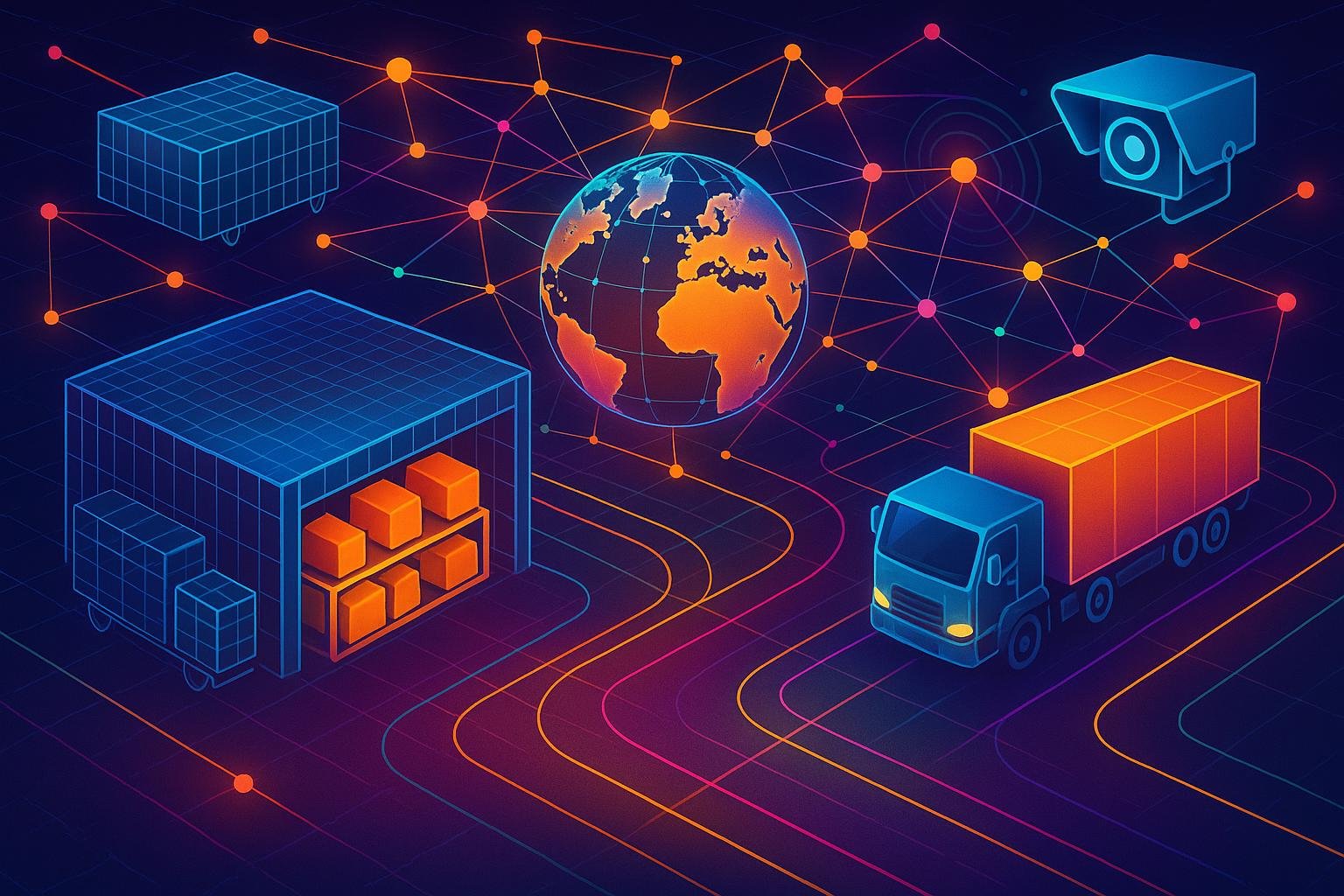
By 2026, the logistics industry is set to transition from incremental digitalisation to a model where autonomous software actively manages physical flows, leveraging digital twins, AI, and pervasive sensing to create self-healing supply chains and redefine operational and commercial paradigms.

By 2026 the global logistics industry has moved beyond incremental digitalisation to a model in which software actively shapes physical flows of goods, remaking risk management, m...
Continue Reading This Article
Enjoy this article as well as all of our content, including reports, news, tips and more.
By registering or signing into your SRM Today account, you agree to SRM Today's Terms of Use and consent to the processing of your personal information as described in our Privacy Policy.
At the core of this shift are high‑fidelity supply‑chain digital twins that mirror factories, ports, vehicles and warehouses in near real time. These virtual models run millions of conditional scenarios to predict knock‑on effects of events such as port congestion or labour stoppages, enabling systems to rebalance inventory across hundreds of urban micro‑hubs before stockouts occur. According to the TechBullion analysis, such simulated environments underpin what industry participants now describe as “self‑healing” logistics, where autonomous software checks alternate carriers, renegotiates spot rates within pre‑agreed limits and updates delivery promises in seconds.
Maritime transport has become a particular locus of automation. Several market studies show divergent estimates for the autonomous‑ships market but agree on rapid expansion. IndustryResearch projects a market value of about USD 21.2 billion in 2026 with a double‑digit compound annual growth rate to 2035, driven by AI, sensor fusion and edge computing; Mordor Intelligence estimates USD 7.6 billion in 2026 rising to USD 12.1 billion by 2031 on the back of decarbonisation and remote pilotage; and other analysts place 2025–26 figures in a range from under USD 13 million in one niche assessment to multi‑billion valuations in broader studies. These differences reflect varying definitions, ranging from software and autonomy modules to full autonomous vessels, and differing geographic and application scopes. Nevertheless, market reports commonly point to fuel optimisation, crew reduction and regulatory testbeds as primary adoption drivers, with shipbuilders and suppliers such as Rolls‑Royce, Kongsberg and Wärtsilä active in trials and product development.
Autonomous surface vessels are complemented by a dense ecosystem of connected freight. Advances in 5G‑Advanced and satellite IoT have turned pallets and containers into data nodes reporting temperature, vibration and carbon intensity. That granular telemetry feeds the digital twin and, in turn, the decision‑making agents that orchestrate routing, consolidation and last‑mile fulfilment. Warehouses have been similarly re‑engineered: increasingly “dark” facilities run round‑the‑clock on fleets of Autonomous Mobile Robots whose swarm behaviours re‑slot inventory dynamically to match sudden demand spikes from retail channels and social media phenomena.
The commercial model of logistics is shifting with technology. Firms are moving from unit‑based charging to outcome‑level contracts in which logistics providers are paid for agreed performance metrics such as on‑time delivery rates or emissions per shipment. TechBullion describes this as Logistics‑as‑a‑Service, a platform‑centred arrangement that decouples capacity from headcount and encourages investment in autonomy to guarantee outcomes. At the same time, reverse logistics has been recast as a revenue opportunity: AI‑driven routing aggregates returns for refurbishment and resale, helping convert a traditional cost centre into a circular‑economy node.
Marketing and customer engagement have adapted to the new emphasis on verified provenance. Brands now use Blockchain‑backed digital product passports and sensor‑verified “carbon paths” to demonstrate not only speed but ethical and environmental credentials. TechBullion calls this “radical traceability”; industry observers note that search and recommendation engines have evolved into procurement tools, what TechBullion terms Answer Engine Optimisation, where carriers compete on resilience scores and live performance data to become the preferred suggestion for AI buyers.
These gains, however, bring acute security and governance challenges. As operations become software‑defined, the attack surface multiplies: a compromised warehouse management system or an unauthorised re‑routing of an autonomous vessel could have systemic consequences. TechBullion warns of “shadow AI” use, employees relying on unauthorised consumer tools to draft shipping documents, which creates compliance gaps. Market analyses echo the concern that cyber‑physical resilience is now as important as locks and fences, and that industry, regulators and governments must accelerate sandboxes and standards to manage transition risks.
The net effect for business strategy is stark. Logistics is no longer an invisible overhead but a competitive differentiator that blends operational agility, sustainability metrics and customer trust. Firms that can combine robust digital twins, authorised agentic AI, and tightly governed autonomy stand to convert supply‑chain complexity into strategic advantage.
Looking ahead, analysts and industry commentators envisage a trajectory toward increasingly coordinated global optimisation: networks that balance flows to minimise waste and stockouts, and that price logistics as deterministic outcomes rather than hours or miles. The timing and shape of that equilibrium will be shaped by regulatory choices, standards for cyber‑resilience and how quickly market participants resolve the practical and ethical questions raised by automated decision‑making. For now, the hallmarks of success are clear, high‑velocity telemetry, enforced governance around AI, and commercial models that reward outcome delivery rather than mere capacity.
Source: Noah Wire Services
Subscribe to Industry Updates

