


**London**: In an interview, Thales Group’s CEO Patrice Caine discusses the need for Europe to enhance self-reliance in defence due to shifting geopolitical dynamics, highlighting increased military spending, interoperability among nations, and the growing role of AI in defence operations amidst challenges posed by reliance on existing procurement systems.
In a recent written interview with Dong-A Ilbo on the 26th of October, Patrice Caine, the Chairman and CEO of Thales Group, addressed the shifting dynamics of defence priorities in Europe, particularly in light of the United States’ perceived distancing from the continent amid geopolitical tensions with Russia. Caine described these developments as a potential “wake-up call for Europe,” indicating an urgent need for self-reliance in national defence capabilities across the European Union.
Caine, who has overseen Thales – the largest defence company in the EU – noted that the conflict in Ukraine and broader geopolitical instability are driving a significant increase in European defence spending. He highlighted that many European nations are pledging to bolster their military investments, but cautioned that rearming efforts will require substantial time to translate into tangible military capabilities. “European countries need to address their budget deficit issues and secure proper budgets to allocate to military orders. However, this is not an easy task,” Caine explained.

He emphasised the complexities surrounding military procurement, noting that current defence ministry systems often slow down contract execution. He called attention to the reliance of many countries on small and medium-sized enterprises, urging for accelerated support to expedite their growth and production capabilities.
Caine further stressed the importance of interoperability among European militaries, promoting a collaborative approach to ensure that military forces can operate effectively together. Thales is leading a consortium named ‘EISNET’, funded by the European Union, which aims to establish open standards for air defence systems to ensure compatibility across member states. This interoperability is deemed critical to protecting EU nations from various threats, including drones and hypersonic missiles.
As European nations seek to replenish their stockpiles following support for Ukraine, there is a noted demand for electronic warfare capabilities, air defence systems, and munitions. Caine specifically pointed to the UK’s requirement for missiles as a clear indicator of the greater defence needs stemming from the ongoing conflict.
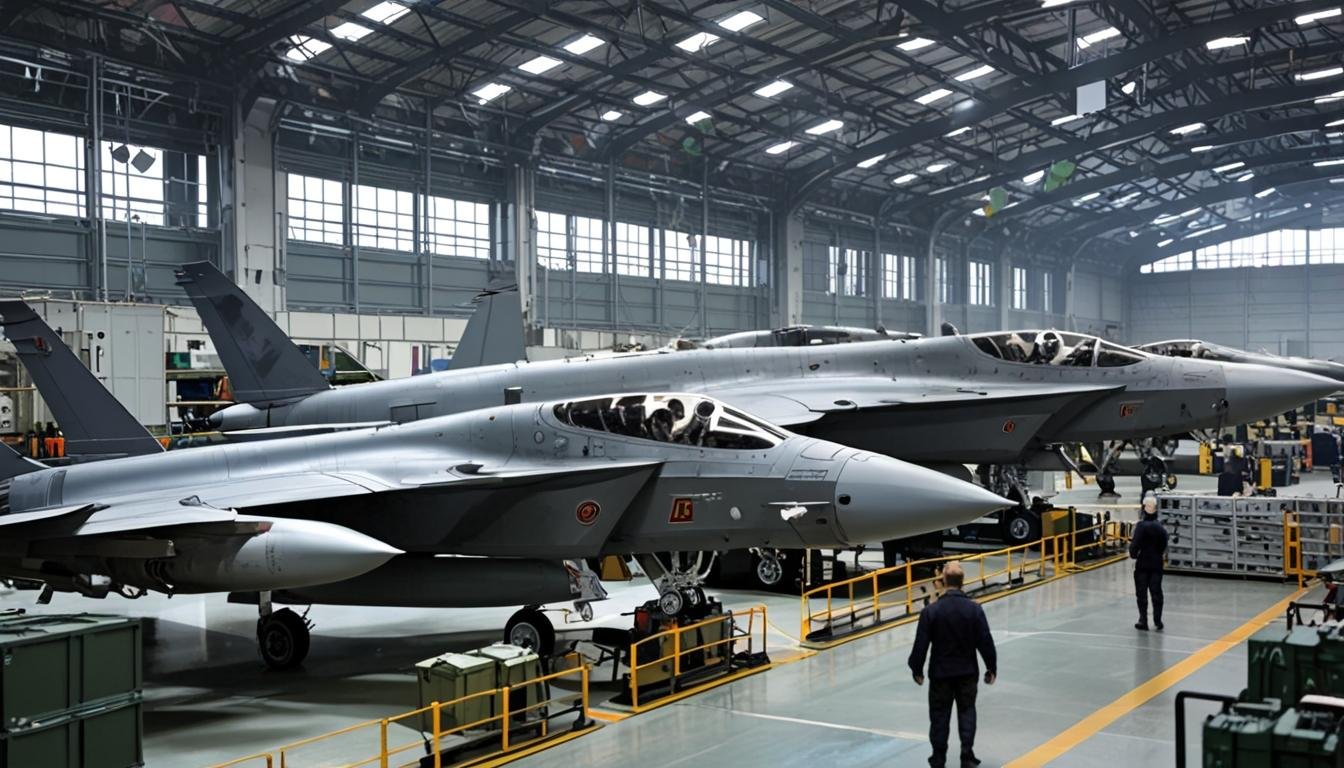
In terms of production, Thales has significantly ramped up its operations, increasing radar manufacturing in its Limours factory from 10 units the previous year to 30. Plans are in place to further increase production to 40 units annually by the end of this year. Additionally, the Belfast facility in the UK has intentions to double its production capacity by 2024 and again by 2028.
Amidst these developments, Caine highlighted the growing role of artificial intelligence in defence operations, noting Thales’s ongoing investments in this area. He stated that AI systems provide a technological advantage, allowing for the detection of threats such as tiny drones that conventional radars may struggle to identify. The firm is committed to ensuring the reliability of its AI technologies, which are subject to stringent military safety standards.
Caine also acknowledged the competitive nature of the global defence market, conveying an optimistic view of South Korean defence companies, which are well-positioned to offer comprehensive solutions and rapid delivery capabilities, an attractive quality for nations needing quick responses to urgent military demands. He suggested that European nations could benefit from partnerships with companies like Thales to enhance their own manufacturing capabilities, particularly in sectors where European technology excels.
Thales Group’s international footprint extends beyond defence, encompassing aviation and cybersecurity, suggesting a robust diversification strategy amidst the evolving security landscape. Caine revealed that last year, the company secured defence contracts totalling €14.723 billion. This reflected not only a domestic upswing but also a growing interest from regions including Asia and the Middle East.
In terms of workforce development, Caine reported that Thales received a remarkable 1 million job applications globally last year, with a strong emphasis on recruiting women into engineering roles. The company has committed to nurturing the science and mathematics skills of young people through partnerships with educational initiatives. Caine noted that establishing an in-house academy system, currently operating in 17 locations with plans to expand significantly, is integral to maintaining expertise within the workforce.
Overall, Patrice Caine’s insights shed light on the current state and future direction of European defence amidst a backdrop of shifting geopolitical realities, highlighting both the challenges and opportunities that lie ahead for the industry.
Source: Noah Wire Services

