


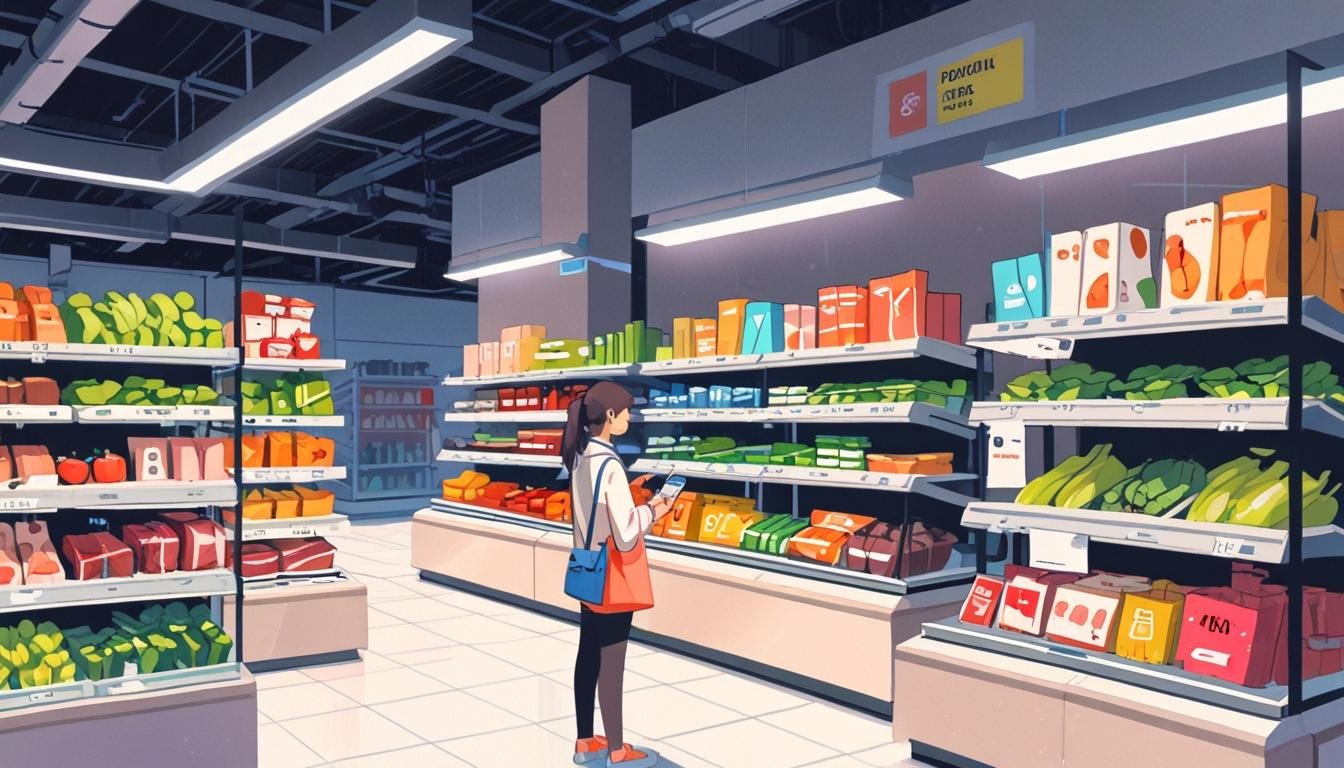
As the retail sector evolves towards a more advanced and interconnected supply chain, Tesco takes a significant step by piloting the next generation of product identification—QR codes powered by GS1. This initiative, occurring in a select number of stores across southern England, aims to redefine how product information is communicated to consumers while addressing critical issues such as food waste and product traceability.
The pilot involves 12 own-brand meat and produce lines, where traditional barcodes have been replaced with GS1 QR codes. This technology not only enhances the accuracy of use-by dates and batch numbers but also provides an essential digital identity for each product. By capturing real-time data from the supply chain to the customer, Tesco claims that these QR codes could significantly minimise errors related to date codes, ultimately protecting consumers from purchasing out-of-date products.

Isabela De Pedro, supply chain development and change director at Tesco, emphasised the transformative potential of this initiative. “While it’s still early days, we’re already seeing the benefits of connecting our products to dynamic digital information,” she stated, adding that this enhanced communication could improve customer experience and create new value within the supply chain. The testing of QR codes also lays the groundwork for further developments, including links to allergen information and sustainability credentials, thus aligning with broader consumer demands for transparency.
The interest in QR codes is not exclusive to Tesco; new research from GS1 UK indicates a growing trend across various industries. Currently, 25% of UK businesses recognise the transition towards adopting QR codes, with 11% having implemented the technology already and a significant 33% anticipating integration within the next year. This shift reflects a collective focus on key business priorities such as supply chain transparency, operational efficiency, and enhanced customer engagement. Iain Walker, director of industry engagement at GS1 UK, noted, “This trial is a clear signal that the retail industry is entering a new chapter.”
Moreover, this pilot is part of a larger global movement to enhance product traceability and regulatory readiness. Initiatives involving QR codes powered by GS1 are currently underway in 48 countries, covering a vast majority of global GDP. Notable multinational brands including Walmart and PepsiCo are already utilising this technology, showcasing its potential to foster supply chain resilience and transparency.
As Tesco forges ahead in this pilot, it complements other sustainability efforts, such as its recent trials involving laser etching product information directly onto avocados, as a means to eliminate plastic waste from barcode stickers. Such innovations indicate Tesco’s commitment to not only enhancing consumer information but also reducing its environmental impact in alignment with its target to achieve net-zero carbon emissions by 2050.
The broader ambition behind this technological transition is clear: By the end of 2027, GS1 envisions a landscape where all point-of-sale systems can seamlessly scan QR codes alongside existing barcodes. The growing awareness and implementation of QR codes signal a transformative era for the retail industry, where transparency and sustainability become interconnected priorities. As Walker concludes, “With awareness rising, implementation accelerating, and the benefits increasingly evident, the shift to QR codes powered by GS1 is becoming a reality for businesses across the UK and around the world.”
Reference Map:
- Paragraph 1 – [1], [4]
- Paragraph 2 – [1], [6]
- Paragraph 3 – [2], [5]
- Paragraph 4 – [3], [7]
- Paragraph 5 – [4], [5]
Source: Noah Wire Services

