


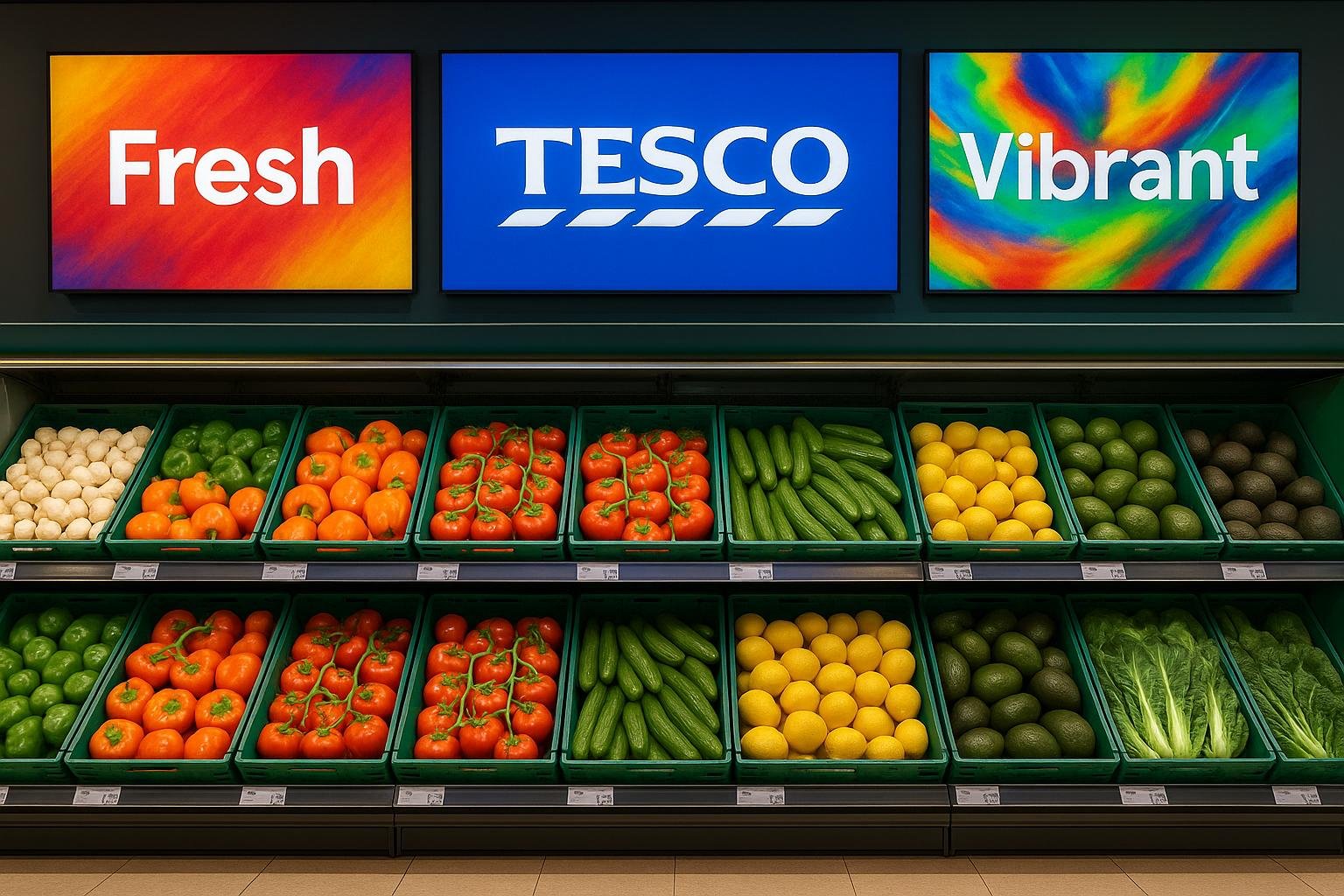
Tesco’s dominance in Britain’s retail landscape faces stern tests as the company balances strong sales growth with intensifying price competition and ongoing supply chain modernisation, positioning itself at a crossroad for future profitability.

Tesco’s enduring centrality to Britain’s retail landscape is being tested and reshaped as the group balances robust sales momentum with mounting competitive pressure and a drive to modernise its supply chain and digi...
Continue Reading This Article
Enjoy this article as well as all of our content, including reports, news, tips and more.
By registering or signing into your SRM Today account, you agree to SRM Today's Terms of Use and consent to the processing of your personal information as described in our Privacy Policy.
According to the original Kalkine Media report, Tesco (LSE: TSCO) remains a dominant FTSE 100 presence, operating a multi-format estate of hypermarkets, supermarkets and convenience stores alongside expanding online channels. That footprint, the report notes, is supported by extensive distribution networks, warehousing and logistics systems that underpin national product availability across fresh, ambient and non‑food categories.
Recent trading and guidance have underlined both the strengths and vulnerabilities of that position. Industry reporting shows Tesco delivered its largest-ever Christmas sales and a 4.1% rise in underlying UK sales during the Christmas period, which helped it maintain its annual profit outlook in an update dated 9 January 2025. Reuters reported that the company credited improvements in value, product quality, innovation, its Clubcard loyalty programme and around £500m of targeted efficiency savings for that performance.citeturn2search0
However, the competitive backdrop has tightened. In April 2025 Tesco warned that annual adjusted operating profit for the year ending February 2026 was likely to fall to between £2.7bn and £3.0bn, below the prior year and earlier analyst expectations; the company attributed the downgrade to intensifying price competition, notably from Asda’s decision to cut prices to regain share. That announcement precipitated a share price fall and underlined the margin squeeze facing the major grocers. Reuters coverage from 10 April 2025 captured Tesco’s cautionary stance.citeturn3search0
The two sets of signals are not mutually exclusive. Data for the first quarter to 24 May 2025 showed Tesco accelerating UK like‑for‑like sales growth to 5.1%, up from 4.3% the previous quarter, with group executives pointing to continued gains in market share and improvements in customer satisfaction and value. Yet management continued to warn publicly about an “intensely competitive market”, signalling that top‑line momentum could sit alongside compressed margins. Reuters reported these results on 12 June 2025.citeturn4search0
Against that market contest, Tesco’s strategic emphasis on efficiency, digital transformation and supply‑chain modernisation is evident. The Kalkine Media analysis highlights the retailer’s investments in online fulfilment, automated warehousing, data-driven category planning and in‑store technology to improve customer experience and replenishment accuracy. Those capabilities were cited as key contributors to recent sales gains and to the company’s wider sustainability goals, including waste reduction and emissions tracking.
Operational examples beyond the UK reinforce this direction. Industry reporting shows Tesco centralised its Hungarian logistics into a single 100,000‑square‑metre distribution hub near Szigetszentmiklós, which became fully operational in March 2025. The facility, developed with renewable‑energy generation and targeting BREEAM certification, exemplifies the kind of scale and sustainability thinking the group is applying to its network.citeturn7search0
Investor scrutiny now focuses on how effectively Tesco can convert scale and digital capability into durable margin resilience. Analysts and market commentary cited by Reuters in April and early June 2025 point to three interlinked battlegrounds: pricing strategy (and responses to rivals prepared to accept lower short‑term profits), the delivery of efficiency savings to offset promotional intensity, and continued innovation in online and convenience formats to protect market share. Some industry commentators believe a prolonged price war is unlikely because of the sector’s financial dynamics; others warn that short‑term disruption to profits is plausible if competitors pursue aggressive discounting.citeturn5search0turn3search0
For consumers and communities the practical effect has been steady availability, a broadened own‑label range and ongoing investment in digital services such as Clubcard personalisation and improved fulfilment options , factors Reuters and the Kalkine report cite as explanatory for recent increases in market share. But for shareholders the narrative is more mixed: strong sales and operational modernisation on one hand, and a nearer‑term profit outlook tempered by competitive pricing pressure on the other.
Looking ahead, Tesco’s positioning within the FTSE 100 means its performance will continue to shape broader market discussions about the resilience of UK retail. The company’s ability to sustain cost efficiencies, defend prices where possible, and extract greater value from digital and logistical investments will be pivotal to converting recent sales gains into consistent profit growth through the 2025/26 financial year. Industry updates across 2025 suggest that while Tesco’s scale and network remain powerful assets, the coming quarters will test how well those assets can be marshalled amid an unsettled pricing environment.
Source: Noah Wire Services
Subscribe to Industry Updates

