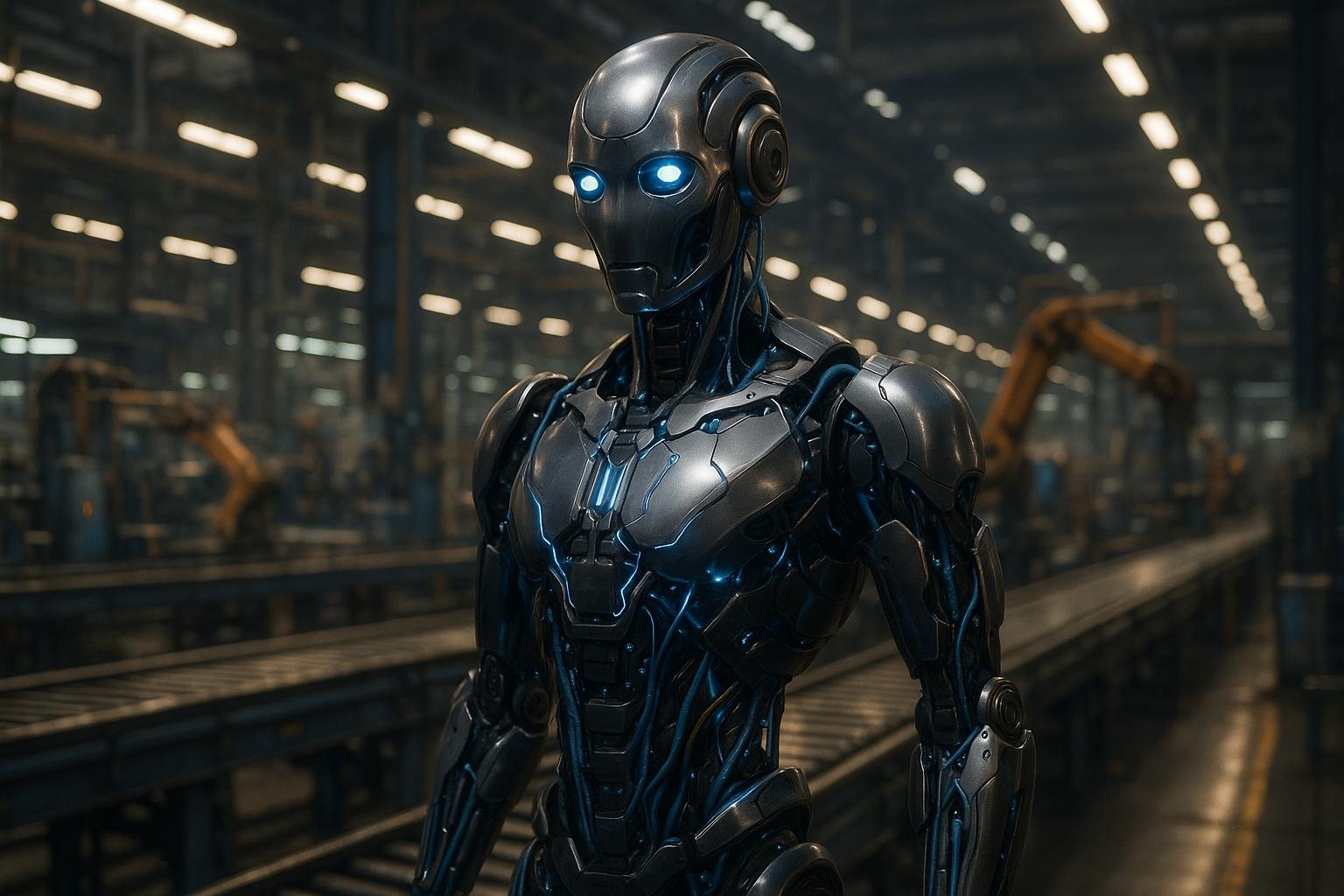
System integrators are repositioning around ‘physical AI’, the integration of artificial intelligence with tangible Machines, driving a new wave of industrial automation across multiple sectors, with key players developing robots and smart systems for factory floors, logistics, and construction.

System integrators that build corporate IT and operational systems are repositioning themselves around “physical AI” , the combination of artificial intelligence...
Continue Reading This Article
Enjoy this article as well as all of our content, including reports, news, tips and more.
By registering or signing into your SRM Today account, you agree to SRM Today's Terms of Use and consent to the processing of your personal information as described in our Privacy Policy.
Physical AI shifts the locus of value from cloud models alone to systems that must perceive, decide and act in messy, real‑world settings. That requirement plays to the strengths of SI firms, which specialise in customising, integrating and operating complex systems at scale for specific factory floors, warehouses and logistics hubs. According to a 2025 Deloitte survey, 22% of companies intend to introduce physical AI, such as humanoid or autonomous mobile robots, within two years. A source from the tech industry said, “Physical AI will become the next core competitive edge for SI companies,” adding, “Almost all industries, including manufacturing, logistics, construction, healthcare, and agriculture, will become new battlegrounds for SI companies.”
Several Korean integrators have already restructured their organisations and R&D efforts around that premise. Lotte Innovate has created a dedicated physical AI unit and is developing a robot‑as‑a‑service offering, coupling its AI platform “iMember” with commercially available hardware to pursue cross‑industry applications from distribution to construction. LG CNS says it is training site‑specific robot control systems using data from industrial settings and working with multiple robot hardware providers in the United States and China, stating, “We are collaborating with various robot hardware companies in the U.S. and China.”
Beyond new humanoid playbooks, SI companies are applying AI to improve established production systems. POSCO DX, an IT arm of POSCO Group, has partnered with leading robot maker Yaskawa Electric to fit vision and classification AI to robots that grade MotorCore components at POSCO Mobility Solution facilities; the company expects the system will roll out to plants in Poland, Mexico and India as well as domestic sites. SK AX deployed an automated logistics stack last year in a North American automotive parts factory, integrating autonomous mobile robots and unmanned forklifts to create a largely human‑free material flow from intermediate goods to shipment. CJ OliveNetworks has been combining robotics and logistics software with global partners to bolster smart manufacturing offerings.
The hardware and platform innovations shown at CES 2026 underline why integrators see an opening. Boston Dynamics’ Atlas humanoid was singled out at the event for its readiness for industrial roles and has been selected by Hyundai Motor Group for deployment at Metaplant America in Savannah, Georgia, from 2028 to handle tasks such as material sequencing and assembly, aiming to raise both safety and throughput. Industry reporting and trade coverage noted Atlas’s award recognition and early factory plans, signalling a shift from lab demonstrations to scheduled industrial trials.
At the same trade show, chip and platform vendors pushed software and silicon to make robots more capable and deployable. Nvidia introduced new simulation and synthetic‑data models intended to speed development of systems that can “see, understand and act,” alongside robotics‑specific reasoning and orchestration tools and more powerful on‑device compute modules. Analysts and platform briefings suggested those advances will help robots interpret ambiguous instructions, plan physical tasks and operate with lower latency, which in turn reduces integration friction for SI projects.
The expanding field of form factors , from humanoids to quadrupeds and wheeled AMRs , is also evident. Tata Consultancy Services demonstrated a quadruped platform for facility monitoring and construction‑site inspection that uses sensors and AI to map environments, detect defects and alert teams autonomously. Such specialised robots illustrate how SI firms can craft vertical solutions that blend perception, analytics and workflow integration to meet customer‑specific safety and quality objectives.
Not all forces favoured by integrators are local. China’s robotics industry continues to scale rapidly, supported by industrial policy and mass manufacturing that have lowered unit costs for many robot types. Industry analysis last year showed China dominating global robot patent filings and installations, a dynamic that makes low‑cost hardware widely available for integrators worldwide but also intensifies competition on price and global supply chains.
For system integrators, the competitive frontier will be the end‑to‑end task: turning sensor feeds and AI models into dependable, maintainable workflows on real plant floors. That requires not only model training but systems engineering, safety certification, interoperability with legacy equipment and lifecycle support. As one industry observer put it, the differentiator will be the ability to convert insights from AI agents directly into reliable motions and procedures on a production line.
Manufacturers and logistics operators are beginning to reward that capability with pilot projects and contracts that bundle hardware, software and ongoing operations. But the market remains fragmented, with multiple hardware vendors, platform providers and integrators testing different commercial models. Some large manufacturers are building in‑house expertise and partnering with robot makers, while others prefer turnkey SI relationships; both approaches are likely to coexist as the technology matures.
The net result is a rapidly evolving commercial landscape in which SI companies that can pair industrial systems know‑how with AI and robotics platforms stand to gain new growth avenues beyond traditional IT services. That opportunity, however, comes with new technical, regulatory and competitive challenges as physical AI moves from demos to everyday industrial use.
Source: Noah Wire Services
Subscribe to Industry Updates