


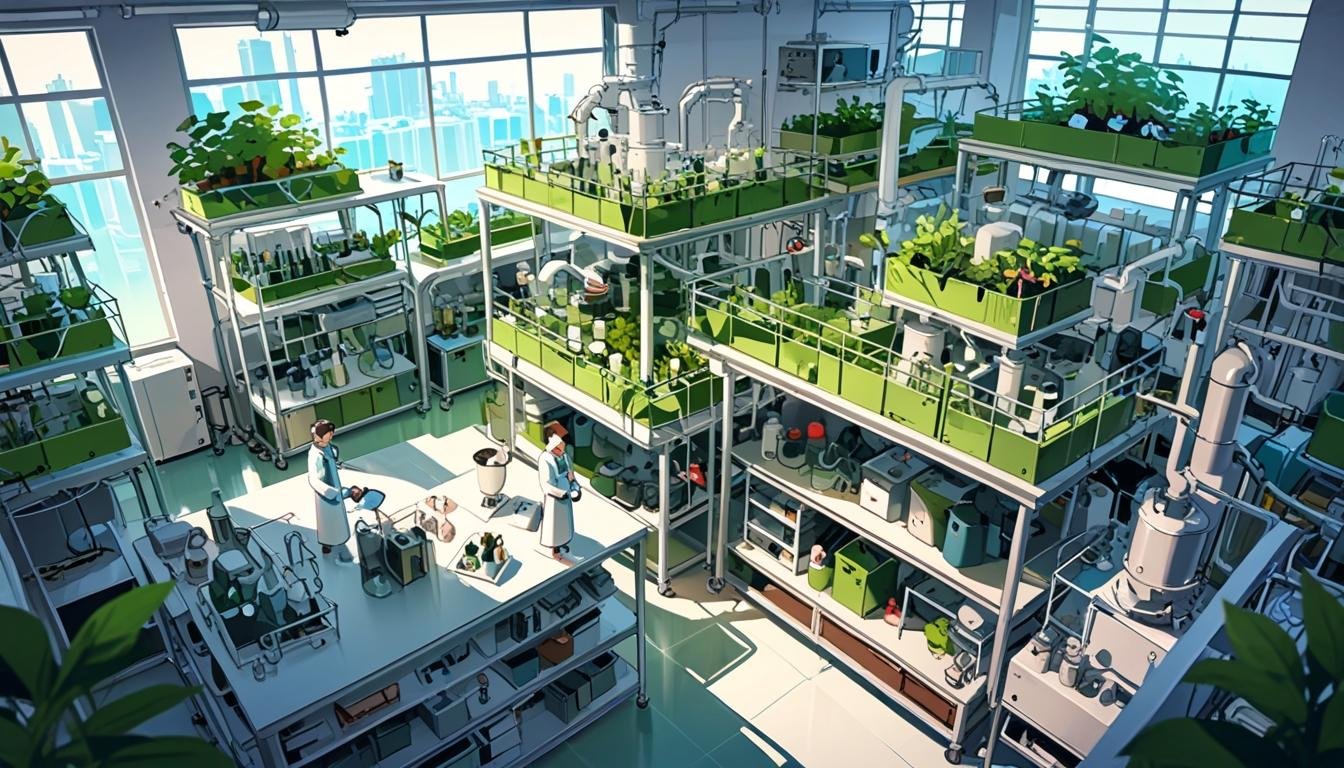
**London**: As biopharmaceutical companies face environmental challenges, leaders like Stefan Lutz from Codexis advocate for innovative solutions such as aqueous-based processes and biocatalysts, aiming to minimise chemical reliance and waste, while firms like Ecolab and Verdot make strides in water management and eco-design.
In the evolving landscape of biopharmaceutical manufacturing, sustainability is taking centre stage as companies strive to mitigate their environmental impact. A range of suppliers providing raw materials, lab equipment, and manufacturing solutions are working to embrace sustainable practices, which are vital for producing ‘green’ products. The emphasis on environmentally friendly methods is particularly critical in the context of raw material sourcing, manufacturing processes, and waste management.
Stefan Lutz, a figure in the sustainability discourse within the biopharmaceutical sector, highlighted the critical role of organic solvents in contributing to global warming potential (GWP). Speaking to Pharmaceutical Technology, Lutz, who serves as Senior Vice President of Research at Codexis, described organic solvents derived from petrochemical sources as a “dominating factor” in GWP. He advocates for the transition to aqueous-based processes as a desirable solution to enhance sustainability metrics. Such technologies not only aim to reduce reliance on these harmful solvents but also optimise the synthesis of target molecules, thereby improving yields and simplifying downstream processing.

In terms of drug production, Lutz pointed out that the manufacturing of small-molecule drugs could benefit significantly from the application of biocatalysts, which could replace conventional stoichiometric reagents and mitigate hazards associated with traditional methods. He particularly noted the environmental footprint associated with the production of therapeutic RNA oligonucleotides, where approximately 3000 kg of acetonitrile is used for every kg produced. “Enabling higher coupling efficiencies, or fragment-based syntheses, will give higher purity, full-length products that could require less or even no further purification,” he stated, alluding to the potential for significant reductions in solvent usage.
Codexis has been committed to sustainability since its inception in 2002, focusing on enzymatic solutions that yield higher outputs with reduced energy consumption and waste. Their newly launched Enzyme Catalyzed Oligonucleotide (ECO) Synthesis platform aims to address these critical challenges by diminishing the dependence on hazardous chemicals and cutting down the use of harmful solvents. Lutz remarked, “By contrast, biocatalytic processes using enzymes generally require milder conditions, utilize renewable resources, and generate less hazardous waste.”
Ecolab, noted for its contamination control strategies and water management programmes, is also making strides in sustainable biopharmaceutical manufacturing. Vice President Christine Yore discussed the pressing challenges of high water consumption and energy use in refrigeration associated with production processes. To combat these challenges, Ecolab advocates for closed-loop systems and water recycling measures. Yore stated, “Our Water for Climate program offers a way for companies to optimise water use across operations, reducing consumption and minimizing environmental impact.” Furthermore, Ecolab’s commitment to achieving clean energy sourcing demonstrates its dedication to incorporating greener practices in production.
On a similar note, Verdot, a provider of purification systems for biopharmaceuticals, has embedded sustainability into its operational framework. Its president and CEO, Charles Ruban, detailed the company’s efforts towards minimising its carbon footprint through eco design and environmental partnerships. He highlighted Verdot’s accomplishment of maintaining a modest carbon footprint of around 100 tons of equivalent carbon per billion euros in revenue. Ruban noted, “We are [designing] energy-efficient equipment that optimizes material use, and we’re partnering with suppliers committed to systemic sustainability,” underscoring Verdot’s approach to sustainability in manufacturing.
As the sector continues to navigate these sustainability challenges, companies are increasingly recognising the necessity of adapting their practices to ensure a viable future for biopharmaceutical manufacturing. The integration of innovative technologies and strategic partnerships appears key in making strides toward environmentally responsible production.
Source: Noah Wire Services

