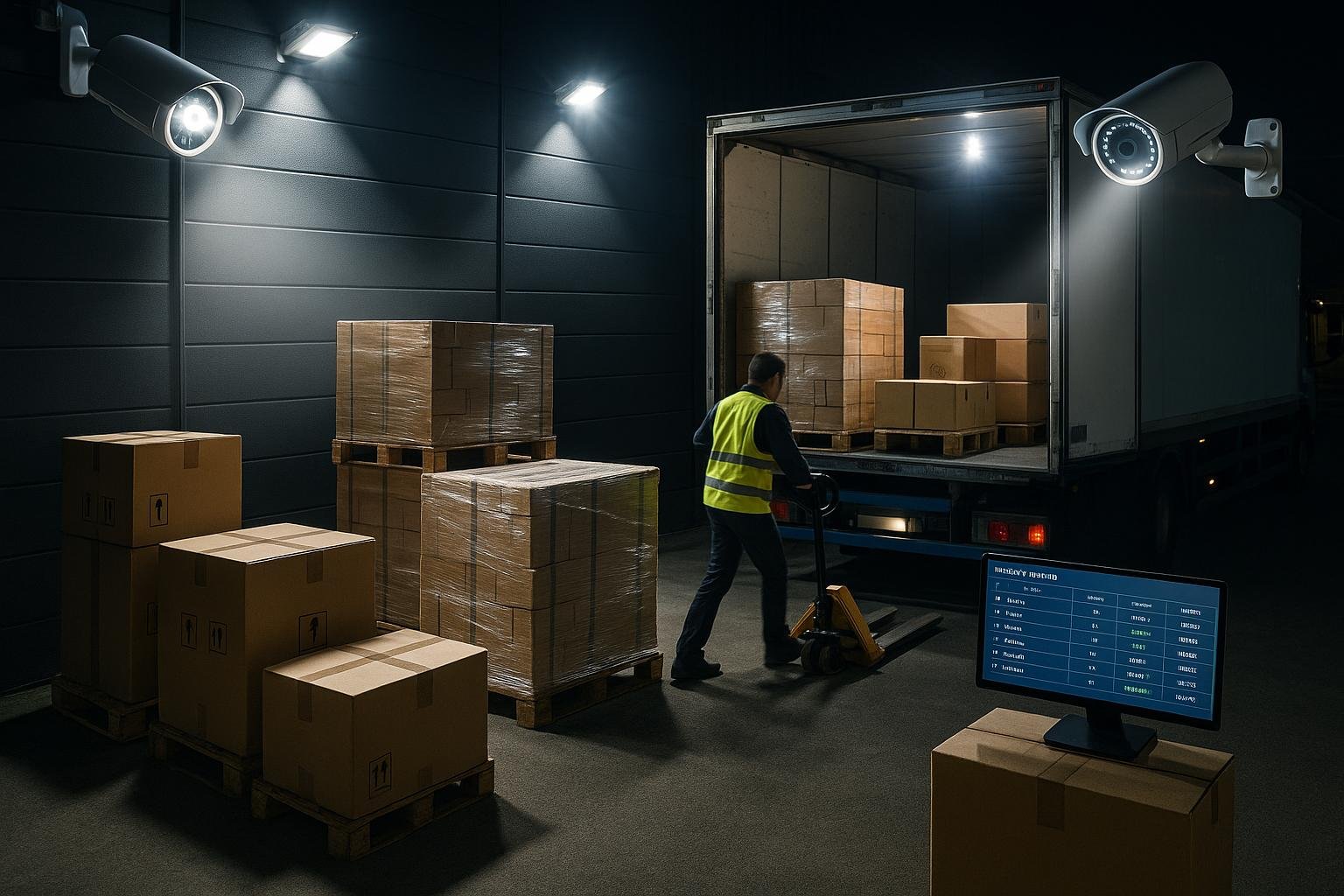
Rising organised theft is transforming supply chain risk management, with industry turning to visual documentation and smarter packaging to safeguard high-value goods amidst increasing criminal sophistication.

Supply chains are under sustained assault from organised thieves and opportunistic pilferers, and the consequences are no longer confined to occasional loss: they are reshaping how brands, packagers and carriers manage accountability. Industry reports point to sha...
Continue Reading This Article
Enjoy this article as well as all of our content, including reports, news, tips and more.
By registering or signing into your SRM Today account, you agree to SRM Today's Terms of Use and consent to the processing of your personal information as described in our Privacy Policy.
According to CargoNet’s 2024 Supply Chain Risk Trends report, theft incidents in the U.S. and Canada rose 27% in 2024, a trend that experts say continued into 2025. CarrierManagement and CargoNet data indicate 2025 losses spiked again, with overall financial exposure rising by roughly 60% to nearly $725 million and average loss values climbing into the hundreds of thousands of dollars. DC Velocity reported 3,625 incidents in 2024, noting that the average value per theft increased year on year. The National Insurance Crime Bureau highlighted the disproportionate share of thefts concentrated in California and Texas, which together accounted for more than half of U.S. cases in 2024. Regional analyses also show hotspots emerging in New Jersey, Indiana and Pennsylvania, while Canada’s Ontario and the Greater Toronto Area reported steep local increases. These varied tallies and emphases reflect differences in data collection and scope, but they all point to one conclusion: criminals are targeting higher‑value cargoes with greater sophistication. Industry sources cite growing demand for items such as cosmetics, consumer electronics, enterprise computing hardware, cryptocurrency mining rigs, food and beverages, and copper products as drivers of the trend.
Traditional tracking methods, barcodes, QR codes and passive RFID, offer limited forensic value when a shipment disappears or arrives short. Those technologies record identity and movement at discrete moments, but they rarely produce an incontrovertible record of condition and seal integrity throughout the warehouse‑to‑dock journey. The result is a frequent stalemate between vendors and retail partners: brands that dispatched complete shipments can find themselves absorbing chargebacks because they lack incontrovertible proof of what happened after a carrier took possession.
A growing number of supply‑chain actors are therefore supplementing conventional tracking with visual proof of condition. Smartphone‑enabled photo and video capture systems allow warehouse teams to document packing, palletisation and seal status with timestamps and geotags before goods depart. That imagery is uploaded to cloud platforms where it can be queried by shipment ID, customer or carrier, creating a searchable evidentiary trail that links packing decisions to what arrives at the retailer. Proponents argue this “see‑and‑prove” approach materially reduces disputes by establishing a time‑stamped visual baseline for each consignment.
Manufacturers and retailers report tangible results. In one case cited by proponents of visual documentation, a global fragrance brand that had been repeatedly penalised by a retail partner used carton‑ and pallet‑level imagery to show goods left the warehouse intact. The evidence revealed tampering occurred during transit: cartons were opened, products removed and seams resealed. Visual records allowed the brand to trace patterns to specific drivers within its freight network; the company terminated several contractors and, according to its account, recovered over $1 million in chargebacks. Industry observers stress that such outcomes depend on cooperation among manufacturers, carriers and retailers, and on the willingness of all parties to share and act on shared data.
Packaging still matters. Proper labelling, serialized cartons, sealed shippers and tamper‑evident materials remain essential first lines of deterrence. But speaking to the broader picture, many in logistics say packaging must now be thought of as the physical anchor for digital traceability: the point where a secure, auditable record is created. Some operations are piloting artificial intelligence to flag packing anomalies in near real time, combining object detection with business rules to stop errors before departure. According to company briefings from providers in this space, these tools can reduce outbound mistakes and create a faster pathway to resolution when losses occur.
Not all data sources align perfectly on scale or geography. For example, DC Velocity and the NICB emphasise the surge recorded through 2024 and the concentration of incidents in California and Texas, while CargoNet and CarrierManagement report a notable escalation into 2025 with larger average theft values and wider geographic dispersion. Truck News highlights Canada’s worsening problem, particularly in Ontario and the GTA, where electronics are singled out as a frequent target. Taken together, these accounts indicate both the persistence and the evolution of the threat: thieves are increasingly selective, favouring high‑margin goods that can be moved through secondary markets quickly.
The commercial consequences extend beyond direct loss. Chargebacks, strained retail contracts and higher insurance premiums all erode margins. For packaging and logistics teams, the imperative is shifting from passive documentation to proactive visibility that can be used as evidence. Industry data shows that when visual proof is available, disputes tend to be resolved faster and recovery actions, whether contractual or criminal, become more feasible.
Vendors of visual‑evidence platforms present their solutions as a practical mitigation step. While vendors highlight successful recoveries and dispute wins, journalists and supply‑chain analysts note that technologies alone are not a panacea. Effective deployment requires consistent processes at the warehouse level, clear data‑sharing agreements across trading partners, and a legal or contractual framework that recognises visual proof in liability allocation. Regulators and insurers may also need to adapt definitions of acceptable evidence to reflect the increasing role of digital imagery in supply‑chain forensics.
As cargo theft grows in frequency and sophistication, the role of packaging teams is expanding from product protection to evidence generation. For brands and retailers seeking to protect margins and mend commercial relationships, the combination of strengthened physical packaging, systematic visual documentation and collaborative data sharing promises a stronger defence. Industry reports suggest that without these adaptations the cost of doing business will continue to rise as organised groups refine their targeting of high‑value loads. The new commercial logic for supply‑chain security is therefore simple: see clearly, share swiftly and act decisively.
Source: Noah Wire Services
Subscribe to Industry Updates