


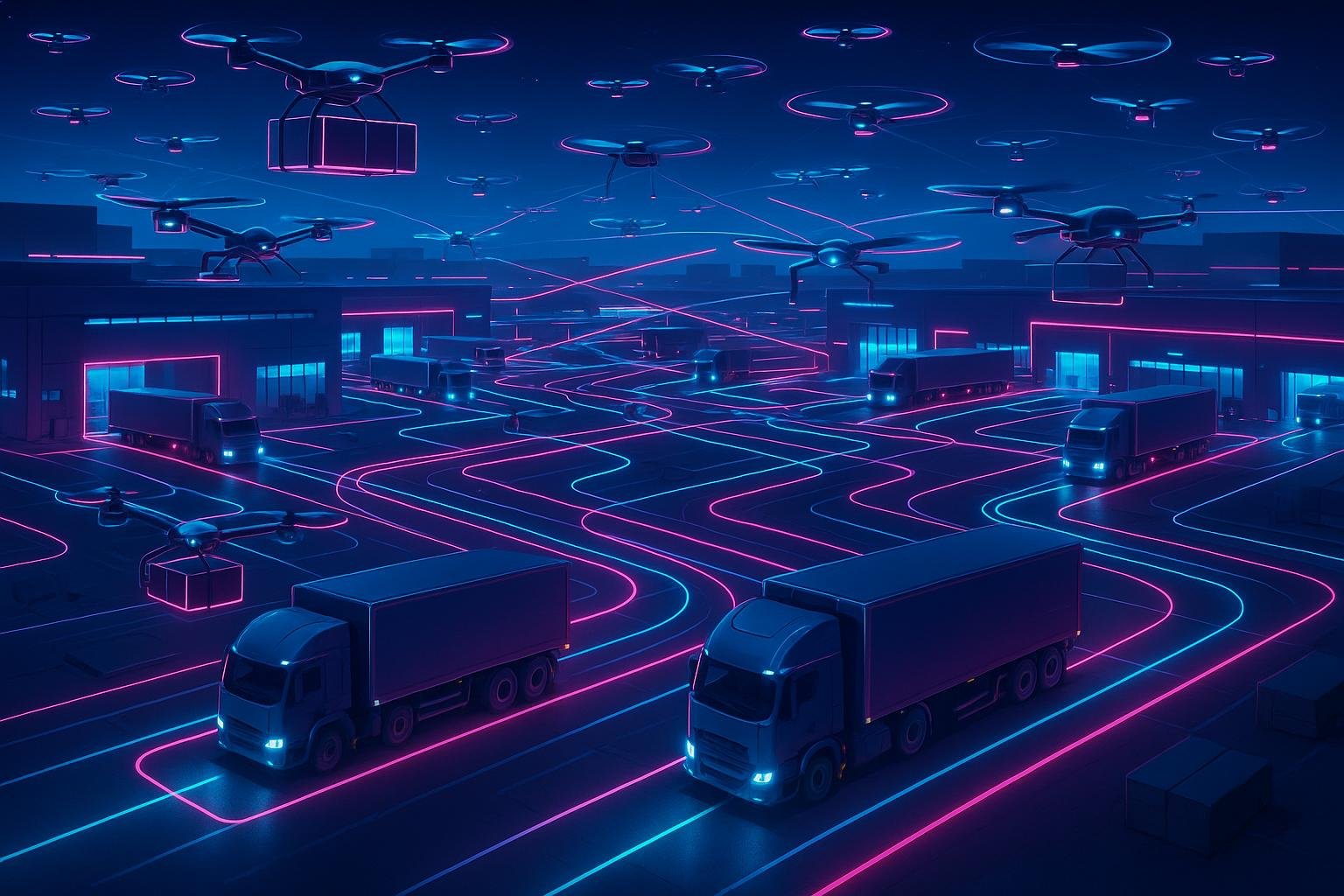
By 2026, logistics providers and shippers are forging deeper alliances, embracing end-to-end visibility, AI-driven analytics, and automation to stay competitive amid tightening capacity and escalating digital demands.

In 2026 the supply chain has shifted from a supporting function to a primary determinant of competitive success,forcing shippers and logistics providers to rewrite how they partner, invest and operate. Penske Logistics frames that transition by retiring th...
Continue Reading This Article
Enjoy this article as well as all of our content, including reports, news, tips and more.
By registering or signing into your SRM Today account, you agree to SRM Today's Terms of Use and consent to the processing of your personal information as described in our Privacy Policy.
According to the 2026 Third-Party Logistics Study, the move toward strategic partnerships is widespread. The research finds that supply‑chain disruptions (81%), collaborative cost optimisation (76%) and digital transformation (57%) are the top drivers pushing shippers into deeper alliances with 3PLs and 4PLs. 3PLs themselves cite demand for end‑to‑end visibility and customised value‑added services as primary reasons to evolve relationships with their customers. Industry data shows both sides increasingly favour contractual mechanisms such as service level agreements, guaranteed capacity and continuous‑improvement targets as the basis for long‑term collaboration.
The practical priorities for 2026 are clear. Organisations must marry holistic visibility with integrated planning and execution, deploy analytics that enable proactive intervention and embed continuous improvement into culture and contracts. Penske says its supply chain management approach acts “as an extension of our customers’ teams” to drive performance, eliminate waste and deliver measurable ROI, and its ClearChain® Technology Suite is presented as the real‑time backbone for those capabilities. The company’s framing reflects broader market signals: control towers, digital twins and predictive analytics are now baseline expectations for firms that want to move from reactive firefighting to anticipatory operations.
Technology investment is doubling down on visibility, automation and agentic AI. Reports from sector vendors and consultancies note heavy deployment of IoT, telematics and cloud visibility platforms to track temperature‑sensitive goods, shared suppliers and multi‑tier risks; adoption of targeted warehouse automation and robotics to offset tight labour markets; and growing use of AI and machine learning to shorten decision cycles. Ryder and other industry observers forecast that practical automation and decision intelligence tools will dominate capital spending, while Appian and others highlight Generative AI and digital workers as mechanisms to convert time saved into higher‑value work.
That digital acceleration brings new fault lines. Multiple studies point to a persistent gap between shipper expectations and 3PL technology capabilities,along with constraints around capital and talent for implementing advanced systems. Cybersecurity risk grows as visibility and connectivity increase,so resilience planning, vendor cyber assessments,multilayer authentication and regular audits, has become an operational imperative. At the same time, supply networks are pushing visibility beyond Tier‑1 suppliers to avoid hidden ESG and compliance exposures,a trend reinforced by AI‑driven simulation and scenario planning.
Market structure and cost dynamics are also in flux. Several industry outlooks expect freight rates to firm selectively in 2026 as capacity tightens in high‑demand corridors,while intermodal and last‑mile networks face pressure from network consolidation and parcel cost inflation. Those forces make collaborative cost‑management mechanisms between shippers and providers more than a nicety; they are now core to maintaining service levels across omnichannel fulfilment and large construction or manufacturing programmes that require tightly synchronised, high‑frequency deliveries.
For senior leaders the takeaway is pragmatic: treat the supply chain as a strategic differentiator and design partnerships and technology investments around shared objectives,accountability and continuous improvement. The successful models blend contracted performance levers, SLA metrics,guaranteed capacity and improvement targets, with real‑time visibility,predictive analytics and targeted automation so that decisions are faster,less wasteful and more resilient to disruption.
The conversation in 2026 is no longer whether to change,but how quickly organisations can operationalise those changes while managing cost,cyber and talent risk. Those that build adaptable, trust‑based partnerships and embed intelligence across planning and execution will lead; those that remain transactional risk falling behind.
Source: Noah Wire Services
Subscribe to Industry Updates

