


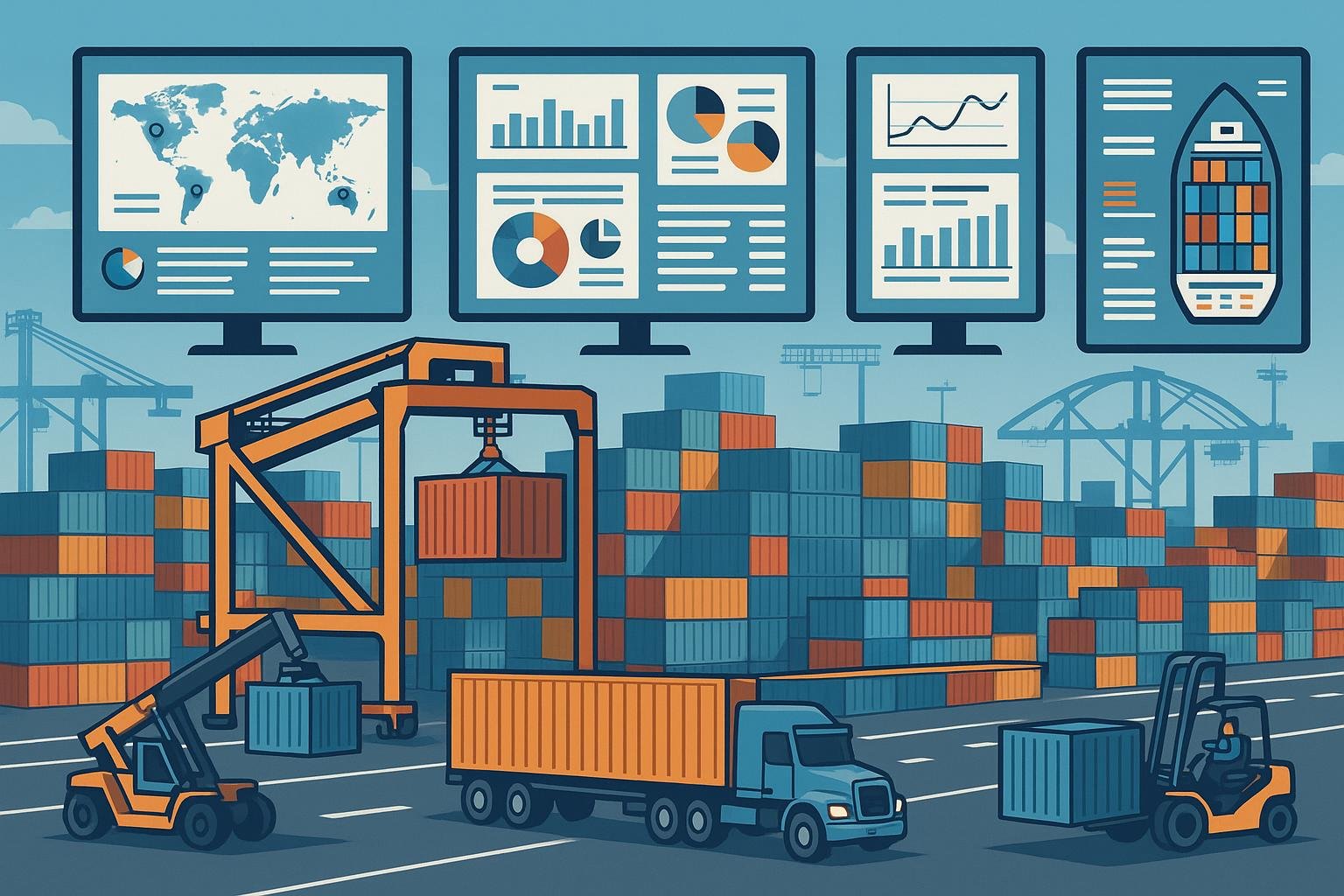
A new analysis reveals that integrating data across global supply chains through control towers and orchestration platforms is vital for operational resilience, with industry leaders pushing for unified visibility to manage disruptions more effectively.

As global supply chains have stretched across continents and channels, the task of keeping every link coordinated has become a central business challenge. A new analysis by Logistics Viewpoints, drawing on a survey and m...
Continue Reading This Article
Enjoy this article as well as all of our content, including reports, news, tips and more.
By registering or signing into your SRM Today account, you agree to SRM Today's Terms of Use and consent to the processing of your personal information as described in our Privacy Policy.
The research highlights why orchestration matters. In an environment where raw materials, manufacturing and final distribution can span multiple countries and service providers, fragmented information undermines responsiveness. According to InterSystems’ survey of 450 senior supply‑chain professionals, nearly half of respondents (46%) said insufficient integration of disparate data sources is the primary obstacle to full orchestration, while 48% identified the lack of end‑to‑end visibility and operational transparency as the biggest operational challenge. The problem is especially acute among senior executives: almost 70% of C‑level respondents flagged visibility shortfalls as a top concern. The complexity of organisations with multiple subsidiaries, divisions and partners was cited by 37% as a further barrier, and 36% singled out poor agility in the face of demand and supply volatility.
Those findings underpin a practical framing for orchestration promoted by the vendors: a See > Understand > Optimize > Act cycle that moves organisations from raw data capture through analysis, decision‑modelling and execution. The model is intended to turn faster sight of events into clearer context, better plans and timely interventions, either automated or human, so that disruptions are handled with minimum business impact.
Industry respondents believe the control‑tower concept is central to that transition. InterSystems’ materials report that 85% of survey participants think an “ultimate control tower” offering a unified view of data would most improve orchestration. Proponents say such a platform can detect exceptions, prescribe corrective options and shorten time‑to‑decision by integrating predictive models, automation and sensor feeds without requiring replacement of existing transactional systems.
Vendors emphasise the practical benefits. InterSystems points to a European example in which a €4.2 billion logistics group consolidated data from 120 subsidiaries into a single operational layer. The company said the initiative reduced partner onboarding from months to days and cut customer response times from hours to minutes, illustrating the operational gains possible when data silos are removed. Industry collateral and technical guides from InterSystems describe its Supply Chain Orchestrator as a data platform that harmonises disparate sources, normalises information in real time and surfaces prescriptive insights for exception management.
Independent observers note, however, that control towers are not a panacea. Achieving genuinely end‑to‑end transparency typically demands more than technology: governance, data stewardship, common semantics across partners and clear operational playbooks are all needed to make real‑time signals actionable. Integration work can be time‑consuming and costly, and without executive alignment the same legacy silos that frustrate operations can persist around process and accountability. Moreover, while sensor networks and AI models can improve detection and forecasting, their value depends on data quality and the willingness of trading partners to share timely information.
For supply‑chain executives, the practical pathway therefore combines several elements: prioritise integration of high‑value data domains that drive delay or cost, standardise data models and exception rules, embed predictive analytics into decision workflows, and establish escalation and remediation protocols that mix automation with human oversight. Where those building blocks work together, companies can accelerate contingency planning, reroute inventory or reschedule production with far less disruption.
The market response is already multidimensional. InterSystems and other vendors are marketing platforms that claim to deliver rapid time‑to‑value by connecting to existing enterprise systems, ingesting IoT and carrier feeds, and applying AI/ML to generate prescriptive actions. According to the eBook accompanying the survey, access to near‑real‑time, reconciled data is a prerequisite for those applications to deliver measurable improvements in cost, service and sustainability.
As supply chains continue to expand in geographic and functional scope, orchestration will remain a focal point for executives seeking resilience. The debate is shifting from whether orchestration is desirable to how organisations stage investment and governance to make it effective. Technology can provide the lenses and levers, but the decisive gains come from aligning people, processes and data so that the control tower becomes an operating nerve centre, not merely a dashboard.
Source: Noah Wire Services
Subscribe to Industry Updates

