


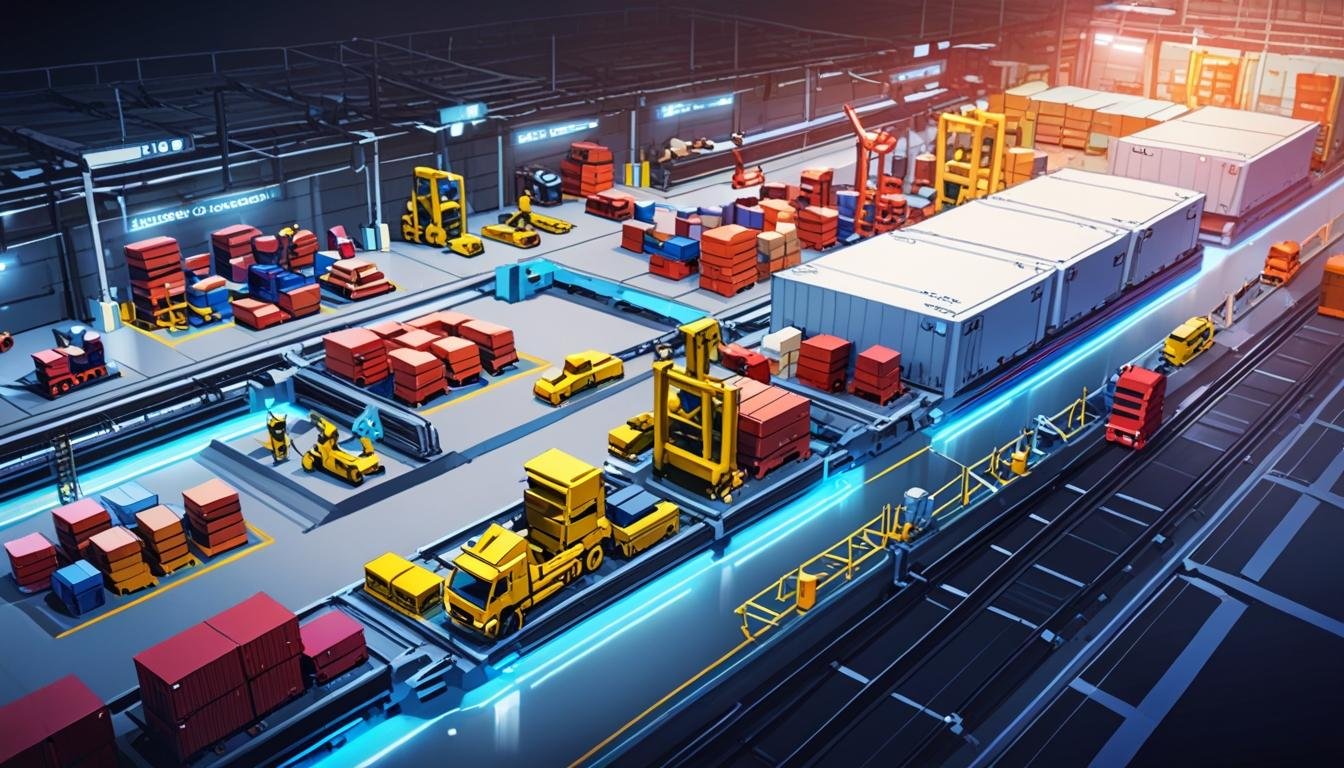
**London**: A report by MHI and Deloitte indicates that over half of supply chain leaders plan significant investments in technology, with 60% anticipating over $1 million in spending. The report forecasts substantial growth in areas like AI and inventory optimisation as businesses adapt to economic challenges.
A report jointly released by MHI and Deloitte reveals that over half of supply chain leaders are poised to increase their investments in technology and innovation, with 60% indicating plans to spend over $1 million in the coming years. Notably, 19% of these leaders project expenditures exceeding $10 million.
The findings are presented in the 2025 MHI Annual Industry Report titled “The Digital Supply Chain Ecosystem: Orchestrating End-to-End Solutions,” which examines trends and technologies that are reshaping supply chains. The report highlights an anticipated rise in the adoption of various technologies, predicting significant growth in the following areas over the next five years: Inventory and Network Optimization (92%), Cloud Computing and Storage (91%), and Sensors and Automatic Identification (88%).

The report emphasizes the necessity of end-to-end supply chain orchestration—an integrated approach that unifies all stages of the supply chain to enhance competitiveness. “These are exciting times for the supply chain industry as we see the orchestration of technology and talent coming to the forefront,” remarked John Paxton, CEO of MHI, adding that the balance between human expertise and technological advancements will be crucial for improving efficiency and sustainability.
The adoption of artificial intelligence (AI) in supply chains is also set to surge. Currently, 28% of respondents report using AI, with an additional 54% planning to implement it within five years. This could increase AI utilisation to approximately 82% by 2029. The technology promises to enhance various supply chain processes, with ‘agentic AI’—capable of operating autonomously—offering quick solutions to disruptions and improving visibility and forecasting accuracy.
Financial pressures and uncertainty in the economy currently rank highest among factors influencing supply chains, with 38% of leaders identifying inflation as a primary concern. Other notable issues include workforce shortages, the need for supply chain agility, and inventory challenges.
Amidst these challenges, several technology-specific trends are emerging. Cybersecurity risks from supply chain digitisation are growing, necessitating heightened attention to data security. Additionally, the lack of accurate real-time data remains a critical obstacle to achieving effective supply chain digitisation. The ongoing rise of e-commerce also challenges companies to enhance responsiveness in order fulfillment.
Wanda Johnson, Supply Chain Technology Fellow at Deloitte Consulting, emphasised that leaders must ensure seamless integration across supply chain components to boost efficiency and meet evolving customer expectations. Moreover, the report contains practical case studies and strategies for implementing technological innovations.
The insights from the 2025 report are based on a survey conducted with over 700 supply chain and manufacturing leaders, primarily occupying executive roles. The sample encompasses a diverse range of companies, 53% of which reported annual sales exceeding $50 million, and 21% reported revenues of $1 billion or more.
Source: Noah Wire Services

