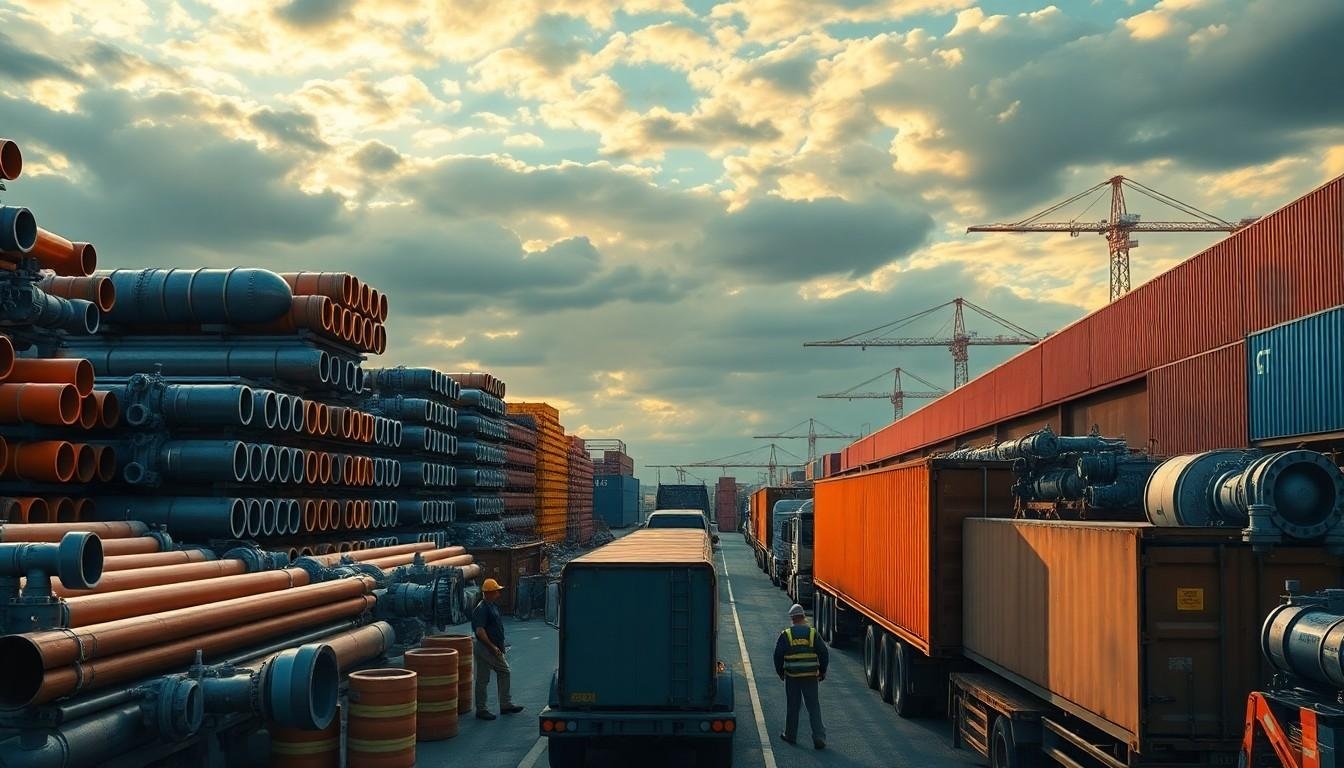
Demand for pipe, valves and fittings is climbing sharply as a wave of energy, data-centre and infrastructure investment collides with tight industrial supply chains, a combination that is already pushing lead times out into 2027 and beyond in some product lines.
The backdrop is a volatile energy market shaped by renewed tensions in the Gulf. AP reported that oil prices fell on Sunday after President Donald Trump signalled a pause in further strikes on Iran and a return to negot...
Continue Reading This Article
Enjoy this article as well as all of our content, including reports, news, tips and more.
By registering or signing into your SRM Today account, you agree to SRM Today's Terms of Use and consent to the processing of your personal information as described in our Privacy Policy.
iations. Reuters has similarly described the Strait of Hormuz as central to global crude and gas flows, making any disruption there a risk not only for shipping but also for prices across the broader industrial economy. The latest reporting suggests the administration has shifted, at least for now, from escalation towards diplomacy, even as Iran has publicly denied some of the claims around talks.
That uncertainty matters for PVF markets because the sector sits at the intersection of energy, utilities and large-scale construction. Demand for carbon steel pipe, fittings, flanges and valves is rising across oil and gas, LNG, power generation, advanced manufacturing and artificial intelligence-related infrastructure. In particular, data-centre growth is creating fresh demand for natural gas-fired power and the pipework that supports it.
Projects are moving quickly. Energy Transfer has approved an expansion of its Transwestern system, with the enlarged Desert Southwest pipeline designed to move Permian Basin gas into Arizona, New Mexico and Texas. Chevron, meanwhile, has entered a long-term power supply agreement with Microsoft, as the technology group develops a major AI campus in West Texas. Dominion Energy South Carolina and Santee Cooper also plan a $5bn gas-fired plant that would reuse a retired coal site, underscoring how utilities are leaning on gas to meet new load demand.
That surge is filtering through the supply chain. Manufacturers are extending delivery schedules as order books swell, and offshore producers of seamless carbon steel pipe are now quoting into late 2027, with some availability stretching into 2028. Freight and container constraints are also keeping imported material expensive and difficult to secure. Industry participants say shortages are appearing not only in pipe, but also in carbon steel fittings and flanges.
Domestic pricing has moved higher in flanges and remains under pressure more broadly, while butt-welding fittings have so far been steadier. Even so, suppliers expect further increases if raw material costs, freight charges or capacity bottlenecks worsen.
The acquisition market is reflecting the same industrial growth story. CRH has agreed to buy Arcosa in an all-cash deal valued at about $8.5bn, while Ferguson has agreed to acquire FloWorks for $1.6bn from Wynnchurch Capital. Both transactions point to continued appetite among large distributors and materials groups for businesses tied to infrastructure, energy and non-residential construction.
The workforce side of the industry is also under strain. The PVF Roundtable says training and recruitment remain urgent priorities, and its charitable foundation has awarded nearly $3m in scholarships for PVF-related education and technical training. With demand rising across so many end markets, the industry’s challenge is no longer just sourcing material, but also securing enough skilled labour to design, distribute and install it.
For contractors and project owners, that means earlier purchasing decisions, tighter coordination and more conservative scheduling assumptions. In a market where geopolitical shocks, energy demand and data-centre construction are all moving at once, procurement discipline is becoming as important as price.
Source: Noah Wire Services