


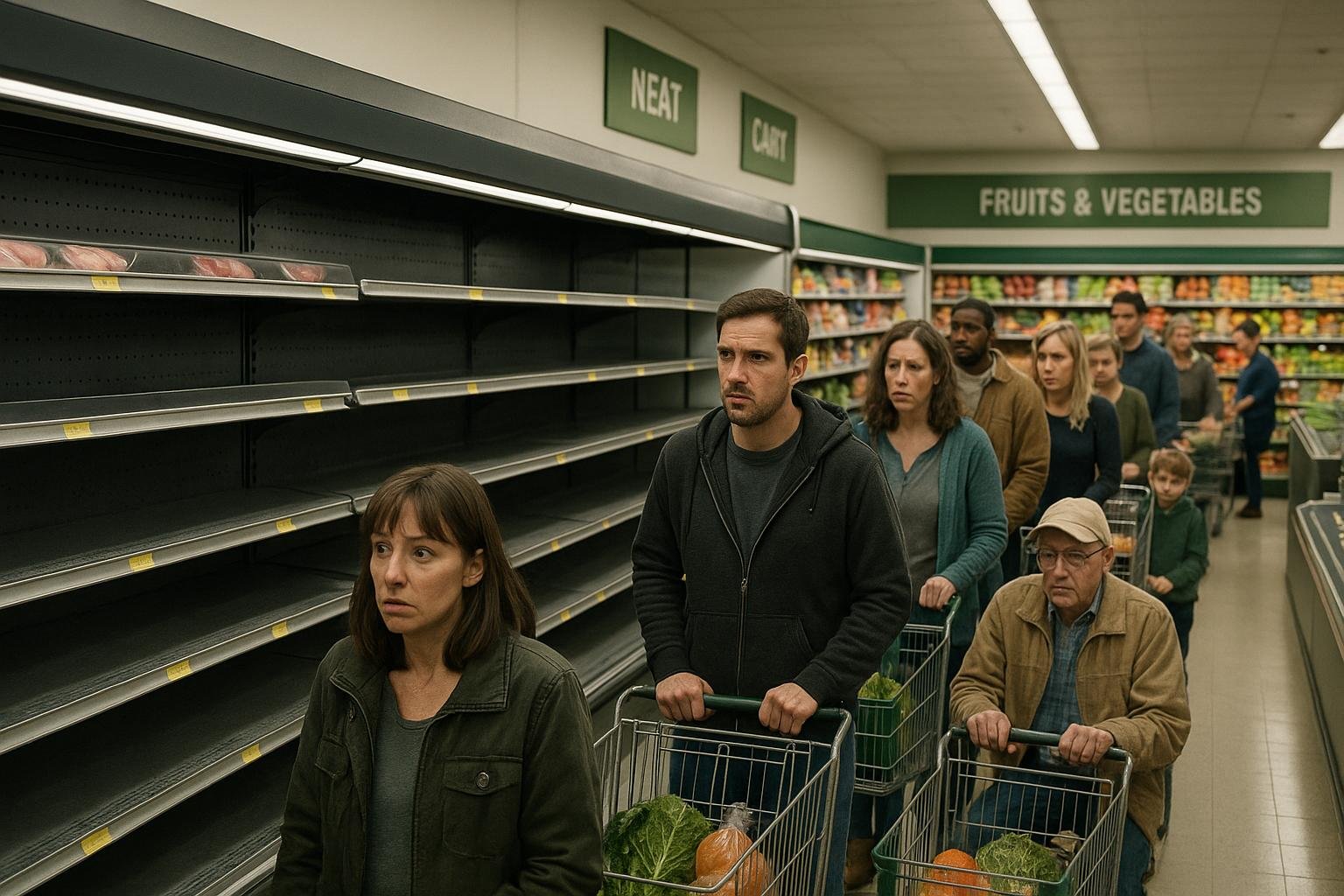
A new report highlights how product availability is overtaking price as the key driver of customer loyalty in UK grocery shopping, with stock shortages risking £2.1 billion in lost sales and reshaping retail strategies.

A study by DHL Supply Chain and Retail Economics finds that product availability is now a decisive factor in where UK shoppers choose to spend, with stock shortages threatening an estimated £2.1 billion of grocery sales.
The report, The Availabi...
Continue Reading This Article
Enjoy this article as well as all of our content, including reports, news, tips and more.
By registering or signing into your SRM Today account, you agree to SRM Today's Terms of Use and consent to the processing of your personal information as described in our Privacy Policy.
That shift is already reshaping loyalty patterns. According to the report, 44% of consumers said they had either switched or added a supermarket in the past year because of stock availability problems, a figure that rises to almost two‑thirds among those under 45. The research also found that 59% of respondents cite availability as a reason for shopping across multiple stores.
Convenience formats are particularly exposed. Although they account for about one‑fifth of grocery sales, convenience stores contribute almost half of the sector’s displaced spend caused by stock‑outs. The report notes availability in convenience outlets typically sits in the low‑to‑mid 80% range, compared with better than 90% in supermarkets and hypermarkets, and 63% of shoppers believe availability is worse in convenience stores.
The authors present availability not simply as an operational metric but as a signal of reliability that underpins trust and repeat custom. Nick Archer, MD, Convenience and Consumer at DHL Supply Chain, said: “The research shows that even small stock gaps can have a significant impact on how shoppers feel about a retailer. Despite the pressure on shoppers’ wallets, loyalty is being driven by more than price. In a market where customers can switch stores with ease, availability is much more than an operational metric. Being competitive in today’s market requires precision. Retailers and their partners need to be able to predict disruption, integrate data and execute efficiently”.
Richard Lim, chief executive of Retail Economics, emphasised changing shopping patterns as a driver of rising expectations: “In today’s environment of busy lifestyles, hybrid working and smaller, more frequent shopping trips, customers expect to find what they need quickly and easily. This is not only limited to grocery, but in all retail sectors, from fashion to beauty. Convenience comes down to having products there when the customer needs them, and availability has become the clearest sign of reliability. Retailers who get it right will be the ones who earn trust and lasting loyalty”.
Industry observers say the findings underline the growing commercial return from investments in forecasting, replenishment and data integration, and the reputational cost when those systems fail. For smaller forecourt and convenience operators the challenge is acute: lower stock coverage combined with smaller assortments and tighter supply chains magnifies the effect of each missing item.
The report frames availability as a strategic issue that touches margin, customer retention and format choice. It recommends that retailers and logistics partners focus on predictive analytics, closer supplier collaboration and faster in‑store execution to reduce stock gaps and stem lost sales.
The Availability Effect is available for download from DHL Supply Chain and Retail Economics.
Source: Noah Wire Services
Subscribe to Industry Updates

