


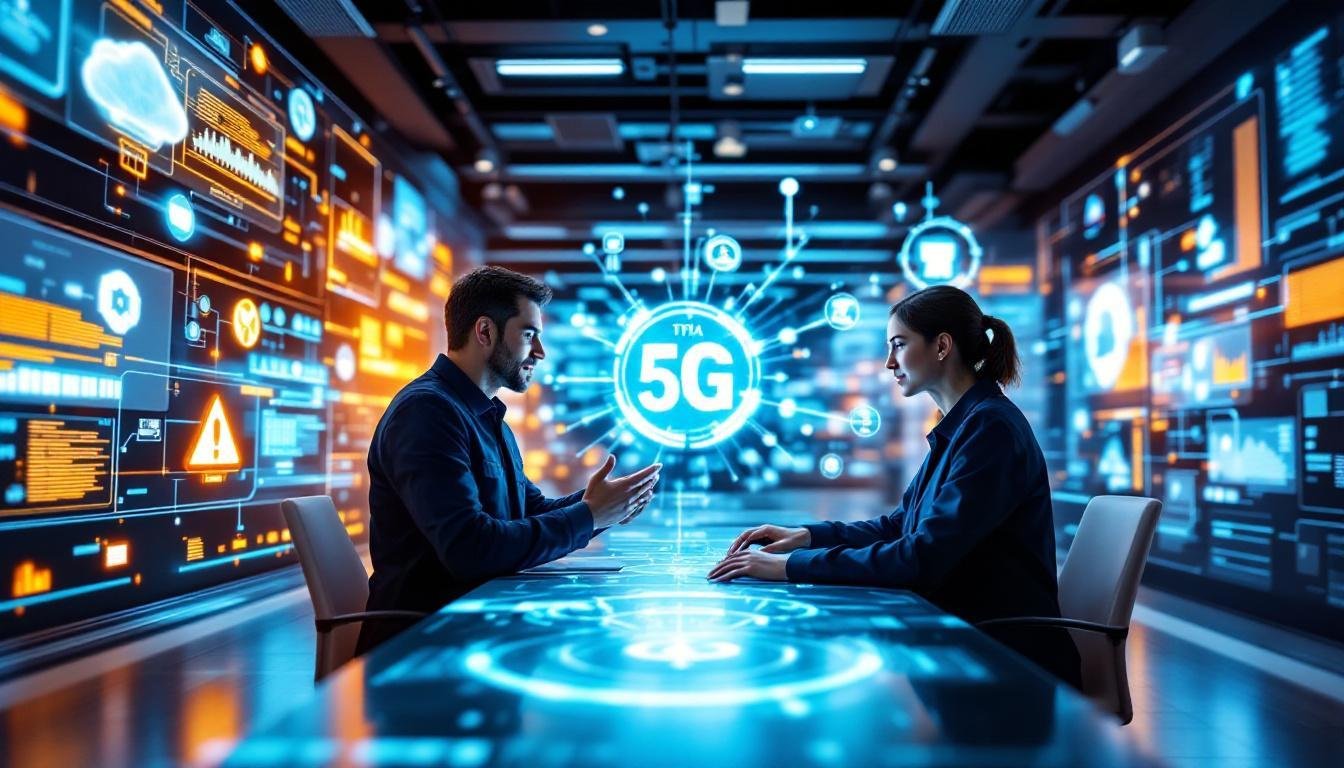
In the evolving landscape of global digital governance, the collaboration between Spain and China through Huawei’s 5G initiative stands out as a nuanced geopolitical experiment, framed by technological innovation and regulatory complexity. At the Beijing-Barcelona digital service centre, Spanish and Chinese engineers are working together to shape a new kind of digital infrastructure—one not built of bricks and mortar, but of code, bandwidth, and mutual trust.
Huawei’s investment in Spain is highly strategic. Spain, as an EU member state with a comparatively open regulatory environment and a strong push for digital modernization, offers fertile ground for testing cooperation between the distinct regulatory regimes of China and the European Union. This partnership illustrates how the two powers might bridge the divide between the EU’s Digital Markets Act, which champions data openness, interoperability, and user empowerment, and China’s Data Security Law, which prioritizes national security and a guarded approach to cross-border data flows.

For small and medium-sized enterprises (SMEs), navigating these dual regulatory frameworks is a challenge. SMEs often lack the capacity to manage complex legal landscapes, and Huawei’s infrastructure could provide a crucial bridge, streamlining compliance and reducing the cost of innovation. For example, a Barcelona-based AI startup may access Huawei’s advanced computing resources while assuring its European clients that their data protection complies strictly with EU privacy standards. This cooperation is not about fully harmonizing legal systems but about creating regulatory “translation” protocols that enable mutual understanding without requiring complete legal equivalence.
The joint digital service centre represents a rare real-world example of how two differing governance frameworks can coexist and learn from each other. Shared principles in national AI ethics, such as transparency, non-discrimination, and accountability, present common ground for interoperability despite divergent philosophical foundations. Trust, forged through practical cooperation, becomes the key infrastructure, supported by protocols, auditing tools, and personal relationships rather than merely by physical technology infrastructure.
However, this partnership unfolds amid significant geopolitical tensions and security concerns. The European Commission has repeatedly urged caution, recommending that member states limit or exclude Huawei from critical 5G infrastructure over security fears. Spain’s decision to award Huawei a €12 million contract to manage the storage and classification of judicially authorised wiretaps has further intensified scrutiny. This move contradicts the Commission’s guidance and has sparked unease among Spanish law enforcement, concerned about potential national security risks linked to Huawei’s ties to the Chinese state.
These security concerns are echoed by the United States and European Union, with officials warning about Huawei’s possible influence on sensitive communications infrastructure. Questions over Huawei’s equipment have led to calls for heightened vigilance, especially given the political sensitivity surrounding access to data and intelligence sharing.
Despite such concerns, Spanish officials have taken a more pragmatic stance. During an official visit to China, Spanish President Salvador Illa met with Huawei representatives, acknowledging the company’s significant role in Spain’s telecommunications sector and its sponsorship of events like the Mobile World Congress in Barcelona. His approach reflects a nuanced balance, recognising both the opportunities Huawei presents for digital advancement and the broader geopolitical challenges involved.
Spain’s experience exemplifies the broader European dilemma: balancing cybersecurity and sovereignty considerations with the imperatives of technological innovation and digital economy growth. Concurrently, Spanish telecommunications providers like MasOrange have embraced Huawei’s cutting-edge technology for their 5G Advanced (5.5G) network rollout in Seville, making Spain a pioneer in adopting new, high-performance network capabilities in Europe. This network promises faster speeds, enhanced connectivity, reduced energy consumption, and innovative features like AI-supported private networks and sensing capabilities.
Ultimately, the Barcelona-Beijing partnership is more than a test of technology—it is a microcosm of the larger contest and potential cooperation shaping global digital governance. The stakes are high, with competing visions of data sovereignty, security, and openness. While a single unified data law between China and the EU remains unlikely, these collaborative experiments demonstrate that coexistence and incremental cooperation can be achieved through trust-building and practical engagement.
In this fragmented digital world, the ability to navigate regulatory dialects and build trust through use and shared standards emerges not just as a technical challenge but as a vital diplomatic and economic skill. Spain’s example, straddling innovative cooperation and geopolitical caution, may offer lessons for other countries grappling with similar tensions in the drive toward digital modernisation.
Source: Noah Wire Services

