


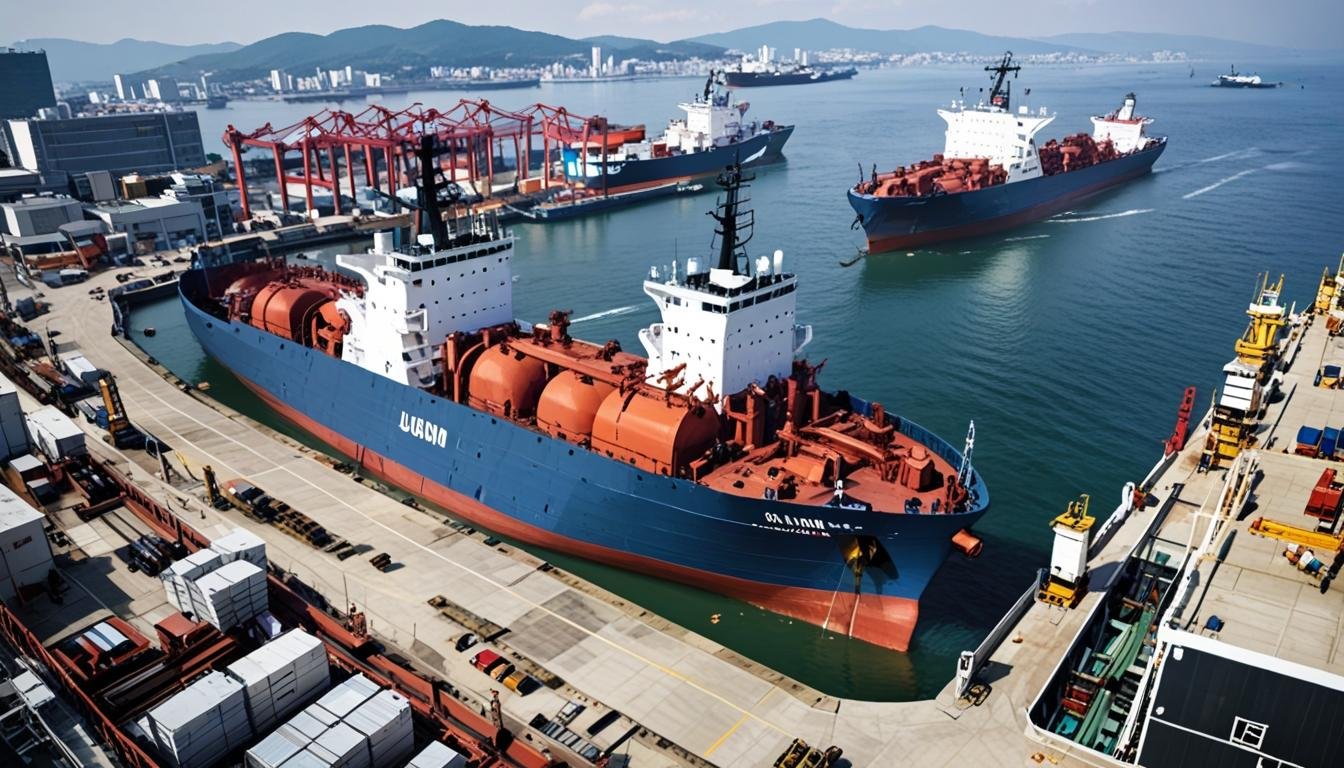
**Washington D.C.:** Senior officials from South Korea and the United States convened to strengthen collaboration in shipbuilding. Highlighting military and commercial interests, discussions included LNG carriers and icebreakers. Tariff negotiations and regulatory challenges further complicate the landscape as both nations seek to maximise mutual economic benefits.
Senior officials from South Korea and the United States convened in Washington D.C. on 27 February 2025 to discuss enhancing collaboration in the shipbuilding sector, spanning both military and commercial vessel production. In attendance were U.S. Commerce Secretary Howard Lutnick and South Korea’s Minister of Trade, Industry and Energy, Ahn Dukgeun, marking their first meeting since the administration of U.S. President Donald Trump began.
Discussions centred around the establishment of a working group aimed at bolstering this partnership. Notably, Washington is reportedly interested in liquefied natural gas (LNG) carriers and icebreakers designed for navigation through the Northern Sea Route, alongside naval ships. During a press briefing, Ahn Dukgeun explained, “We discussed with Secretary Lutnick measures to strengthen bilateral partnership in shipbuilding and high-tech industries,” reflecting the broader strategic interests of both nations.

In an effort to further these discussions, South Korea plans to form a task force comprised of representatives from various ministries including industry, foreign affairs, and defence, while the U.S. is expected to set up a parallel group under the commerce department’s leadership. Additionally, both countries intend to establish a consultative group focused on the energy and trade sectors, highlighting the integrated nature of their economic interests.
Reports indicate that U.S. officials have encouraged South Korean shipbuilders, who have already secured contracts for the next three to four years, to prioritise U.S. demand. South Korea might leverage this request to negotiate potential tariff exemptions. During his visit starting on 26 February, Ahn sought discussions on these tariff issues, asserting that any tariffs imposed on South Korea should not be less favourable than those applied to other countries.
The emphasis on expanding the partnership in shipbuilding aligns with the U.S. administration’s broader energy strategy, which aims to boost fossil fuel production, thus increasing demand for crude oil tankers from South Korean manufacturers like HD Korea Shipbuilding & Offshore Engineering Co., Hanwha Ocean Co., and Samsung Heavy Industries Co. The global market for tankers has been largely dominated by Chinese shipyards, which claimed the majority of orders for new crude carriers last year. However, a shift in U.S. policy restricting Chinese-built vessels could significantly enhance prospects for South Korean tankers.
Additionally, there is a noted requirement for icebreakers tied to U.S. energy projects, including the Alaska LNG initiative. The context of Arctic ambitions was also discussed, as previous U.S. statements have indicated a desire to increase geopolitical influence in this region, which could require specialised vessels suited for ice navigation. South Korea’s shipbuilding firms, such as Hanwha and Samsung, possess the requisite technology for producing ice-breaking LNG carriers, which tend to be 1.5 times more costly than standard LNG tankers.
U.S. Navy Secretary nominee John Phelan underlined the necessity of collaboration with allied nations to enhance shipbuilding capabilities amid escalating competition with China. “I think that we have to definitely look at expertise and skill that foreign partners have,” he said during a Senate Arms Services Committee hearing on 27 February.
Despite these prospects, South Korean shipbuilders are battling obstacles posed by stringent U.S. regulations as well as opposition from coastal states regarding potential modifications to the Jones Act and the introduction of the SHIPS Act, aimed at revitalising the U.S. shipbuilding infrastructure. The Jones Act mandates that all goods transported between U.S. ports must be carried on vessels that are built, owned, and operated by American citizens or permanent residents.
The challenges for South Korean shipyards also include an already busy schedule, with full docks extending up to three years. An official from a South Korean shipbuilder remarked, “We must check if we can adjust the schedules with the existing customers, although the U.S. requests quick deliveries.” Furthermore, regulatory constraints may prevent these builders from using Chinese steel, which tends to be significantly cheaper than South Korean alternatives, complicating cost management in vessel production for export to the U.S. The intricacies of these negotiations and their implications for trans-Pacific trade will be closely monitored by industry stakeholders in both countries.
Source: Noah Wire Services

