


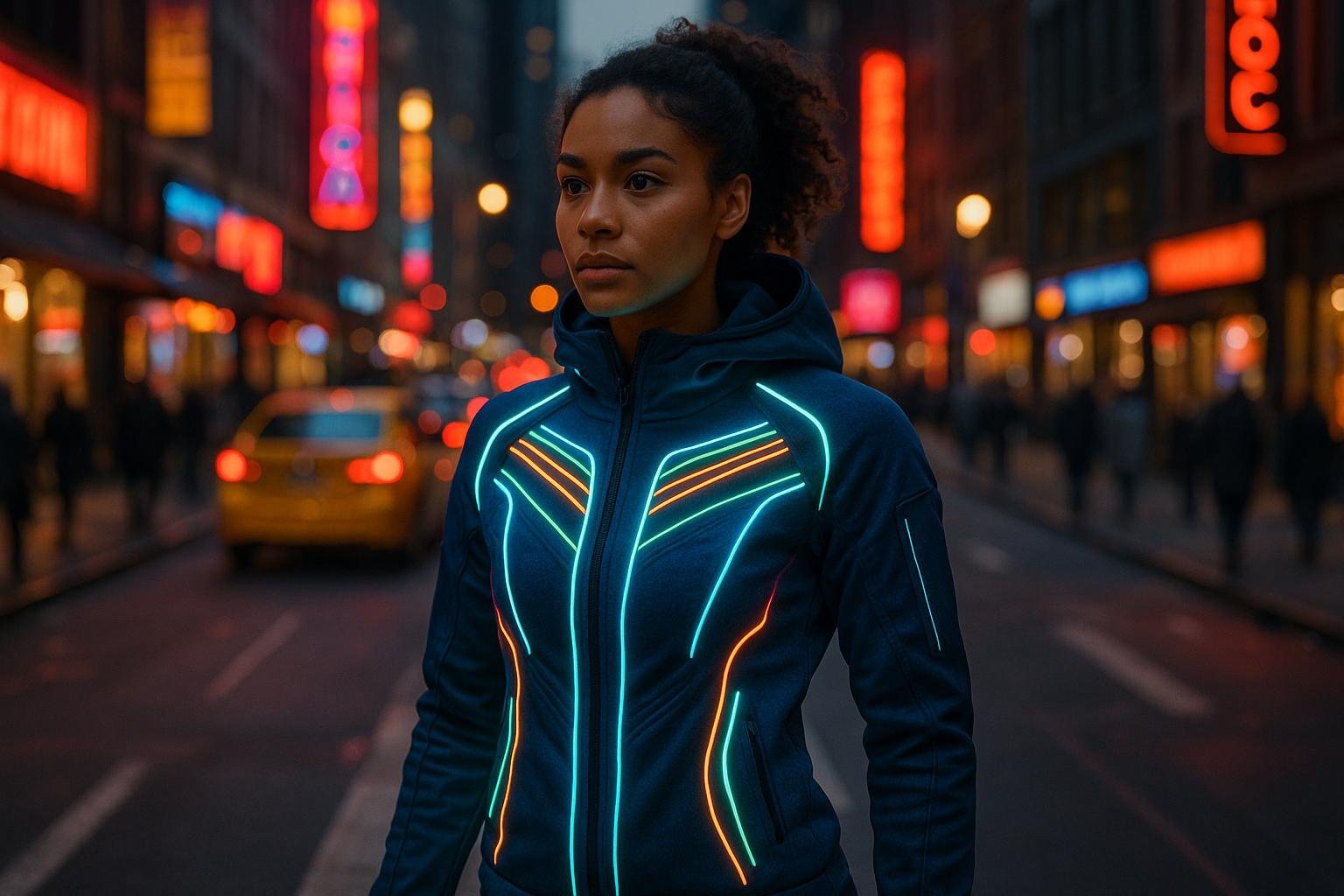
The global smart textile sector is accelerating towards mainstream adoption, with industry forecasts predicting a surge in market value driven by advances in materials, AI-embedded garments, and sustainable solutions amid rapid expansion in healthcare, sports, defence, and fashion.

The smart textile sector is moving from laboratory curiosity towards broad commercialisation, driven by faster material innovation, tighter integration with IoT and AI, and growing demand acr...
Continue Reading This Article
Enjoy this article as well as all of our content, including reports, news, tips and more.
By registering or signing into your SRM Today account, you agree to SRM Today's Terms of Use and consent to the processing of your personal information as described in our Privacy Policy.
Multiple industry reports corroborate rapid expansion while offering differing trajectories. A January 2025 release on GlobeNewswire reproduces the Renub Research projection of US$29.1 billion by 2033 and highlights AI‑enabled clothing that monitors temperature, heart rate, blood pressure and sweat biomarkers. The IMARC Group places the 2024 market close to US$4.9 billion and estimates growth to US$28.5 billion by 2033 with a slightly lower CAGR of 20.4%. Other analysts offer more conservative forecasts: Global Growth Insights estimated the 2024 market near US$4.18 billion and projects roughly US$20.27 billion by 2033, while Grand View Research separates the polymers sub‑segment and forecasts more modest growth for that materials market alone. These variations reflect differing definitions of “smart textiles,” whether polymer and component markets are included, and the pace at which pilots are commercialised into high‑volume production.
The market’s principal growth engines are clear. Fitness and sports apparel remain early, high‑value adopters as performance garments embedded with biometric sensors offer continuous, comfortable tracking without separate devices. Fashion and lifestyle applications are expanding the consumer-facing case for smart fabrics: conductive yarns, LED fabric, thermochromic materials and touch‑sensitive panels are being used for interactive garments and adaptive comfort. According to the coverage of industry reports, healthcare and remote patient monitoring now account for a substantial and growing share of applications, with some analyses suggesting over 40% of smart fabric use is tied to healthcare and fitness needs.
Material science advances underpin the commercialisation push. Industry reporting highlights progress in conductive polymers, nanomaterials, flexible electronics and washable conductive inks that seek to solve perennial challenges around durability, washability and user comfort. Energy‑harvesting fabrics and thermoelectric materials are emerging sub‑segments that may shift product economics by reducing reliance on external batteries. At the same time, analysts note that system‑level solutions , the integration of sensors, power, data transmission and analytics , are moving from pilots into production, a critical step for scale.
Regional patterns reflect national strengths and policy priorities. North America, led by the United States, is described as an innovation hub thanks to strong R&D, wearable‑tech demand and defence applications. The Vocal.Media summary emphasises military use cases such as surveillance and performance monitoring, while also noting environmental efforts to adopt biodegradable sensors and recycled components. India is singled out for rapid growth supported by government initiatives such as the National Technical Textiles Mission and active academic research. The UK’s expansion is linked to wearable healthcare and sports science, and Saudi Arabia is cited as building demand under Vision 2030 for temperature‑regulating and performance‑monitoring textiles.
The competitive landscape is moderately fragmented: global brands, specialised textile houses and semiconductor and materials companies all vie for position. The Vocal.Media/ Renub summary lists multinational players including Adidas, DuPont, Gentherm, Texas Instruments, Toray, Ohmatex and Schoeller Textil, noting strategies that combine R&D, partnerships and sustainability measures. Industry commentary reproduced across market reports stresses that partnerships between technology firms and fashion houses , for example, past collaborations such as Google and Levi Strauss’ Project Jacquard referenced in coverage , remain an important catalyst for consumer acceptance.
Challenges persist. Cost, standardisation, washability, sensor lifetimes and data privacy are recurring barriers flagged by analysts. Manufacturers must reconcile durability and comfort with embedded electronics, and regulators and purchasers in healthcare and defence demand proven reliability and data security. Sustainability claims are growing louder, but producing truly recyclable or biodegradable electronic textiles at scale remains difficult and may constrain some segments until materials and end‑of‑life systems improve.
Taken together, the body of reporting presents a consistent picture: smart textiles are progressing from niche experiments to mainstream product lines, but with divergent views on the pace and scale of growth. According to the synthesis of industry forecasts, whether the market reaches roughly US$20 billion or nearer US$29 billion by 2033 depends largely on how quickly material challenges are solved, costs fall, and system‑level products move into high‑volume manufacture. If current trends in conductive materials, AI integration and sustainability continue, smart textiles are poised to shift from novelty to a routine component of apparel, medical devices and industrial safety over the coming decade.
Source: Noah Wire Services
Subscribe to Industry Updates

