


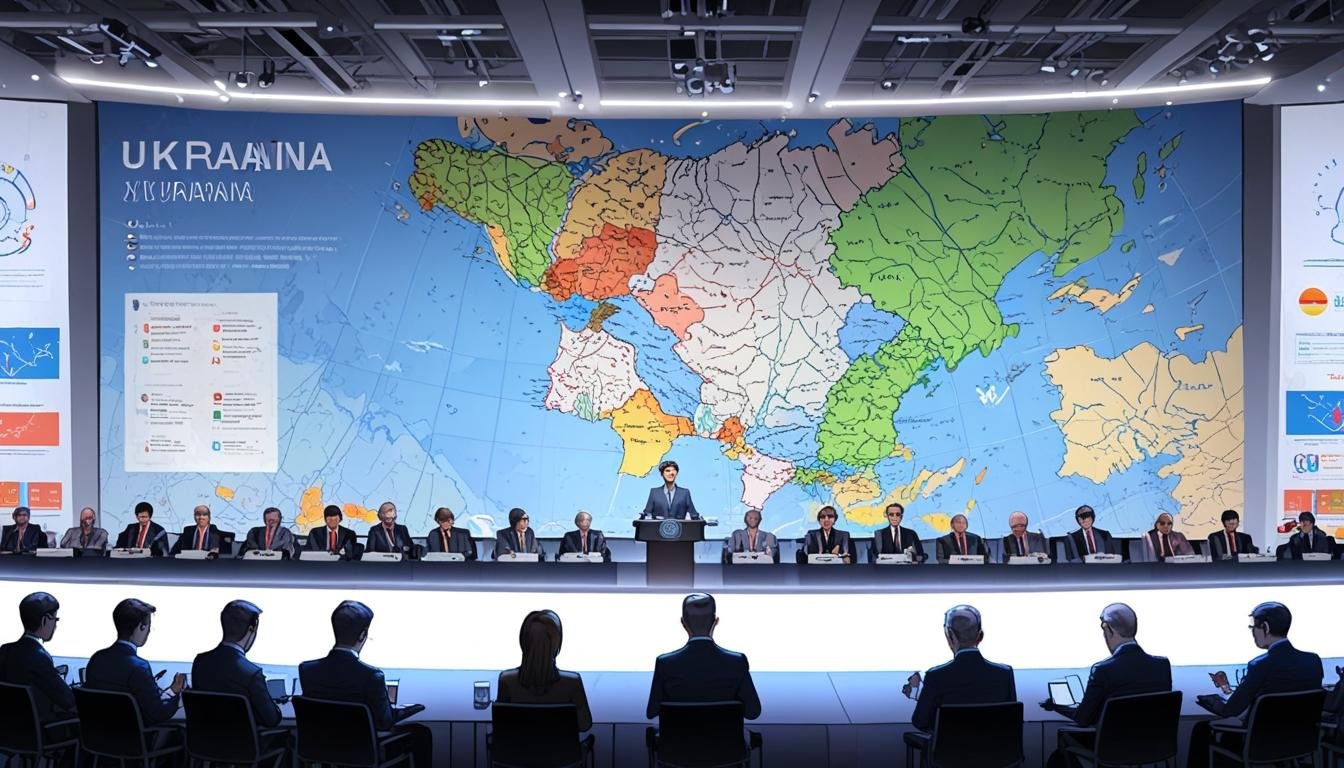
**Planica**: A conference focusing on Ukraine’s reconstruction gathered political and economic leaders in Slovenia. Discussions highlighted the integration of Slovenian companies in reconstruction efforts, emphasizing energy, digitalisation, and long-term investment opportunities despite ongoing challenges amid the war.
Planica, March 29, 2025 – A significant convergence of political and economic leaders took place in Planica, Slovenia, on March 28, during the conference titled “Ukraine’s Recovery: From Standing Strong to Moving Forward.” Organised by the Institute for Strategic Solutions (ISR) in collaboration with the public agency SPIRIT Slovenia, the Ministry of Economic Development, Tourism and Sport, and the Ukrainian Embassy in Slovenia, this event focused on the integration of Slovenian companies into the ongoing reconstruction efforts in Ukraine.
The conference’s opening remarks were delivered by Tine Kračun, director of ISR, who underscored that reconstructing Ukraine is projected to cost over 500 billion euros in the next decade. “Reconstruction is not just a humanitarian necessity but also an economic opportunity,” he stated, designating key sectors like energy and digitalisation as vital for Ukraine’s modernisation and alignment with European standards. Tamara Zajec Balažič, the acting director of SPIRIT, encouraged Slovenian enterprises to connect with their Ukrainian counterparts, asserting that although challenges remain, the groundwork for reconstruction is already being established.

Deputy Prime Minister and Minister of Foreign and European Affairs Tanja Fajon highlighted the strategic importance of Ukraine’s reconstruction, both morally and economically. “I have seen firsthand how challenging and difficult the situation is,” she remarked during the conference, reiterating that restoring a sense of security is essential for the Ukrainian populace. She outlined Slovenia’s commitments, including financial management support and participation in humanitarian programmes like the Grain From Ukraine initiative, reflecting on Slovenia’s status as a significant per capita donor in this area.
Julia Sviridenko, Ukraine’s first deputy prime minister and economy minister, addressed participants via video link, noting Ukraine’s economic resilience amid ongoing hostilities. She projected a GDP growth of 2.7% for the year, emphasising that opportunities for investments remain viable despite the war. “Today, these are very tangible business opportunities,” Sviridenko stated.
The conference featured a panel discussion that focused on the mechanisms through which Slovenian companies can engage in Ukraine’s recovery sustainably and safely. Vira Savčenko, director of BDO Ukraine, urged early involvement from companies, asserting that those who initiate engagement sooner will gain lasting advantages. She also highlighted various financial tools available, including political and war insurance provided by international institutions such as the Multilateral Investment Guarantee Agency (MIGA) and the European Bank for Reconstruction and Development (EBRD). Gašper Jež from SID Bank described available insurance options for Slovenian exporters, signalling a commitment of up to 60 million euros to priority sectors such as infrastructure and digitalisation.
The framework for cooperation includes partnerships in significant public projects like social housing and energy infrastructure development, followed by initiatives for transparency and efficient procurement processes. Viačeslav Didkivskij, from the Ukrainian state agency for reconstruction, noted the ambition behind these projects and the necessity for international collaboration for effective execution.
The European Investment Bank (EIB) revealed that it had already co-financed the renovation of over 300 hospitals and schools across 150 Ukrainian cities. Miha Polak from the EBRD reported a commitment of over six billion euros to sustain Ukraine’s economy during the crisis, with an aim to escalate investment to three billion euros annually as reconstruction efforts commence.
Amidst these discussions, representatives from the British government, including Dr. Ruth Wiseman, posited that future prosperity in Ukraine will hinge on a robust, inclusive economy led by the private sector, with particular emphasis placed on green energy initiatives. The production of low-carbon concrete from recycled materials resulting from conflict has emerged as one such project linking UK and Ukrainian businesses.
The conference concluded with discussions on the opportunities for Slovenian companies in agriculture and technology sectors, including microsatellite technologies and innovations in farming practices. Participants stressed the importance of finding trustworthy partners within Ukraine, given the country’s evolving economic landscape and specific market dynamics.
Overall, the conference in Planica represented a strategic platform for fostering relationships between Slovenian enterprises and Ukrainian stakeholders, marking a hopeful step towards Ukraine’s recovery amidst ongoing challenges.
Source: Noah Wire Services

