Siemens is betting that industrial AI will only pay off when it is tied directly to day-to-day operations, and Mendix is now part of that effort.
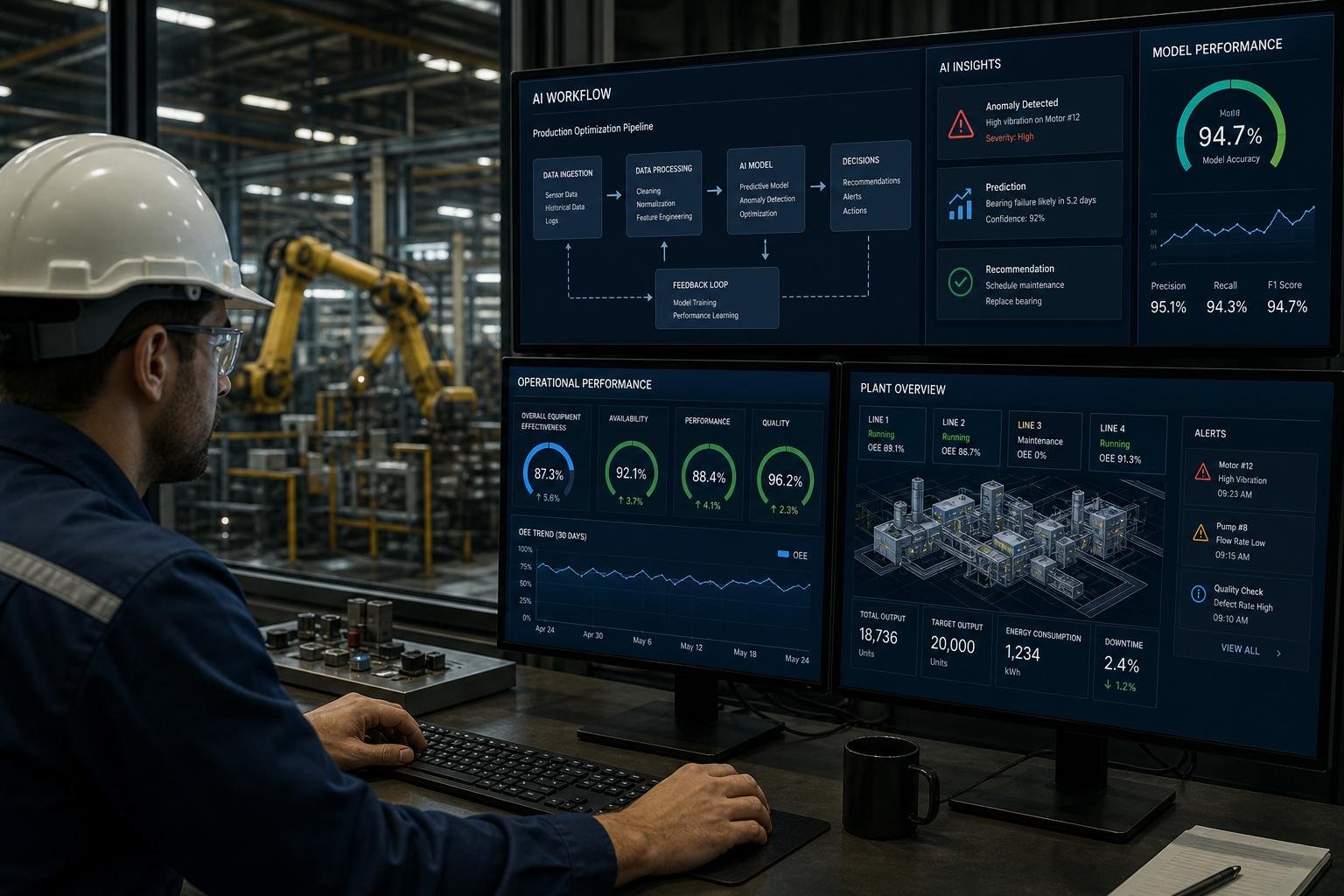
The company said its low-code platform has been added to Intelligence Center X, Siemens’ enterprise system for industrial AI that is intended to move organisations beyond isolated pilots and towards measurable results. Siemens says the software combines shared context, orchestration, agent development and governance, with Mendix use...
Continue Reading This Article
Enjoy this article as well as all of our content, including reports, news, tips and more.
By registering or signing into your SRM Today account, you agree to SRM Today's Terms of Use and consent to the processing of your personal information as described in our Privacy Policy.
d in the execution layer where AI models and agents are turned into working applications and human-in-the-loop processes.
Tony Hemmelgarn, president and chief executive of Siemens Digital Industries Software, summed up the pitch by saying AI creates value only when it is built into how work is actually carried out. That view reflects a wider problem in enterprise AI adoption: many projects prove technically viable but struggle to scale because they remain disconnected from operational workflows. A 2025 MIT report on AI in business reached a similar conclusion, saying most pilots fail because of brittle processes, weak contextual learning and poor alignment with everyday work.
Siemens says Intelligence Center X is designed to address that problem by creating a continuous loop from enterprise data to AI-driven action. Graph Studio and AI Studio provide the underlying industrial data structure and semantic context, while Mendix is meant to help organisations build the applications that put those insights into practice across manufacturing, logistics, product development and asset management.
The company has been positioning Mendix as a bridge between operational systems and business users for some time. Siemens has previously said the low-code platform, together with Mendix Data Hub and services for Industrial Edge, can help customers create a more complete view of plants, factories and systems while giving domain experts access to relevant data. In Siemens’ own industrial architecture materials, Mendix Workstation is presented as a configurable interaction layer that connects shop-floor operations with enterprise systems using standards such as OPC UA, MQTT, REST and GraphQL.
Siemens is also linking the new platform to supply-chain traceability and product intelligence. Its digital thread materials describe tools aimed at improving control, compliance and visibility across the full lifecycle of a product, an area where industrial AI could have particular value if it can be embedded into existing workflows rather than layered on top of them.
The company points to customer examples to show what that looks like in practice. Vivix Vidros Planos, Brazil’s largest flat glass maker, has deployed nearly 30 Mendix applications to connect operational and enterprise data across SAP S/4HANA, Siemens Industrial Edge and Snowflake. Siemens says that helped cut production issue resolution times by 85% and recovered 6,000 hours of manual work in a year. The firm also says Vivix has built an AI-powered virtual engineer using Intelligence Center X, Amazon Bedrock and Anthropic’s Claude.
Axiz Digital is another case Siemens cites. The company says Axiz used Intelligence Center X to combine AI and machine-learning development with application building and process orchestration, reducing manual effort by 95% and achieving full accuracy in data ingestion for a pricing use case. Andrew Moodley, Axiz Digital’s chief cloud, digital and marketing officer, described AI and ML development as the brain, with application development and orchestration as the body.
For Siemens, the message is clear: industrial AI will not be judged by the number of pilots launched, but by whether it can be governed, repeated and scaled. Mendix is now being positioned as one of the tools meant to make that shift possible.
Source: Noah Wire Services