


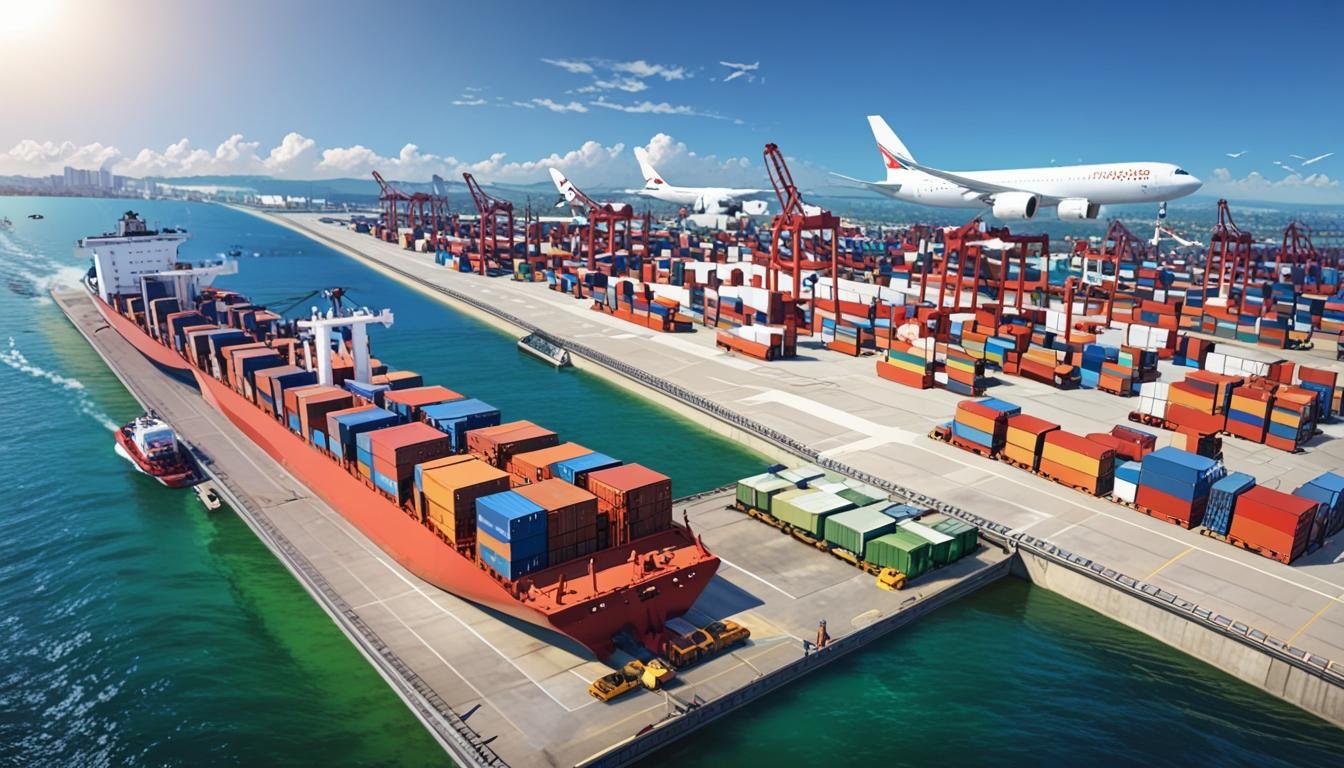
**London**: A global survey reveals that 88% of supply chain executives are reconfiguring strategies due to protectionism and geopolitical instability. Key trends include increased diversification, friendshoring, and an emphasis on risk management, with technology seen as crucial for enhancing efficiency.
A recent survey conducted globally has revealed significant shifts in the strategies of supply chain executives as they adapt to emerging challenges such as protectionism and geopolitical instability. The Trade in Transition survey, which gathered insights from over 3,500 supply chain executives, indicates that a substantial 88% of organisations are geographically reconfiguring their supply chains. Furthermore, 46% of those surveyed are actively pursuing diversification, while 22% are opting for nearshoring and regionalisation. Only 12% reported that they are not adjusting their supply chain strategies.
The findings show a marked trend toward companies working with a greater number of suppliers, with 75% of respondents indicating they are taking on more partners. This change is largely driven by a heightened awareness of risk management, particularly in the context of maintaining cash flow amidst rising interest rates, which limits the capacity to increase inventory buffers.

The survey highlights a notable decline in average inventory buffers, which fell from 10.2 weeks in 2022 to 8.6 weeks projected for 2024, alongside a 10% reduction in the number of companies maintaining inventories that exceed a month of stock. The majority of executives surveyed consider diversification more effective than holding large inventories, with only 20% expressing that maintaining stockpiles provides greater security against supply disruptions.
A key aspect of the reshaped sourcing strategies is the trend towards “friendshoring,” defined as centralising sourcing and production within politically aligned regions. This strategy was selected by 34% of respondents as the preferred choice in sourcing adjustments, while 32% opted for parallel or dual-sourced supply chains. Additionally, 27% are looking to set up operations in countries that are stable yet not necessarily politically aligned, with Brazil, India, Mexico, Vietnam, and the UAE emerging as crucial players in international trade and manufacturing.
The research notes that 71% of executives view these non-aligned nations as offering “stable and diverse trade, economic and investment opportunities,” while 69% believe they could effectively address supply gaps created by trade conflicts among major geopolitical blocs. Nonetheless, concerns persist regarding future challenges in maintaining these relationships, with 62% expressing apprehension about the potential difficulties arising from differing regulatory standards.
In terms of positive developments, the potential of technology stands out, with 41% of respondents optimistic that emerging technologies will enhance efficiency and visibility in supply chains. John Ferguson, Global Lead for New Globalisation at Economist Impact, who conducted the research, commented on the motivating factors behind the evolving landscape, stating, “The overall outlook is being propelled by three forces: shifting geopolitics, climate change, and a new wave of AI and automation.” He emphasised the resilience of businesses in not retreating from international trade but rather rising to meet the challenges presented, with 20% of executives hopeful for forthcoming trade agreements that could alleviate tariffs and trade barriers.
In conclusion, the evolving supply chain dynamics reflect a complex interplay of risk management and strategic adaptation in response to an uncertain global landscape. Firms that successfully integrate risk management with technological innovation and willingness to adapt are anticipated to be well-positioned for success in this new chapter of global trade.
Source: Noah Wire Services

