


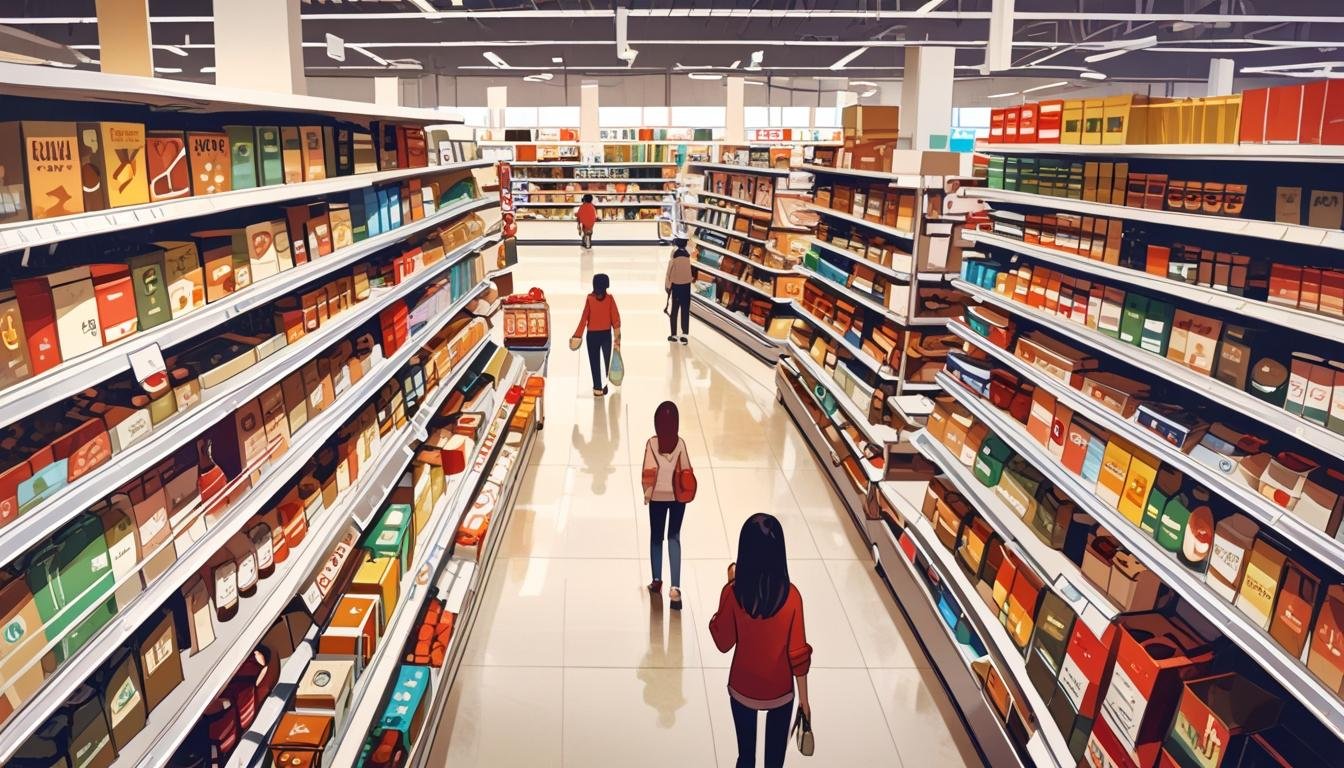
**United States**: The intricate relationship between grocery retailers and consumer packaged goods companies is experiencing a major shift, with retailers gaining more power, leading to tighter margins and challenges for CPG brands amid rising private-label competition and changing consumer preferences.
The evolving dynamics between grocery retailers and consumer packaged goods (CPG) companies in the United States reflect a significant shift in market power, driven by various economic, technological, and consumer behaviour factors. Historically, these two sectors relied heavily on one another, with grocery retailers requiring a diverse range of branded products and CPG companies needing to access consumers through retail channels. However, recent developments have tilted this balance decidedly in favour of retailers, particularly large national chains like Walmart, Kroger, and Costco, as well as rising private-label retailers such as Aldi and Trader Joe’s.
The change in power dynamics has left many CPG brands facing challenges such as tighter profit margins, increased competition, and a diminished ability to negotiate favourable terms with retailers. Economic shifts, fluctuation in consumer preferences, advancements in technology, and disruptions in supply chains contribute to this new reality.

Several critical factors have influenced this realignment of power:
Firstly, retailer consolidation has allowed large grocery chains to amass significant market influence, a fact exemplified by Walmart, which commands a large share of overall grocery sales in the U.S. This market dominance translates into substantial leverage in negotiations regarding pricing and shelf space. Compounding this situation, attempts at mergers, such as the blocked merger between Kroger and Albertsons, highlight the regulatory scrutiny that can arise as retailers look to further consolidate their power.
Secondly, the rise of private-label products has heavily impacted the landscape for CPG companies. Retailers such as Aldi and Trader Joe’s, which stock predominantly their own brands—approximately 85% of their total stock-keeping units (SKU)—have successfully created alternatives to national CPG brands, often offering higher profit margins and the ability to tailor products specifically to their customer demographics.
Moreover, access to consumer data has further entrenched the power of retailers. Major players like Amazon, Walmart, and Kroger possess advanced insights into consumer behaviour, positioning them to negotiate favourable terms to secure prime shelf space and promotional visibility. In this digital age where data is paramount, CPG companies often struggle to access the competitive consumer insights necessary to build direct relationships with customers.
The rapid expansion of e-commerce and omnichannel retailing has also played a crucial role in shifting power dynamics. The surge in online grocery sales, facilitated by platforms like Instacart and Amazon, has positioned retailers as key gatekeepers—deciding which brands gain visibility in digital spaces and thus affecting overall sales trajectories for CPG products.
Compounding these challenges are economic pressures stemming from the Covid-19 pandemic and subsequent inflationary trends. Grocery retailers have resisted price hikes requested by CPG companies, arguing that consumers are unwilling to absorb increased costs. Concurrently, disruptions in supply chains have left brands to navigate complex logistical challenges that favour the large retailers.
Despite these obstacles, CPG companies are exploring strategies to regain influence within this changing landscape. One approach involves leveraging strong brand identities and consumer loyalty to negotiate better terms with retailers. Brands with loyal customer followings can resist unwelcome pricing pressures and secure advantageous shelf space.
Furthermore, collaboration through data sharing presents an opportunity for CPG companies to reinforce their positions. By providing insights that can drive traffic and sales, CPG brands can transform themselves from mere suppliers into key partners for retailers.
Differentiation remains crucial in a market dominated by private labels. CPG companies can find success by focusing on higher-end, organic, or niche products that justify premium pricing and appeal to discerning consumers.
Additionally, exploring alternative distribution channels may reduce reliance on large retailers. Innovations in e-commerce, coupled with direct-to-consumer sales models, offer valuable pathways to access consumers while also gathering crucial data regarding purchasing behaviours.
The changing landscape has also dramatically altered consumer behaviour. With food inflation pushing grocery prices up by approximately 25% since 2020, consumers have grown increasingly demanding, seeking greater value and flexibility from both retailers and CPG brands. This shift has seen a heightened willingness to switch to private labels, shop across multiple chains, or alter purchasing habits.
While the balance of power may currently favour grocery retailers, the relationship between them and CPG companies continues to evolve. Both sectors must navigate complex market conditions while keeping consumer interests at the forefront of their strategies to adapt to this new reality.
Source: Noah Wire Services

