


**Boston**: Industry leaders gathered at the Seafood Expo North America to discuss responsible sourcing and the urgent need to address human rights violations, including forced labour in seafood supply chains. Experts emphasised the importance of transparency and collaboration to improve ethical standards in the industry.
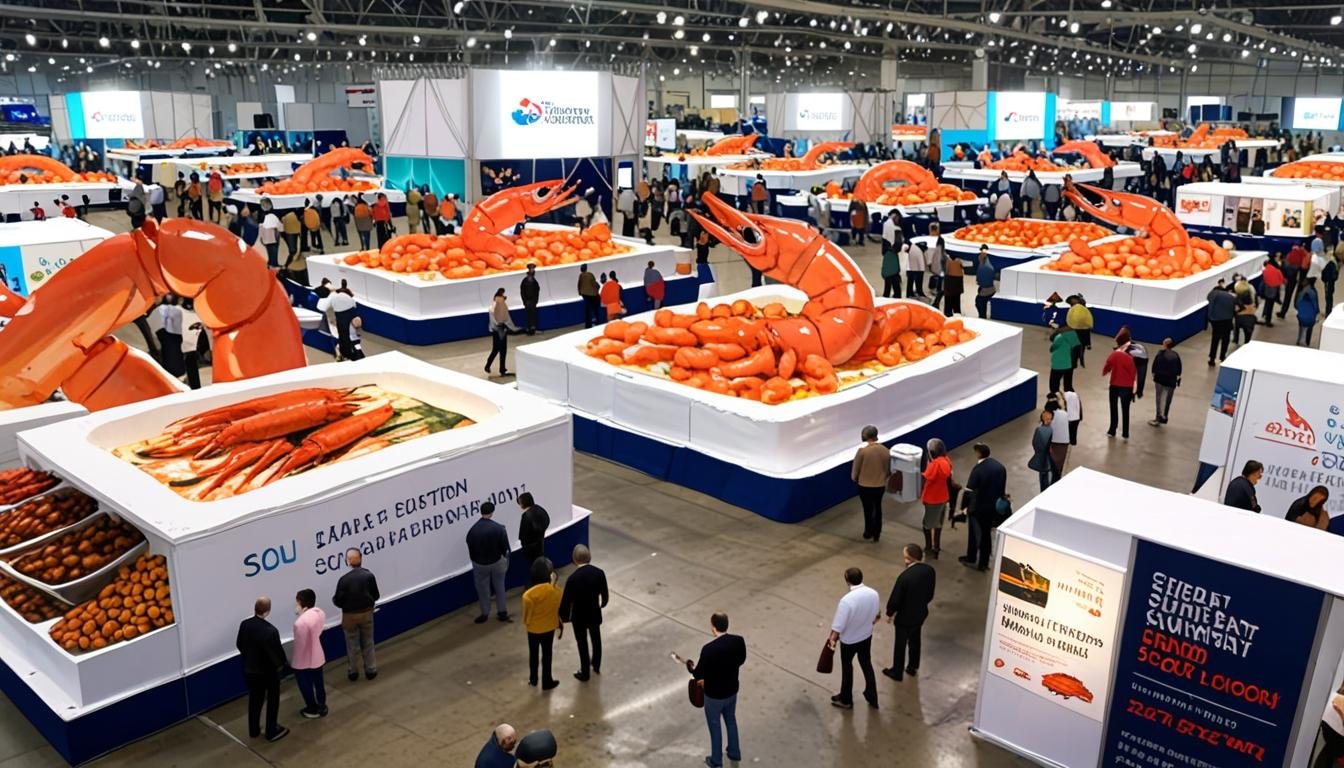
At the Seafood Expo North America (SENA) held last week in Boston, industry leaders, fishermen, and non-governmental organisations gathered to address pressing issues surrounding responsible seafood sourcing. This annual trade event took place at the Boston Exhibition and Convention Center and showcased a diverse array of seafood products, including shrimp, tilapia, and salmon, competing for attention in a marketplace increasingly focused on sustainability and food safety.
This year, in addition to the customary emphasis on freshness, quality, taste, and value, there was a notable shift towards human rights issues, particularly as they pertain to forced labour and worker abuse in seafood supply chains. Over the past decade, human rights due diligence (HRDD) has emerged as a priority for seafood procurement professionals, a trend intensified by high-profile media revelations about exploitation in the industry.

In a session entitled “Navigating Human Rights Due Diligence in Seafood Procurement: Challenges, Best Practices and Next Steps,” Ashley Aarons, a senior private sector advisor for Oxfam US, highlighted the escalating legal risks seafood companies may encounter regarding forced labour. These concerns gained prominence following a recent lawsuit filed by four fishermen from Indonesia against U.S. tuna company Bumble Bee Foods, accusing the firm of using forced labour on its supply vessels. Similarly, the French retailer Carrefour faced scrutiny after being linked to seafood products sourced from Chinese processing facilities where members of the Uyghur ethnic minority allegedly endured forced relocation and compelled labour.
Aarons stated, “I think the business case for stronger procurement is just going to increase… You have made human rights commitments… It’s about transferring those across the business into business practices.” He noted that there has been a heightened awareness of risks associated with forced labour in seafood supply chains and an increased demand for human rights impact assessments. Aarons described the seafood sector as “higher risk” relative to others, such as textiles, due to its lack of comprehensive guidance on addressing labour issues.
Moreover, Aarons emphasised the significance of establishing long-term partnerships between buyers and suppliers, engaging in collaborative production planning, and implementing fair payment terms. He stressed that recognising the value of responsible sourcing work is paramount for mitigating supply chain risks.
Corey Peet, VP of sustainability for U.S. seafood importer Aqua Star, drew comparisons between the ongoing human rights initiatives within the industry and previous global efforts to enhance environmental sustainability. He asserted, “It’s hard to gain reach… our focus is really on that engagement, on training, and how can we constantly learn and improve.”
The plight of deep-sea fishermen came to the forefront during a session titled “Should I Stay or Should I Go? Navigating Supplier Relationships in the Seafood Sector in Response to Labor Abuses,” where Indonesian fisherman Silwanus Tangkotta recounted his traumatic experiences aboard tuna vessels. He described a harrowing incident involving severe injury and subsequent denial of medical assistance, leading him to self-amputate parts of his fingers. Following his ordeal, Tangkotta faced further hardship when his employer deemed him a burden and sent him home.
Andrea Tomlinson, legal director at Global Labor Justice, indicated that Tangkotta’s experience is indicative of a broader issue within the industry, asserting that such treatment of workers is not isolated. “We see this type of treatment of workers on the high seas all the time,” she remarked, urging a need for increased transparency within supply chains. She pointed out that even seafood marketed as premium products, such as those certified by the Marine Stewardship Council (MSC), may not meet ethical standards as perceived.
Marcelo Hidalgo, COO of the Fishing Industry Association of Papua New Guinea, shared insights from the PNG tuna fleet, which accounts for 18 per cent of global tuna catches. He revealed efforts to develop a workforce strategy plan over the past two decades, with enhanced transparency initiated since the lifting of COVID restrictions. Despite these advances, Hidalgo acknowledged that a comprehensive solution to human rights due diligence remains elusive, stating, “There’s no single solution.”
The discussions at SENA underscored the seafood industry’s continued struggle with human rights challenges as participants explored best practices and commitments needed to address these pressing issues within their supply chains.
Source: Noah Wire Services

