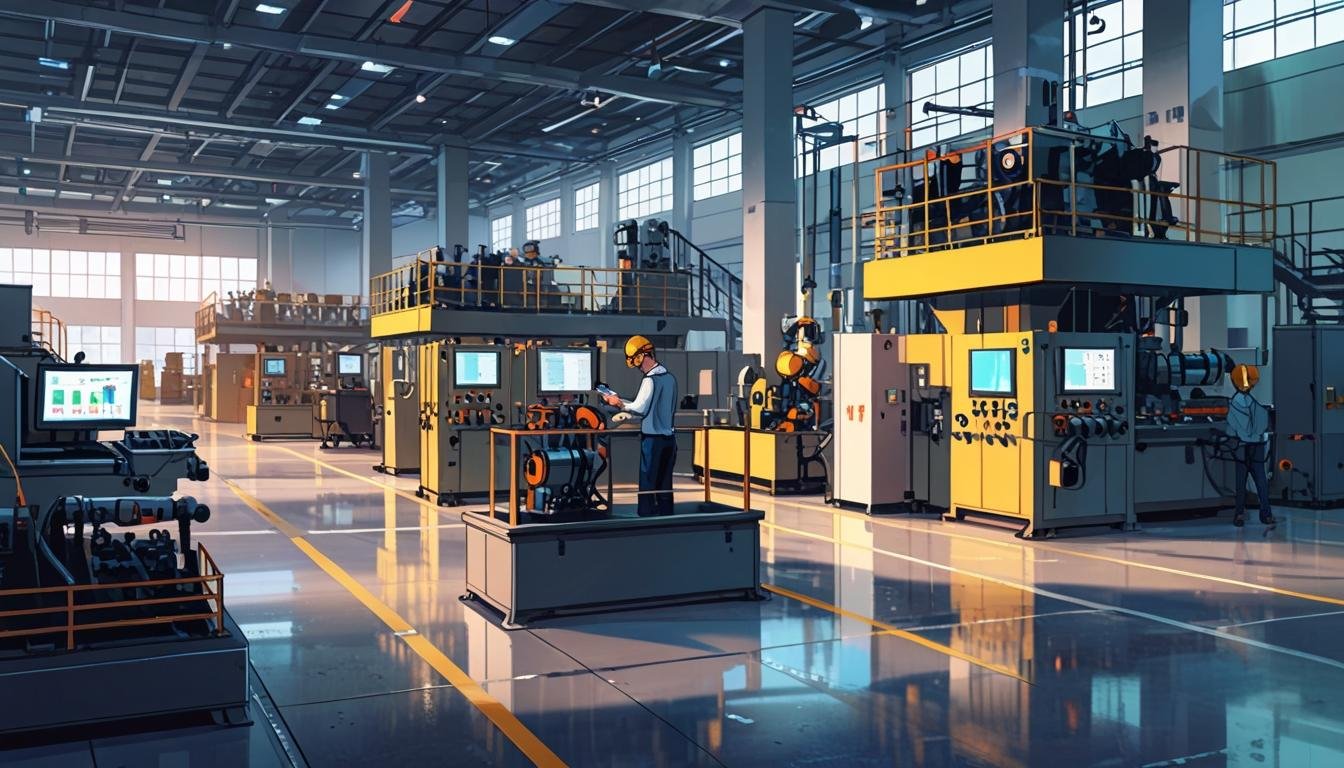
The U.S. manufacturing sector is experiencing a significant transformation, largely steered by a commitment to digitisation that distinguishes industry leaders from the rest. At the Automate Show in Detroit, Andre Marino, Senior Vice President of Industrial Automation at Schneider Electric North America, underscored that successful manufacturers begin their journey not by chasing the latest technological trends, but by pinpointing the specific problems they intend to solve. This approach helps avoid what Marino describes as “pilot purgatory,” a scenario where companies initiate numerous digital trials without realising scalable, enterprise-wide advantages.
Marino advocates for a structured framework: strategise, digitise, optimise. By first identifying the challenges faced, businesses can effectively gather the necessary data before selecting appropriate technologies to facilitate measurable outcomes. This methodology challenges the prevalent notion of “innovation fatigue,” where the rush to adopt new technologies can lead to ineffective implementations. Instead, Marino recommends concentrating on solvable, repeatable challenges—issues like optimising energy consumption or minimising downtime—which tend to yield greater returns on investment than tackling intricate, isolated problems.

Another notable hurdle in the digital transformation landscape is data fragmentation. As Marino points out, harmonising information from various vendors and systems is crucial for leveraging advanced technologies, particularly Artificial Intelligence. Open platforms are essential for enhancing operational efficiency and unlocking the potential of AI, allowing data to flow seamlessly between control mechanisms and enterprise systems. This is a pivotal shift, particularly for manufacturers striving to remain agile amid the fluctuating global supply chain.
Schneider Electric’s Lexington facility serves as a pioneering example of the potential benefits of this modernisation strategy. Originally established over 50 years ago, the plant has undergone a transformative re-engineering, embracing cutting-edge EcoStruxure technologies. These updates have led to significant improvements, such as a 20% reduction in energy usage, 90% elimination of paper-based processes, and a remarkable 6% year-over-year decrease in downtime. Notably, the factory has been recognised by the World Economic Forum as a “Lighthouse” for its exemplary integration of Industry 4.0 technologies. This accolade signifies its role as a benchmark in operational excellence and sustainable practices within the manufacturing sector.
Flexibility and adaptation are vital in today’s manufacturing climate, particularly as companies navigate a volatile global supply chain. Manufacturers are increasingly required to integrate diverse systems and vendors to enhance both adaptability and speed. Transitioning towards automation presents its own challenges. Marino highlights three typical missteps: a lack of strategic direction, concentrating on unsustainable use cases, and neglecting the crucial aspect of change management. Proper employee training and engagement are imperative to ensure the successful adoption of new technologies; otherwise, systems can remain underutilised despite substantial investments.
The Lexington factory’s journey embodies the potential of smart retrofitting and demonstrates that even legacy facilities have a viable path towards digital maturity. For instance, employees at the plant have embraced technological advancements, including workers who have adapted from traditional methods to operating smartphones in one of the most advanced factories globally.
Furthermore, Schneider Electric’s broader strategy includes creating replicable templates from successful projects like the Lexington plant. With 22 manufacturing sites across the U.S. and numerous others worldwide, their aim is to help fellow manufacturers modernise without having to build from the ground up.
The fundamentals of this renaissance in U.S. manufacturing suggest that a clear vision and systematic approach to digital transformation are essential for achieving scalability and sustainability. As the sector continues to evolve, embracing these principles can pave the way for innovation that is both impactful and enduring.
Reference Map:
- Paragraph 1 – [1], [4]
- Paragraph 2 – [1], [2], [5]
- Paragraph 3 – [3], [6]
- Paragraph 4 – [1], [2], [3]
- Paragraph 5 – [1], [4], [7]
- Paragraph 6 – [1], [6]
- Paragraph 7 – [1], [2]
- Paragraph 8 – [1], [7]
Source: Noah Wire Services