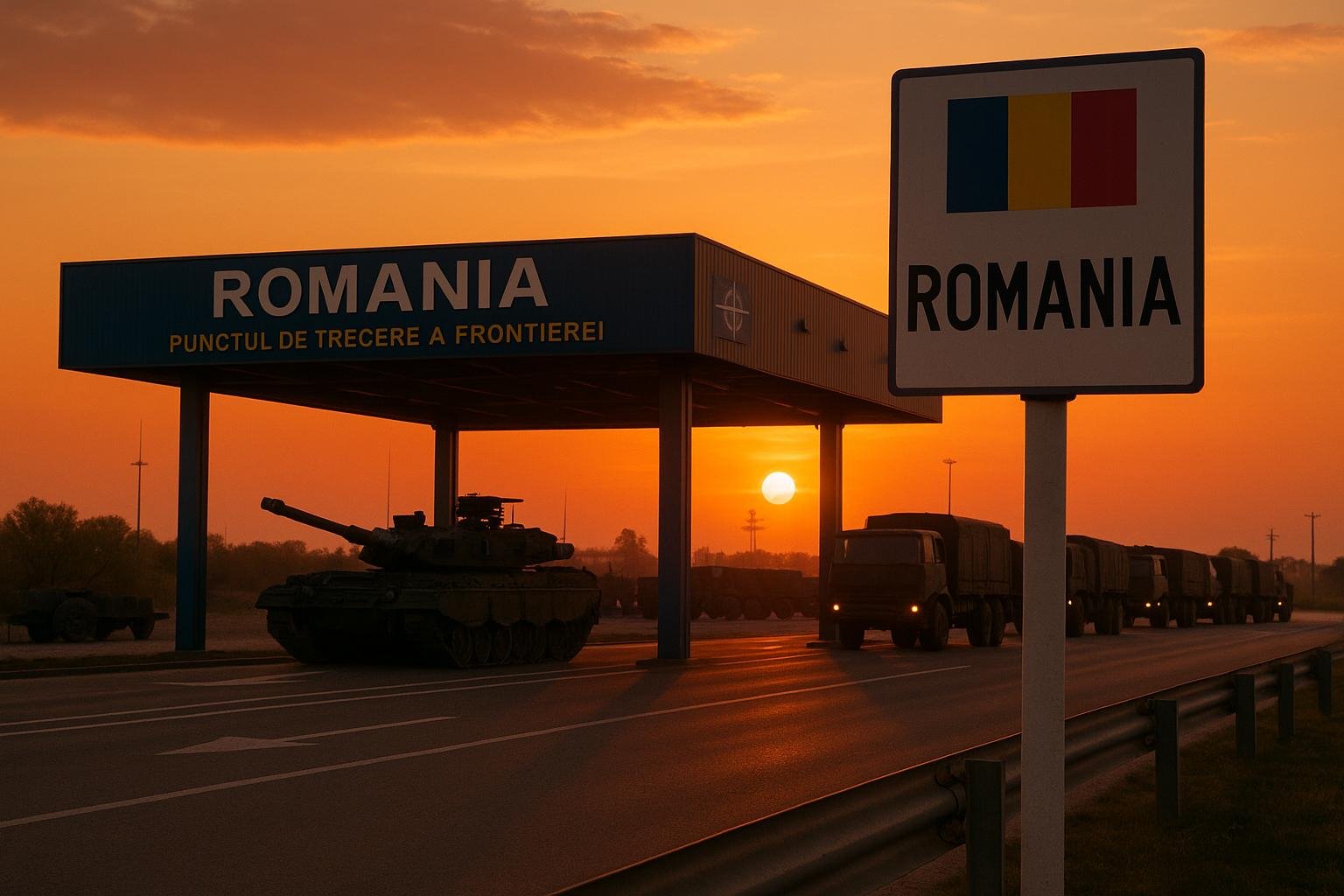
Romania will host NATO’s second major military logistics hub from January 2026, creating a southern transit corridor to diversify arms deliveries to Ukraine and strengthen Alliance support amid strategic vulnerabilities.
Romania will host NATO’s second major military logistics hub from January 2026, creating a southern transit corridor to sustain and diversify arms deliveries to Ukraine, NATO and defence reporting show.
According to Defence Romania, the new c...
Continue Reading This Article
Enjoy this article as well as all of our content, including reports, news, tips and more.
By registering or signing into your SRM Today account, you agree to SRM Today's Terms of Use and consent to the processing of your personal information as described in our Privacy Policy.
entre will operate alongside the existing hub in Rzeszów, Poland, and will be placed under NATO command as part of the NATO Security Assistance and Training for Ukraine (NSATU) framework. The move is intended to halve dependence on a single transit node by doubling NATO’s capacity to move military aid into Ukraine, particularly under the Prioritised Ukraine Requirements List (PURL) mechanism through which European allies and Canada fund US-sourced equipment and munitions.
Maik Keller, NATO deputy commander for support to Ukraine, confirmed the January 2026 start date to Defence Romania and said the PURL process has already delivered large quantities of materiel to Kyiv. Industry and mission figures show that NSATU facilitated roughly 220,000 tonnes of military assistance to Ukraine in 2025, involving thousands of truck movements, rail wagons and strategic airlift sorties, underscoring the scale of logistics the new hub is intended to manage.
Journalists and analysts have long warned that concentrating transit through Rzeszów created strategic vulnerabilities. The Romanian hub is being portrayed as a response to that risk: it will provide a stable southern route for supplies bound for the Donbas and coastal sectors, ease pressure on Poland’s facilities and increase resilience along NATO’s eastern flank. Several defence outlets report the centre will be fully integrated into NATO command-and-control for supply sequencing and prioritisation.
NATO officials have linked the expansion to broader Alliance commitments made at recent summits to boost defence production and increase investment. According to a NATO statement at a conference in The Hague, the Prioritised Ukraine Requirements List is a central mechanism by which allies coordinate and fund urgent equipment and ammunition purchases for Ukraine.
Some NATO figures have also sought to reassure partners that deliveries have continued despite political shifts in donor countries. A senior NATO official told media that weapon flows to Ukraine did not decline following the decision by US political leaders to alter direct aid arrangements, an account echoed in reporting on the new hub’s creation.
The establishment of a second hub in Romania marks a significant logistical evolution in NATO’s support for Ukraine, moving from ad hoc national initiatives toward a more institutionalised, Alliance-run supply architecture. Defence reporting indicates that the Romanian facility will focus on transit, stock management and rapid onward movement, with the aim of preserving continuity even if individual routes or nodes are disrupted.
While detailed operational arrangements and capacity figures for the Romanian hub have not been publicly released, defence officials and reporting say it will materially increase throughput for PURL deliveries and other allied contributions, and strengthen NATO’s ability to sustain prolonged support for Ukraine.
Source: Noah Wire Services