


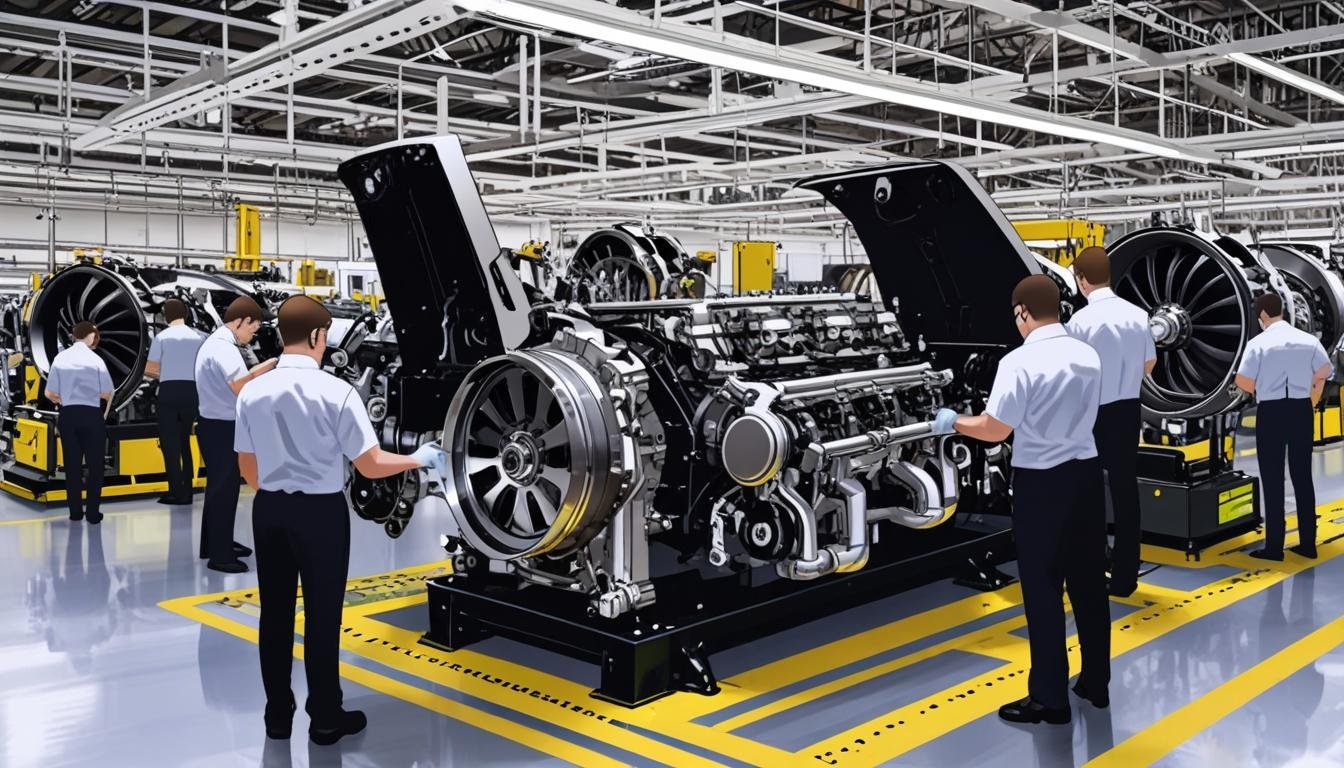
**London**: Rolls-Royce is strategising to enhance its manufacturing capacity in the U.S. amid ongoing tariffs established by the Trump administration. The company aims to mitigate trade restrictions by increasing production and potentially relocating some processes from the UK and Europe.
British engineering powerhouse Rolls-Royce is reportedly making preparations to enhance its manufacturing capacity in the United States as a strategic response to tariffs established by former President Donald Trump’s administration. According to the Daily Telegraph, the company is crafting contingency plans aimed at mitigating the effects of the ongoing trade restrictions.
These plans are believed to involve increasing production within the U.S. and expanding the workforce there. This shift is seen as a measure to circumvent tariffs imposed on imports from countries adversely affected by the trade war, including China, Canada, and Mexico, where Rolls-Royce currently employs approximately 6,000 workers.

A source disclosed to the Daily Telegraph, “If you are making something in countries like China, then you’ll be looking at whether you can do it in the U.S. instead.” This statement underscores the company’s intent to reassess its production locations to better align with the changing landscape of international trade.
The strategic considerations are not limited to overseas production; Rolls-Royce is also contemplating the possibility of relocating some manufacturing processes from the UK and Europe in response to potential tariffs that could jeopardise its operational capacities in those regions.
In a note directed to shareholders, Rolls-Royce acknowledged the potential impact of trade restrictions on production costs and the necessity to possibly realign its global supply chains. The statement indicated, “Market exposures are being monitored, and we are adapting supply chain strategies to ensure resilience amid potential protectionist measures and evolving trade dynamics.”
The U.S. represents a considerable market for Rolls-Royce, contributing roughly a third of the company’s global revenue. Key clients in this sector include the U.S. Department of Defence, Boeing, and Lockheed Martin. In the previous year, the company reported earnings of £5.94 billion ($7.67 billion) from its North American ventures, markedly higher than the £2.6 billion ($3.36 billion) from the UK and £6.5 billion ($8.4 billion) from Europe combined.
A spokesperson for Rolls-Royce remarked, “We have additional capacity within some of our U.S. operations and continuously seek to explore options to ensure that our global internal supply chain is optimised for delivery to customers in the U.S.” This comment highlights the company’s focus on maintaining operational efficiency while adapting to the challenges presented by trade policies.
The announcement comes in the context of the Trump Administration’s broader agenda to enhance American manufacturing, which was publically endorsed by the former President, who referred to April 2 as “Liberation Day,” a date by which new tariffs labelled “fair and reciprocal” are set to be implemented. During a recent address, he stated, “We’re getting back to some of the wealth that very, very foolish presidents gave away because they had no clue what they were doing.”
In light of these trade measures, several major corporations, including Apple, Oracle, and Taiwan Semiconductor Manufacturing Co. (TSMC), have commenced substantial investment plans to bolster their manufacturing bases in the U.S. The automotive industry has also shown similar inclinations; reports indicate that manufacturers such as Honda, Hyundai, Kia, and Audi are evaluating the advantages of relocating production operations to the American market to minimise the repercussions of the aforementioned tariffs.
Source: Noah Wire Services

