


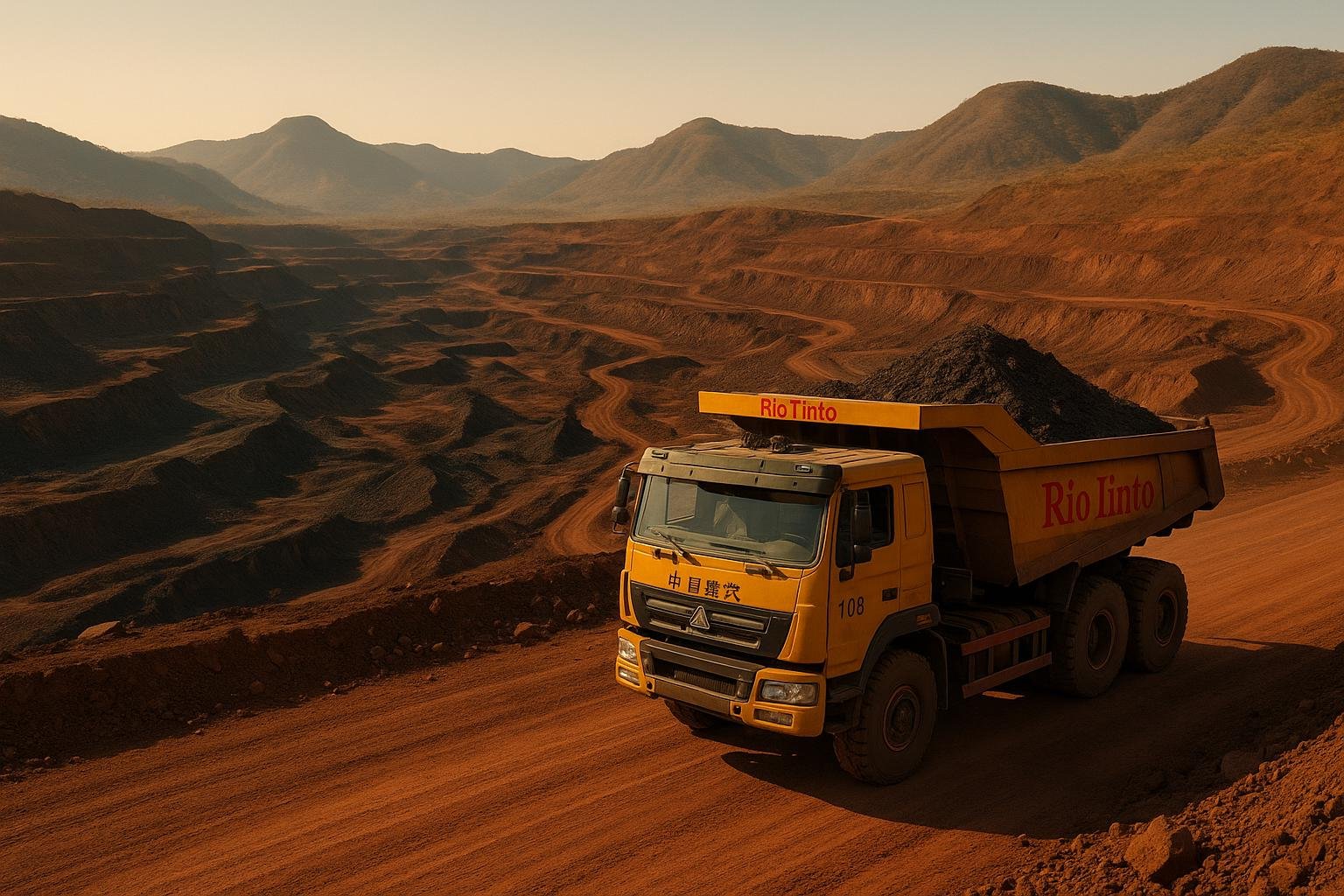
Rio Tinto is strengthening its ties with Chinese OEMs like BOTON and Sailun at the Simandou project, signalling a move towards co‑innovation and sustainability‑driven supply chains amidst geopolitical sensitivities.

Rio Tinto’s procurement approach at Simandou underlines a marked shift toward deeper engagement with Chinese suppliers, combining scale and rapid innovation with the miner’s operational standards to co-develop tailored equipment and sustainability so...
Continue Reading This Article
Enjoy this article as well as all of our content, including reports, news, tips and more.
By registering or signing into your SRM Today account, you agree to SRM Today's Terms of Use and consent to the processing of your personal information as described in our Privacy Policy.
According to IM-Mining, Rio Tinto has been broadening strategic ties with Chinese original equipment manufacturers for items ranging from conveyor belts to off‑the‑road tyres, valuing shorter lead times, logistical flexibility and evolving technology offerings. The relationship with Wuxi BOTON Technology Co Ltd (BOTON) is a long‑running example: IM-Mining reports that BOTON and Rio Tinto renewed an eight‑year cooperation agreement in June 2024, extending a partnership that began with a 2018 trial at Dampier Port and, to that point, had supplied more than 800 km of conveyor belt to Rio Tinto operations globally. BOTON told IM-Mining it is pursuing smart conveying, unmanned inspection, low‑carbon materials and circular recycling, and in 2023 jointly developed with Rio Tinto a conveyor belt testing platform to simulate field conditions and address early‑stage damage.
BOTON’s footprint at Simandou is already operational: IM-Mining states BOTON began supplying SimFer, Rio Tinto’s Simandou joint‑venture arm, in March 2024 and established BOTON Conveyor Services Guinea LLC and a BOTON Africa Technical Service Center to provide 24/7 technical support aimed at securing the project supply chain and continuity. China Daily has earlier documented Rio Tinto’s broader sourcing from China, noting more than $14 billion of goods and services purchased since 2012 and that Chinese suppliers already provide a substantial share of conveyor belts used in the Pilbara and components for other global operations.
Complementing BOTON’s conveyor work, tyre supply for Simandou has also been awarded to a Chinese supplier. Tyrepress and Mining Magazine report that Sailun Group, through its Maxam brand, signed a five‑year global supply agreement with Rio Tinto covering 2025–2030 to provide tyre solutions for XCMG XDE260 230‑ton class mining trucks and ancillary equipment at Simandou. According to Sailun, the parties discussed leading tyre technologies and commercial applications and exchanged ESG concepts and practical cases; Sailun said it “will rely on its comprehensive industrial chain advantages, accumulated R&D strength, and efficient and sufficient production capacity to ensure the safe and stable supply of Rio Tinto’s global projects.” Both suppliers told industry outlets they are exploring circular‑economy measures, including recycling and reuse of worn conveyor belts and waste mining tyres.
Industry commentary frames these agreements as part of a changing model of engagement. An opinion piece in Mining Magazine argues Rio Tinto’s partnerships with Chinese firms reflect a move from transactional buying toward co‑innovation and lifecycle collaboration, delivering performance, cost and sustainability gains. That view aligns with Rio Tinto’s own public milestones for Simandou: the company said in a November 2025 release that operations had commenced at the project, which includes over 600 km of new multi‑use rail and port infrastructure and aims to export up to 120 million tonnes of iron ore annually.
The evolving supplier mix at Simandou illustrates several practical priorities for major miners: securing resilient, responsive global supply chains for large‑scale capital‑intensive projects; leveraging overseas R&D and manufacturing scale to compress delivery schedules; and seeking partners able to meet rising ESG and circularity expectations. According to the reporting, Rio Tinto appears to be balancing those operational and sustainability aims by formalising longer‑term framework agreements and establishing in‑country service operations to underpin project reliability.
However, these developments carry geopolitical and operational sensitivities. While Chinese vendors emphasise technological advancement and pledges on recycling and low‑carbon materials, the move to deepen procurement from China will be watched closely by stakeholders concerned with supply‑chain diversification and strategic dependencies. Rio Tinto’s public statements on Simandou focus on unlocking a major low‑carbon ore source and on the legal and infrastructure agreements underpinning the project, but the miner has not characterised supplier sourcing choices as a shift away from other markets; rather, the company presents them as part of delivering project scale, timing and technical requirements.
As Simandou enters operations and fleet and conveyor systems move from procurement into sustained service, the partnerships with BOTON and Sailun will be tested by performance, logistics and the durability of proposed recycling and circular‑economy measures. Industry data and reporting suggest the arrangements reflect a broader trend in resource procurement: miners increasingly treat large OEMs not simply as vendors but as collaborative technology partners capable of helping deliver large, complex, and sustainability‑focused projects.
Source: Noah Wire Services
Subscribe to Industry Updates

