


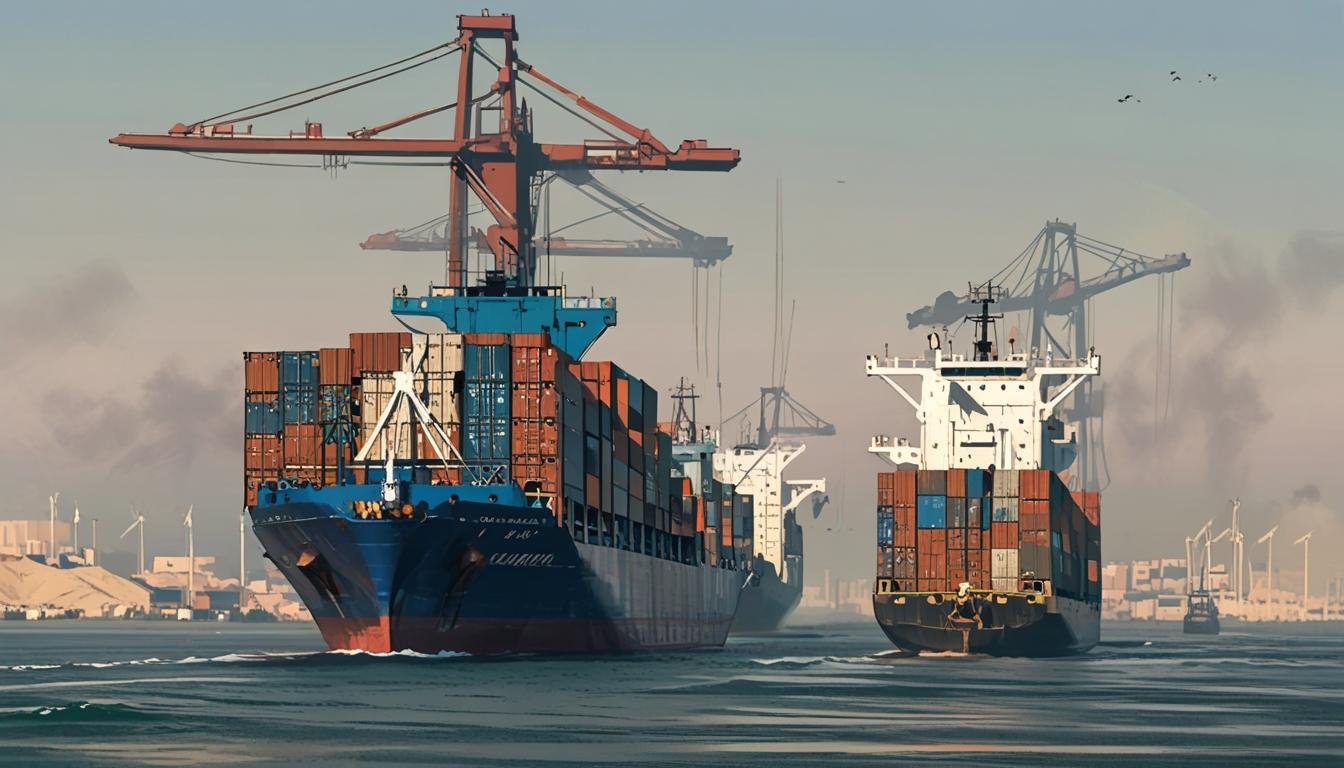
The recent announcement of a ceasefire between the US and Houthi militia in Yemen has stirred conversations about the potential for a significant return of container ships to the Red Sea. This development, as highlighted by Xeneta, an ocean and air freight intelligence platform, carries the risk of flooding the market with added shipping capacity, potentially leading to a global collapse in freight rates. However, the situation is complex and uncertain.
If container ships resume operations through the Red Sea and the Suez Canal instead of circumventing Africa via the Cape of Good Hope, Xeneta posits that global TEU-mile demand could plummet by as much as six percent. This prediction is grounded in the anticipated one percent growth in global container shipping demand for the entirety of 2025. The figures provided reveal a stark image: average spot rates for container shipments from the Far East to Northern Europe and the Mediterranean currently stand at USD 2,100 and USD 3,125 per 40-foot container, representing increases of 39 and 68 percent, respectively, from pre-crisis levels noted in December 2023.

Peter Sand, Chief Analyst at Xeneta, underscores the long-term implications of geopolitical disruptions on container shipping in 2025, stating, “Of all the geopolitical disruptions impacting ocean container shipping in 2025, conflict in the Red Sea continues to cast the longest shadow.” Sand warns that the anticipated return of ships to the Red Sea would commodify the market, leading to unsustainable low rates, exacerbated by a slowdown in imports into the US resulting from ongoing tariffs.
The logistical landscape is further complicated by Egypt’s Suez Canal Authority, which is contemplating discounts on transit fees—ranging from 12% to 15%—to incentivise shipping traffic back to this pivotal waterway. Such measures are critical, given the dramatic revenue drop from USD 2.4 billion in late 2023 to approximately USD 880.9 million by Q4 2024, primarily attributable to disruptions caused by Houthi attacks.
This threat to maritime stability has instigated a ripple effect across the shipping industry. Major firms such as Maersk are grappling with the potential for declining container volumes. The shipping giant has revised its growth forecast for 2025—from an anticipated rise of four percent to a more cautious estimate indicating potential declines. Recent bombing campaigns and geopolitical tensions have heavily influenced these figures, indicating that uncertainties loom large over trade.
Amidst the backdrop of mounting shipping orders—reaching record levels, with 8.4 million TEUs expected by 2026—concerns about overcapacity are mounting. Industry experts project that supply could surge by 46% compared to 2019, outpacing a mere 22% rise in demand. This imbalance could lead to inevitable freight rate decreases unless there is a concerted effort to manage capacity strategically.
Further complicating the narrative is the ongoing threat posed by the Houthi militia, with warnings from Sand that as long as the Houthis maintain their focus on targeting shipping traffic, carriers will be hesitant to commit fully to resuming operations through the Red Sea. While some industry leaders express cautious optimism about a potential cessation of hostilities, the complex web of political maneuvering signals that a definitive shift back to regular shipping routes will not occur without firm guarantees for safety and stability.
As these dynamics play out, the maritime sector faces a litany of challenges that could fundamentally reshape its landscape. With an impending capacity flood and uncertain geopolitical tides, the future of global shipping hangs precariously in the balance, awaiting resolution on both economic and political fronts.
Reference Map
Source: Noah Wire Services

