U.S. retailers will spend an estimated $113 billion on technology in 2026 as they accelerate digital transformation and harden their operations against persistent market volatility, according to Forrester. The research house projects this figure as a 6.6% rise from 2025 and says the increase is being channelled into modernising infrastructure, scaling artificial intelligence and backing omnichannel capability to improve forecasting, fulfilment and personalised customer experiences.
Continue Reading This Article
Enjoy this article as well as all of our content, including reports, news, tips and more.
By registering or signing into your SRM Today account, you agree to SRM Today's Terms of Use and consent to the processing of your personal information as described in our Privacy Policy.
>
Forrester’s analysis highlights software , particularly AI-enabled systems, data platforms and cloud applications , as the primary recipient of new budgets. The consultancy warns that retail leaders must make every investment count by linking spend to profitability, resilience and measurable customer value, a point repeated in its webinar discussion of macroeconomic pressures, shifting consumer behaviour and cost constraints.
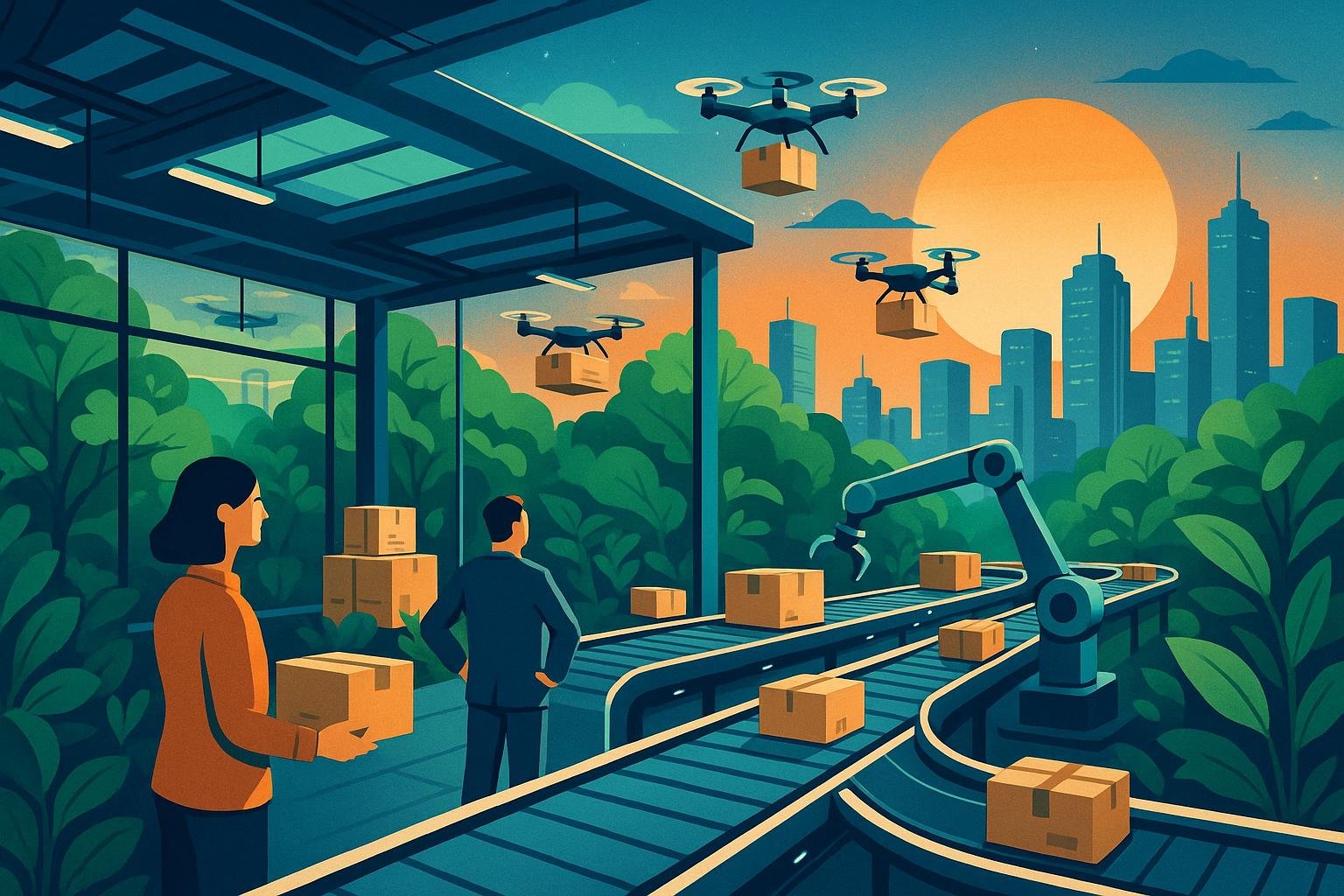
AI and automation are presented as the twin engines of this investment wave. Retailers are deploying machine learning for demand prediction, inventory optimisation and tailored marketing, while robotics and automated warehouse technologies are streamlining repetitive tasks and accelerating last-mile fulfilment. Industry commentary and sector briefs note that these tools are increasingly used together to reduce waste, shorten lead times and free staff for higher-value work.
Supply-chain resilience, transparency and sustainability are major themes driving technology choices. A Modex MHI report cited in industry coverage stresses the need for end-to-end visibility and real-time data sharing so problems can be spotted and resolved across manufacturing, transport and delivery. Retailers are also using digital systems to measure and trim environmental impact, responding to consumer demand for greener practices and to regulatory and investor scrutiny.
The 2026 picture for consumer electronics offers a complementary perspective. Circana expects U.S. consumer technology sales to reach roughly $112 billion next year, driven largely by computer hardware and with spending growth concentrated among higher-income cohorts. That split in purchasing power is shaping retailers’ product assortments and pricing strategies as they navigate a market where many shoppers remain price-sensitive.
Other analysts emphasise that retail technology is shifting from optional enhancement to business-critical capability. Datema Retail points to smarter self‑service, tighter integration of hardware and software, and beefed-up loss-prevention tools as examples of investments intended to protect margins and improve in‑store and online efficiency. Mappedin and similar commentators flag phygital experiences, indoor wayfinding, IoT sensors and AR/VR as competitive differentiators for venues and brands that want to justify footfall and deliver richer omnichannel journeys.
The larger corporate landscape is also influencing spending patterns. The first quarter of 2026 saw renewed interest in sizeable consumer megadeals, signalling investor appetite for consolidation and for buying capabilities , notably in AI, analytics and logistics , rather than just market share. Market commentators suggest acquirers are targeting firms that can scale quickly, offer strategic entry into new categories or geographies, or bring strong brand recognition.
Brand protection is another upward budget pressure as e-commerce expands. Forecasts for the brand-protection market point to growing demand for tools that detect counterfeits and unauthorised sellers, thereby preserving revenues and customer trust as online channels proliferate.
Comparisons with other sectors underscore the breadth of corporate tech investment. Forrester also projects U.S. insurance technology budgets to reach about $173 billion in 2026, roughly 6% of total U.S. tech spend, illustrating parallel drives toward AI-powered personalisation, fraud detection and automation in services. Insurtech lessons , from using data to refine risk models to deploying chatbots for faster customer service , are informing retail thinking on efficiency and customer engagement.
Consumer behaviour continues to shape how retailers allocate capital. Analysis from Martech.org and sector coverage indicate growing intolerance for hidden fees, sustained demand for flexible payment options such as buy‑now‑pay‑later, and a premium placed on transparent pricing and ethical sourcing. Retailers are responding by simplifying checkout, expanding payment choices and embedding sustainability into product and logistics decisions.
Looking beyond 2026, industry observers expect further integration of data across channels and deeper personalisation enabled by machine learning. Unified commerce platforms that link online and offline inventories, customer profiles and fulfilment flows will be central to creating consistent experiences. At the same time, emerging interfaces , from advanced virtual‑reality shopping to nascent metaverse experiments , are being monitored as potential future touchpoints rather than immediate, mainstream drivers.
Taken together, these trends suggest that the $113 billion projected for retail tech in 2026 is funding more than incremental upgrades. According to Forrester and other industry analysts, retailers are committing to structural change: building systems that deliver faster, more tailored service, improve margins and meet growing expectations around sustainability and transparency. The stakes are high, and the challenge for executives will be to translate ambitious technology roadmaps into measurable commercial and operational returns.
Source: Noah Wire Services