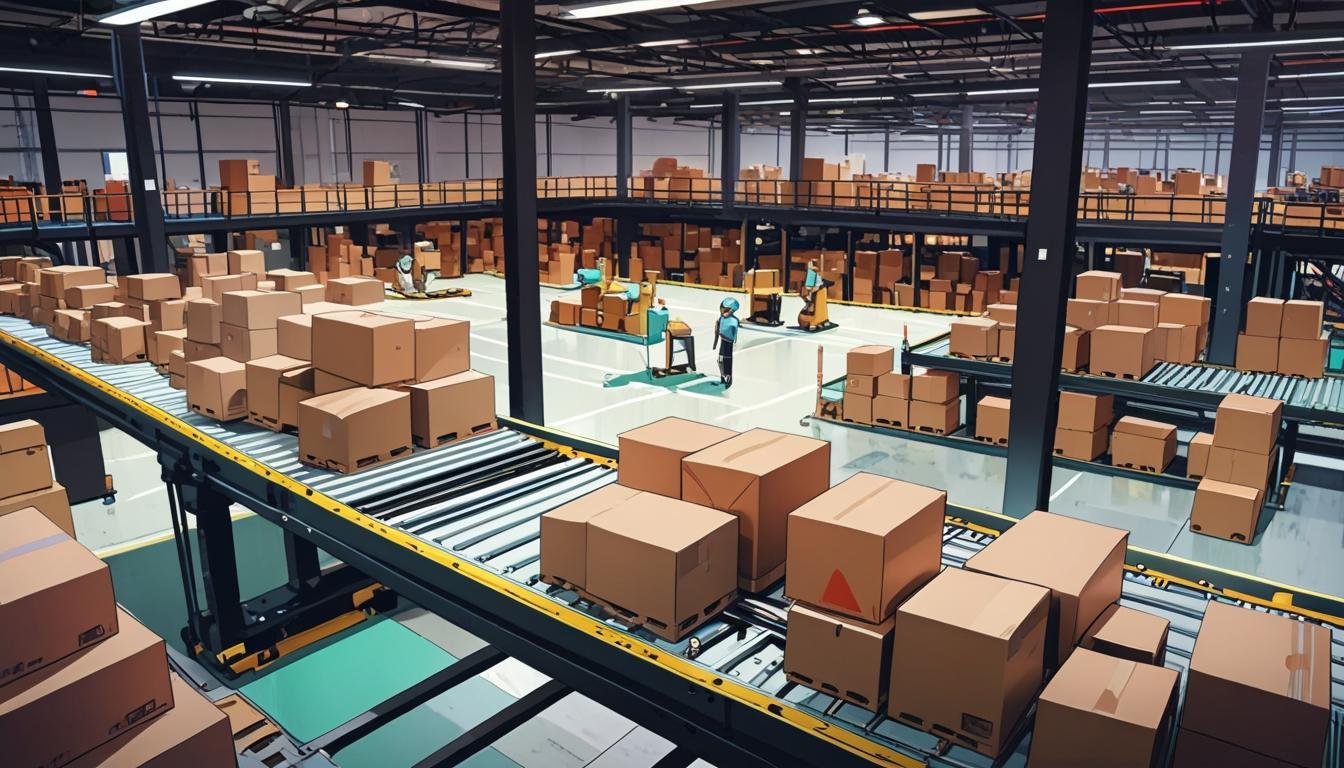
**London**: Major retailers like Walmart and Target are intensifying their same-day delivery services to enhance customer satisfaction. With investments in technology and logistics, they aim to improve efficiency and accuracy, responding to the rising consumer demand for fast and reliable delivery options.
Big-box retailers are placing a significant emphasis on enhancing their delivery capabilities to meet the expectations of consumers who demand speed and reliability. Walmart, one of the largest retailers in the United States, has been intensifying its efforts in this area, with CEO Doug McMillon expressing a desire for the brand to be recognised for its extensive online assortment and improving delivery speeds. During a recent earnings call, McMillon noted that Walmart’s same-day delivery services now reach 93% of U.S. households—a notable increase from over 80% a year prior. This expansion aligns with Walmart’s overarching strategy, which includes the introduction of same-day pharmacy delivery.
Target is also competitive in this space, aiming to ensure that its same-day delivery options are closely tied to its brand identity. Cara Sylvester, Target’s executive vice president and chief guest experience officer, highlighted the company’s aspirations to make same-day delivery synonymous with its offerings during a March earnings call.

The competition for fast and convenient same-day delivery options is heating up among major retailers. However, smaller players are also recognising the need to improve fulfilment times and provide accurate delivery estimates to maintain customer loyalty. Investments are being made across the board, with retailers revamping their distribution facilities, implementing automation, and leveraging technology for better inventory management.
In particular, data management and analytics capabilities are proving to be crucial for retailers looking to streamline operations. Melissa Minkow, the global director of retail strategy for CI&T, indicated that effective demand forecasting and inventory management are essential in preventing stock-outs and managing excess inventory.
Walmart has been proactive in its logistics advancements, boasting the construction of five new high-tech fulfilment centres since 2021. Recent expansions of existing distribution centres have included automation to enhance capacity for fresh products. Additionally, Walmart has signed a partnership with Symbotic, a firm specialising in artificial intelligence and robotics, in a $520 million deal to optimise its delivery operations.
Target is similarly investing in modernising its supply chain, integrating AI-driven inventory management solutions to bolster efficiency and curb stock shortages. The retailer has announced updates aimed at increasing the accuracy and speed of inventory movement, utilising its existing store assets in conjunction with its Shipt delivery service.
Notably, Dick’s Sporting Goods is also enhancing its fulfilment capabilities by incorporating technology such as RFID to bolster delivery efficiency. Moreover, Advance Auto Parts has begun using services from last-mile delivery firms, which led to a significant reduction in transportation costs and a rise in sales for rapid delivery services.
Among specialty retailers, achieving precision in delivery estimates is becoming a priority. Etsy has introduced more specific delivery dates through a machine learning model aimed at improving customer experience. Best Buy has responded by implementing a tracking system that provides minute-by-minute delivery updates, as noted by Brian Tilzer, Best Buy’s chief digital, analytics, and technology officer.
However, the approaches to same-day delivery vary among retailers, with some opting not to develop their own networks. Alternatives such as DoorDash and UberEats now collaborate with various retailers to offer last-mile solutions. Minkow suggested that while some companies may still be inclined towards certain delivery options, others may focus more on the predictability of pricing and delivery times.
Gartner’s Tom Enright observed that the dynamics of retail fulfilment have evolved over the past few years. Despite a significant shift towards faster deliveries — a trend initiated in large part to keep up with Amazon — research indicates that most e-commerce spending comes from customers who are willing to wait longer than three days for their deliveries. Enright revealed that over 30% of Walmart customers are now opting for expedited delivery services for a convenience fee, reflecting a growing demand but also highlighting that ultra-fast delivery is chiefly relevant for grocery items, where customer urgency is heightened due to perishability.
As retailers continue to navigate the complexities of supply chain enhancements, the landscape remains varied. The future of these delivery services will depend on balancing consumer expectations with operational capabilities, ensuring a sustainable approach to fulfilling the demands of a diverse customer base.
Source: Noah Wire Services