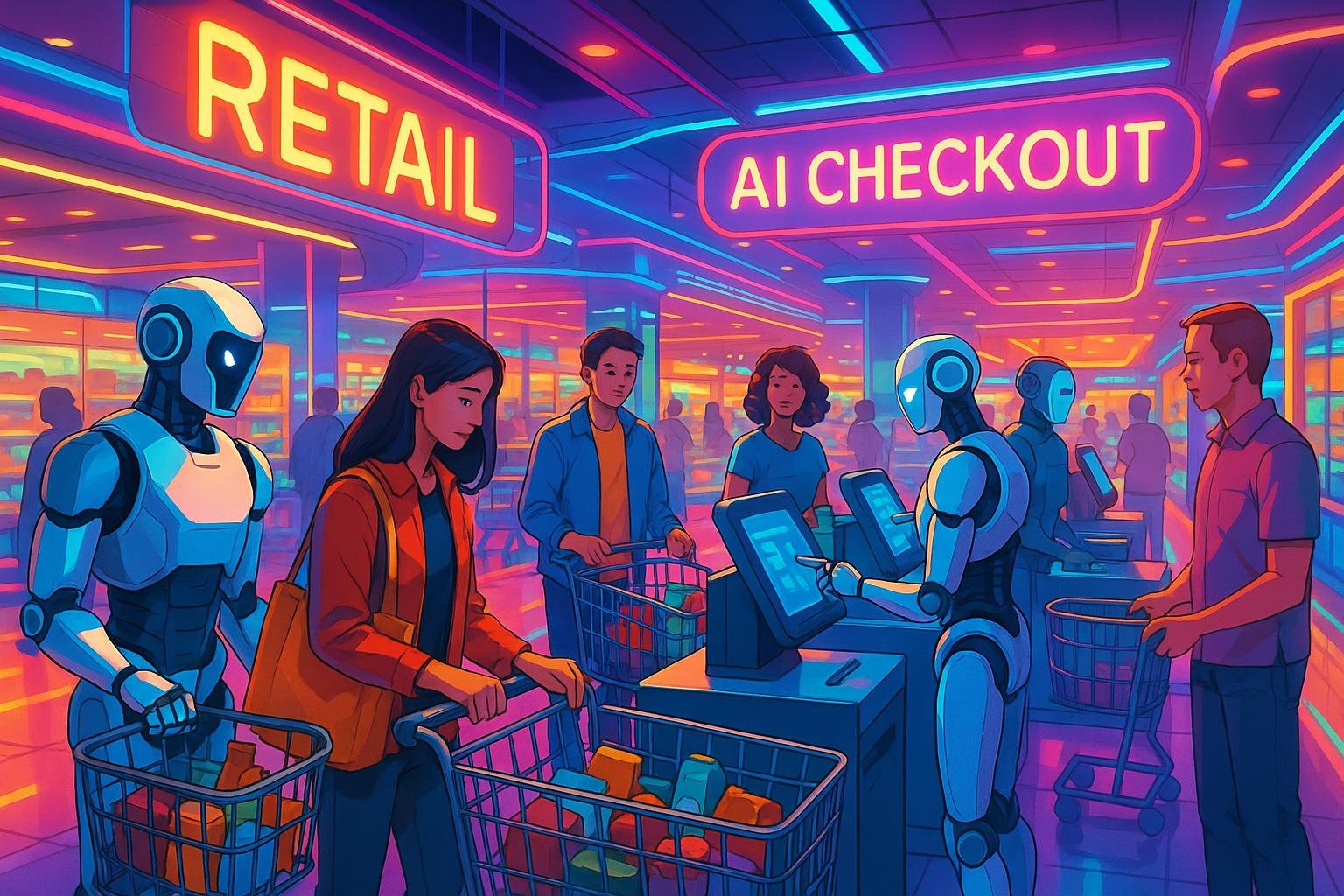
Retailers are moving beyond experimental AI to fully operationalise intelligent systems that reshape business models, customer relationships, and commerce infrastructure, driven by increasing integration, governance, and workforce transformation, as 2026 approaches.

Retail has moved past the experimental phase of artificial intelligence and into a period of operationalisation that is reshaping business models, customer relationships and the architecture that underpins m...
Continue Reading This Article
Enjoy this article as well as all of our content, including reports, news, tips and more.
By registering or signing into your SRM Today account, you agree to SRM Today's Terms of Use and consent to the processing of your personal information as described in our Privacy Policy.
One of the clearest examples is retail media networks, which industry forecasts show are expanding rapidly and becoming a major profit centre. The lead analysis notes U.S. ad spend on retail media is projected to exceed $100 billion by 2027, and AI is central to making those networks more profitable by matching intent signals across digital and in‑store touchpoints. At the same time, subscription and service models are being reimagined through predictive analytics that anticipate refills, upgrades and exclusive offers, while experiments with anonymised “digital consumer twins” allow brands to test products and promotions before full launch.
The technical challenge beneath these innovations is integration. Where AI once operated in silos , separate models for pricing, logistics and marketing , leading retailers are now linking demand forecasting, supply‑chain agility, dynamic assortment and sustainability objectives into a single optimisation fabric. Achieving this requires a modern, unified data architecture: secure, scalable and capable of delivering lineage and explainability across use cases. Many retailers, however, still face the friction of legacy on‑premises systems and competing capital priorities such as store investment and price competitiveness.
Governance has risen to boardroom level. According to a Gartner report cited in the lead article, fragmented AI regulation will prompt roughly $5 billion in compliance investment by 2027. As a result, companies are appointing chief AI officers and developing ethical frameworks to manage model explainability, data lineage and non‑security risks. Embedding governance is presented not as a legal afterthought but as a commercial imperative: transparency and fairness are becoming competitive differentiators that influence long‑term customer trust.
The human dimension is equally critical. Retailers expect broad reskilling over the coming 18 months, creating roles from prompt engineers to AI ethics specialists faster than talent pipelines can currently supply. Martin Ryan says leading firms are embedding AI enablement across their digital strategies so associates, merchandisers and marketers learn to collaborate with intelligent systems. Without that participation, even sophisticated models risk delivering limited business value.
Beyond optimisation, a new frontier is emerging in which AI agents take prescriptive action. According to Joan Verdon in Forbes, 2026 is shaping up to be the year of “agentic commerce,” where systems move from prediction to execution , automating multi‑step actions across consumer and operational touchpoints. That shift complements the lead article’s view of generative AI enabling dynamic content creation, automated campaign testing and digital product design, and it underscores how retailers must balance creativity with responsibility.
The retailers most likely to thrive will do three things simultaneously: invest in unified data platforms that enable end‑to‑end optimisation; formalise governance and explainability to respond to regulatory and consumer demands; and accelerate workforce transformation so humans and AI co‑create new forms of customer value. As Martin Ryan observes, the aim is not merely to predict the future but to use AI to create it , responsibly, scalably and with people at the centre.
Source: Noah Wire Services
Subscribe to Industry Updates