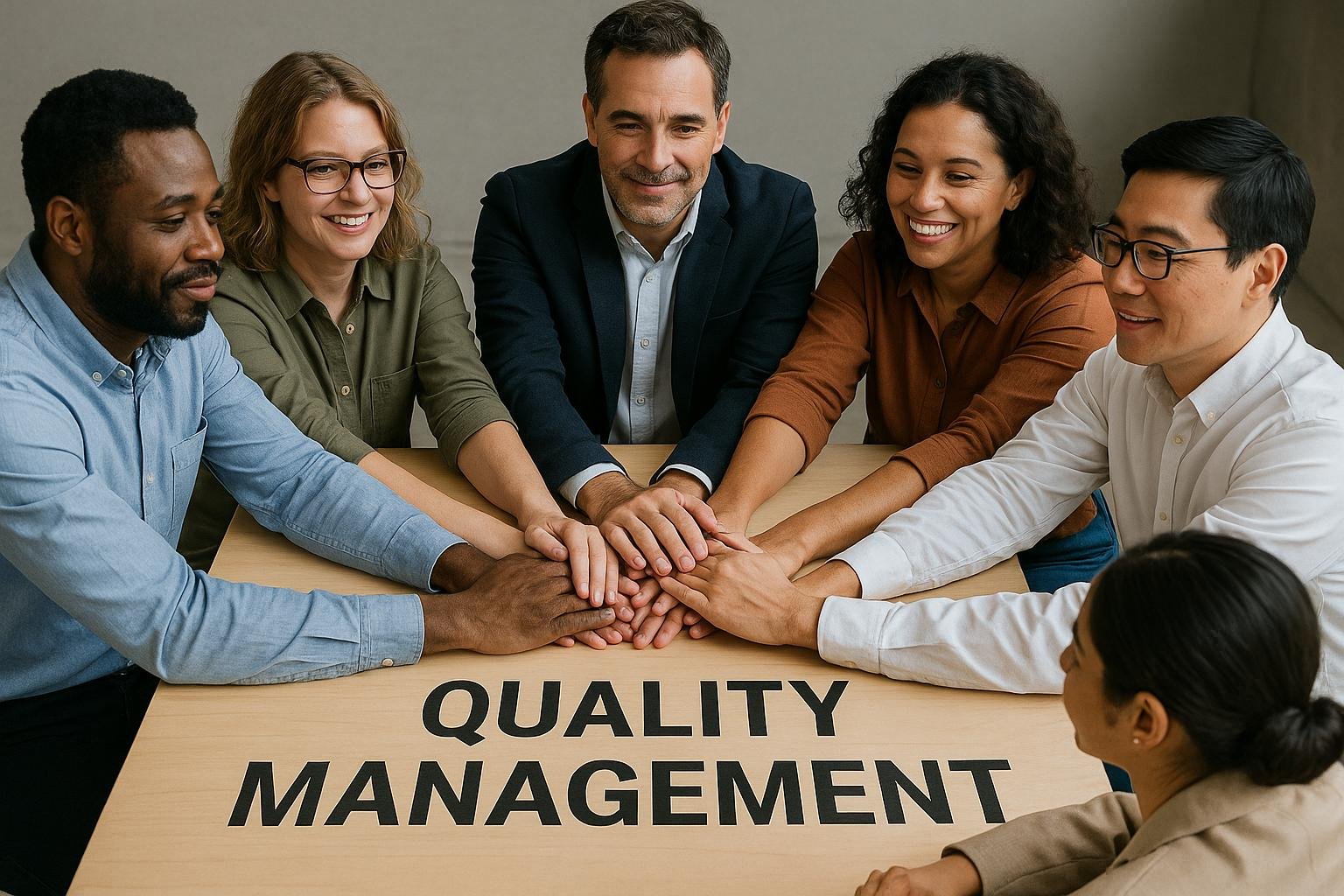
Supplier quality management (SQM) is increasingly seen as a governance discipline that transforms procurement through measurement, collaboration, and strategic supplier partnerships, offering significant benefits in cost reduction and innovation.

Fall’s rituals , communal cooking, shared responsibility and the anxiety that one missing dish can derail the feast , provide an oddly useful metaphor for modern procurement: supplier quality management (SQM) is the coordinat...
Continue Reading This Article
Enjoy this article as well as all of our content, including reports, news, tips and more.
By registering or signing into your SRM Today account, you agree to SRM Today's Terms of Use and consent to the processing of your personal information as described in our Privacy Policy.
In a piece first published on Supply Chain Game Changer, Sam Jenks argued that SQM is “an overall evaluation of delivery and performance within the boundaries of agreed upon terms and conditions of supplier and buyer,” and that getting supplier quality right can unlock top-line growth and customer satisfaction. According to the article, the discipline is as much about selecting suppliers that fit cost and demand profiles as it is about minimising the internal burden of inspection and rework. The author also warned that the cost of poor suppliers is real and measurable and recommended quantifying it as the Cost of Poor Quality (COPQ). “COPQ in the supply chain cannot be eliminated completely , since no supplier is perfect calculating these metrics can help you identify opportunities for cost savings, as well as problem areas to address,” the article said.
That emphasis on measurement is echoed across industry and academic sources. The Institute for Supply Management highlights core supplier performance KPIs such as on-time delivery, lead time, order accuracy and cost variance and urges buyers to co‑define KPIs and service-level agreements with suppliers so that performance measurement directly informs supplier relationship management (SRM). A separate how‑to list from qi-a recommends tracking at least ten SQM metrics, including supplier defect rate, incoming inspection acceptance rate, on-time delivery performance and CoPQ, so organisations can spot patterns and intervene before issues cascade.
Practical SQM has five recurring elements, according to Zycus: governance and compliance, data and visibility, structured performance measurement, continuous improvement processes and technology enablement. The vendor blog stresses that, without integrated data and automated workflows, SQM efforts fall prey to manual processes, supplier resistance and siloed information that inhibit scalability.
The business case for investment is supported by academic and consulting research. An MSc thesis from Concordia University outlined a multi‑criteria framework for supplier quality development and noted many firms fail to attribute COPQ to suppliers, even though supplier‑caused quality losses can exceed a material share of revenue. Industry commentary from BPR Hub places the stakes even higher, warning that poor quality can cost firms as much as 15–20% of sales revenue through rework, returns, regulatory fines and reputational damage.
Translating measurement into improved outcomes requires connecting SQM to SRM. Jenks’ article argued that once definitions and KPIs are in place, the harder work is ongoing relationship management: supplier assessments, audits and joint innovation reviews that move vendors from transactional vendors to strategic partners. This mirrors the wider SRM literature, which describes supplier governance, performance management and capability assessment as the scaffolding for collaboration and innovation.
Putting these ideas into practice typically follows two parallel tracks. First, standardise and quantify what “quality” means for your organisation , delivery timeliness, completeness of shipments, product tolerance conformance, sustainability, cost competitiveness and the ability to innovate are common dimensions. Second, instrument those dimensions with a supplier scorecard, agreed SLAs and routine reviews, supported where possible by digital SQM platforms that consolidate data, automate chargebacks and surface risk. Industry guidance from ISM and vendor best practice both highlight the value of co‑defining KPIs with suppliers to ensure transparency and mutual accountability.
Risk and cost recovery are central mechanics of a mature SQM programme. Measuring COPQ enables procurement teams to calculate chargebacks and to prioritise improvement work where ROI is highest. At the same time, structured audits, financial reviews and factory visits help validate supplier capability, while innovation reviews create space to extract incremental value beyond mere compliance.
SQM is therefore less a one‑time project and more a governance discipline: an assurance system that safeguards value across a supply base. As Jenks put it using the Thanksgiving analogy, whether feeding a group of friends or managing a global textiles supply chain, “quality within collaboration requires give-and-take, leadership, compliance, governance, management, strategy and clearly defined goals.”
For procurement leaders the implications are clear: invest in measurement, align SQM with SRM, and treat suppliers as potential strategic partners rather than just vendors. Industry data and academic work alike suggest that the payoff , lower COPQ, improved on‑time delivery, stronger compliance and more supplier‑led innovation , more than justify the effort.
Source: Noah Wire Services
Subscribe to Industry Updates