India’s goods network handled a record 141.53 million e-way bills in September 2026, according to Business Standard. The electronic documents, required for many goods movements under the GST system, provide a measure of freight activity. September’s total was 7.21 per cent higher than a year earlier and surpassed the previous monthly peak, set in March. The approaching festival season helped lift activity, although the comparison was against an already strong base.
The scal...
Continue Reading This Article
Enjoy this article as well as all of our content, including reports, news, tips and more.
By registering or signing into your SRM Today account, you agree to SRM Today's Terms of Use and consent to the processing of your personal information as described in our Privacy Policy.
e of that movement sharpens a persistent supply-chain challenge: commodity buying can respond to market signals far faster than transport, storage and port operations can adjust. Prices, futures, import bookings, policy shifts and forecasts all influence purchasing. Yet information about a large order may not reach logistics teams until ships are approaching or already at port.
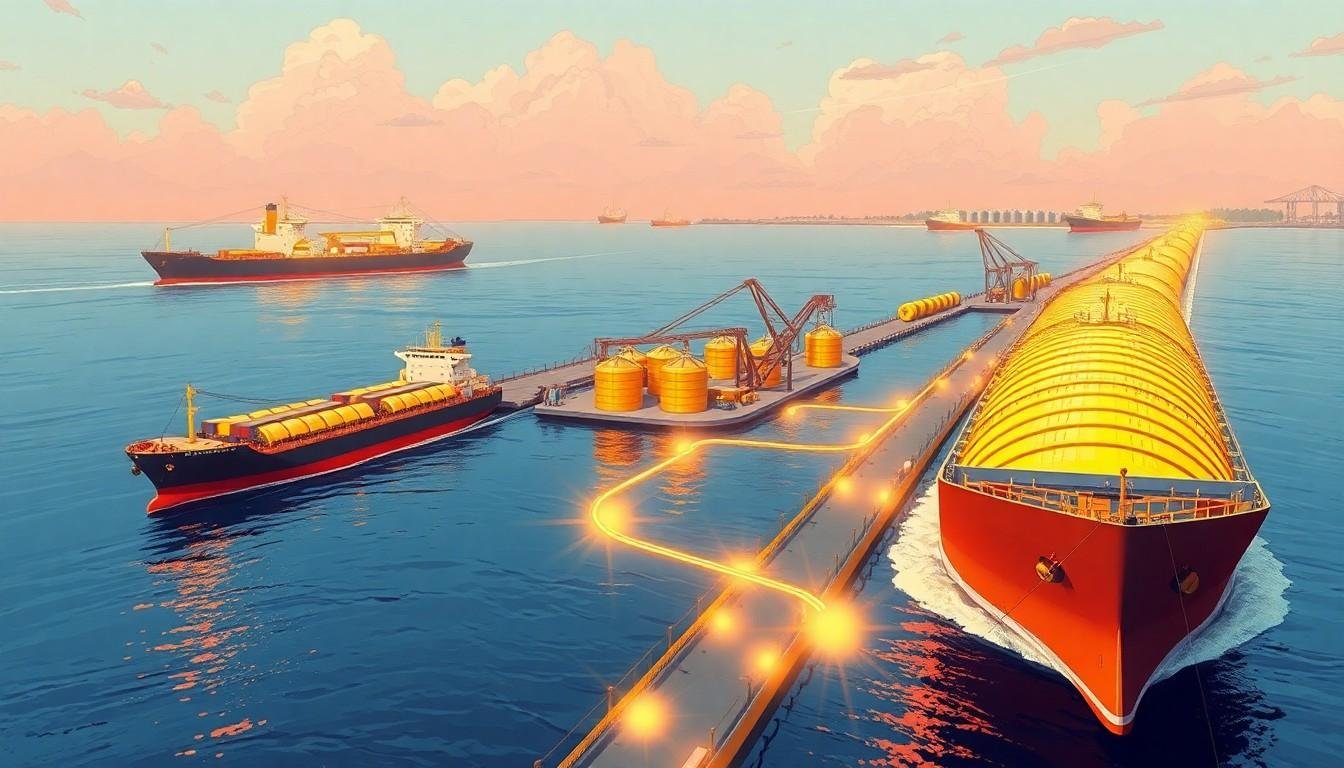
The consequences were visible in India’s edible-oil trade. Refiners increased purchases for August and September after prompt-delivery oil became cheaper than supplies booked for later months, while anticipating stronger festival demand. Imports in August reached an estimated 1.54 million tonnes, an 11-month high, according to Reuters. Consumption rose more slowly than expected, leaving cargoes at ports faster than they could be unloaded and cleared.
At Kandla, at least nine vessels carrying about 300,000 tonnes waited to discharge, with delays of up to ten days as shore tanks filled, Reuters reported. Haldia also faced congestion, though less severely. The disruption mattered well beyond the immediate queue: Kandla handles nearly a third of India’s edible-oil arrivals. Refiners were considering cutting subsequent purchases while inventories were worked down.
The episode illustrates how a price advantage can bring deliveries forward, concentrating arrivals in a narrow window. Storage, trucks and rail capacity cannot necessarily be added at the same pace. If buyers, logistics planners and port operators are working from separate information, even a sound purchasing decision can become an expensive operational problem.
Demurrage, the charge for keeping a vessel waiting, is the most visible cost. Further expense can arise when trucks booked for a delayed cargo are released and later have to be secured again, potentially at higher rates. The congestion may also prompt buyers to defer new orders, extending the effects beyond the ships already waiting.
India’s broader logistics policy recognises the importance of better information and planning alongside physical infrastructure. A government assessment of logistics costs, prepared by the Department for Promotion of Industry and Internal Trade with the National Council of Applied Economic Research, examines transport, warehousing and material handling for 2023–24. It also describes initiatives including the National Logistics Policy, PM Gati Shakti and the Unified Logistics Interface Platform, intended to support more coordinated planning and monitoring.
For businesses, a practical first step is to put procurement and logistics teams on a shared view of purchases and expected arrivals. Large orders should act as early warnings, allowing planners to test whether port, storage and inland capacity can absorb the likely volumes. Companies can then consider spreading deliveries, diverting cargo to another port or arranging alternative warehousing before vessels are at anchor.
Sharing forecasts with ports, transporters and warehouse operators can further improve the response, since each party sees only part of the supply chain. Planning for a range of outcomes, including a sudden increase in arrivals, is particularly important when many buyers are responding to the same price signal.
Digital tools may help connect those decisions. DP World’s 2026 India Country Report, based on a survey of 451 senior supply-chain and logistics executives, says businesses are using artificial intelligence for tasks including route optimisation, documentation and customs processes. The report reflects survey findings from a logistics operator, rather than independent evidence about the Kandla disruption. More broadly, APQC’s cross-industry work on supply-chain visibility and planning highlights the value of timely supply and demand data, network optimisation and forecasting with suppliers and customers.
Applied to commodity flows, such systems could bring together prices, bookings, vessel movements and available capacity, flagging where cargo risks becoming stranded and helping teams compare options. The aim is not simply to record what has happened, but to make operational choices while there is still time to alter an arrival, route or storage plan.
India will continue to need investment in ports, tanks, railways and roads. But new infrastructure takes time to build, while prices and purchasing decisions can change in days. Better coordination between market intelligence and logistics cannot remove every bottleneck; it can give businesses an earlier chance to respond before a queue forms.
Source: Noah Wire Services