


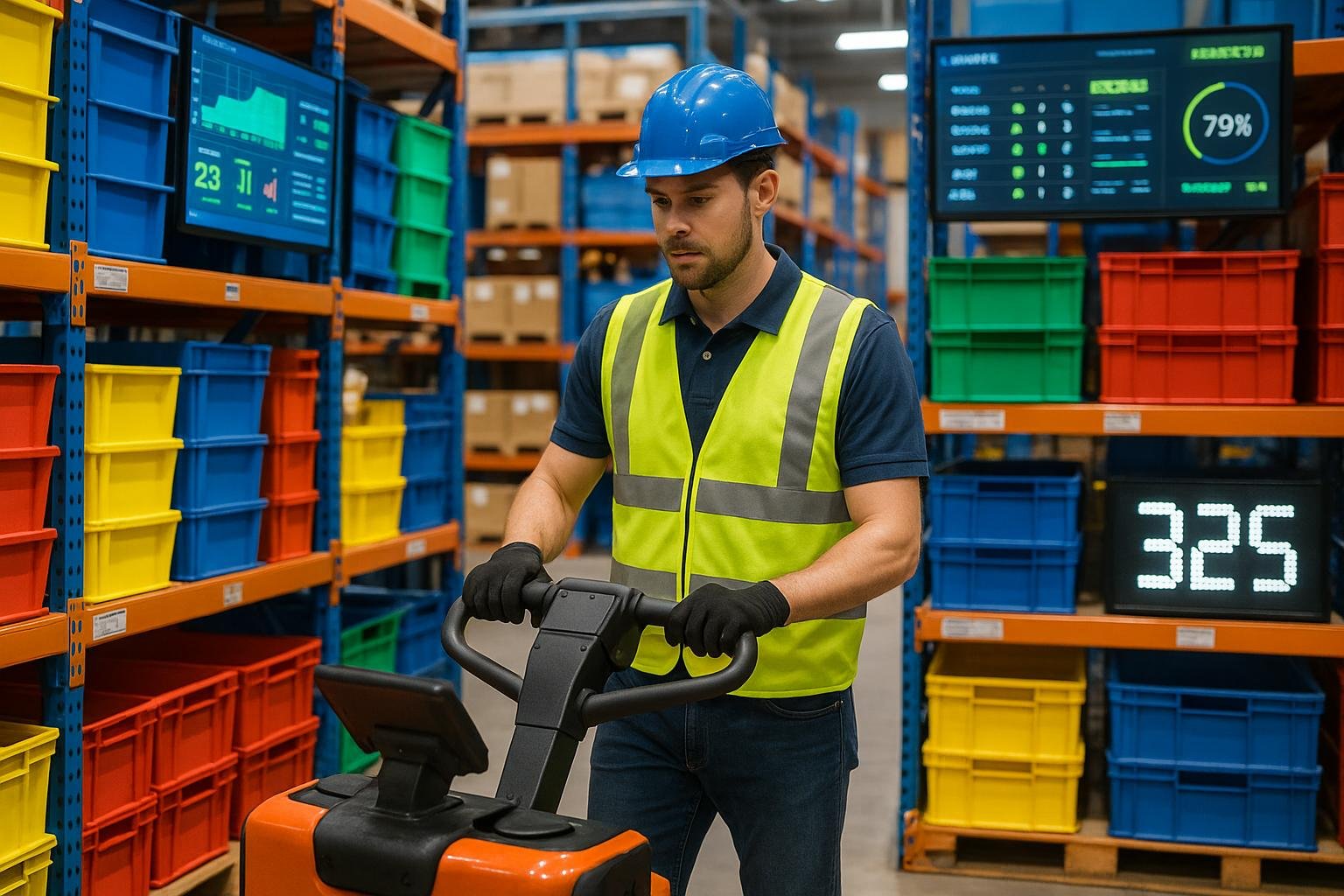
As peak retail months strain logistics operations amid consumer volatility and policy disruptions, flexible systems and real-time data are vital for maintaining service levels and controlling costs in warehouse management.

The busiest months of the retail calendar are testing warehouse operations more intensely than in recent years. A convergence of heightened consumer volatility, accelerating automation programmes, and policy-driven disruption has left logistics teams ...
Continue Reading This Article
Enjoy this article as well as all of our content, including reports, news, tips and more.
By registering or signing into your SRM Today account, you agree to SRM Today's Terms of Use and consent to the processing of your personal information as described in our Privacy Policy.
Demand spikes driven by social platforms can turn steady SKUs into overnight bestsellers, exposing planning assumptions and creating urgent rerouting, expedited freight and unplanned labour needs. When fulfilment floors and their supervisors lack live operational clarity, those short-term surges cascade into wider inefficiencies. Real-time operational data, delivered where decisions are made, shortens the time between recognition and response, enabling pickers, packers and managers to adjust priorities minutes rather than hours later.
Those benefits are not hypothetical. Industry research from ProGlove indicates that micro-inefficiencies , small delays that rarely appear in headline metrics , can amount to nearly eight weeks of lost productivity per year in a typical warehouse. Many operations report the equivalent of roughly 416 hours annually squandered on such frictions, a leakage that becomes especially painful during peak throughput periods.
The external environment compounds the challenge. Tariff measures and trade policy shifts are already reshaping shipping patterns and investment plans. According to reporting by Axios, new tariffs have reduced vessel calls and container volumes at major U.S. West Coast ports, with port officials and economists citing steep declines in cargo from affected sourcing countries. The National Foreign Trade Council’s survey also finds business leaders increasingly view tariffs as a source of operational uncertainty, complicating procurement, manufacturing and warehousing decisions and diverting capital away from strategic projects.
Analysts of the automation market warn that tariffs carry further implications for investment. Research by Interact Analysis highlights several outcomes: capital expenditure on warehouse automation can slow in an uncertain policy climate; companies may hold more inventory to mitigate sourcing risk; and tariffs on inputs such as steel can erode the return on automation projects in the United States. AutomatedWarehouseOnline reached similar conclusions, underscoring how protectionist measures can push firms to reassess where and how they deploy mechanisation.
Those policy shocks also create second‑order effects across the network. Spatial Global’s analysis points to increased use of bonded storage as firms attempt to defer tariff payments, driving up warehousing costs and amplifying the bullwhip effect across logistics schedules, capacity and congestion. Intermittent government closures and regulatory delays add further volatility, making predictable cut‑offs and carrier windows harder to rely on.
Against this backdrop, resilience requires an operating model built for flexibility rather than for fixed routines. That means systems and processes that support continuous re‑forecasting, dynamic task allocation and rapid reprioritisation without long reconfiguration cycles. It also means extending visibility beyond supervisory dashboards to supply frontline staff with contextual, actionable prompts so they can resolve exceptions autonomously and swiftly.
Adopting a visibility‑first approach need not entail wholesale replacement of existing software. Practical rollouts start with the highest‑risk workflows: capture the most valuable signals, map them to straightforward decision rules and present concise guidance to the people executing the work. The aim is to augment human judgement, not to remove it, so workers have the situational awareness needed to prevent small issues from becoming service failures.
Labour scarcity further amplifies the premium on usable data. According to U.S. Bureau of Labor Statistics figures cited by industry sources, warehousing faces a material gap in available workers, increasing the need for operations that can flex capacity and use technology to maintain throughput without overburdening teams. Firms that can combine scalable labour models with partner networks and real‑time orchestration will be better placed to navigate both seasonal peaks and policy shocks.
Seasonal peaks will always be a stress test. But in a year defined by trade uncertainty, policy interruptions and demand volatility, organisations that prioritise live visibility and empower their workforce to act on it will be best positioned to protect margins and customer promise. For warehousing leaders, the most durable competitive edge will be the ability to see what is happening now and to convert that sight into faster, smarter action.
Source: Noah Wire Services
Subscribe to Industry Updates

