


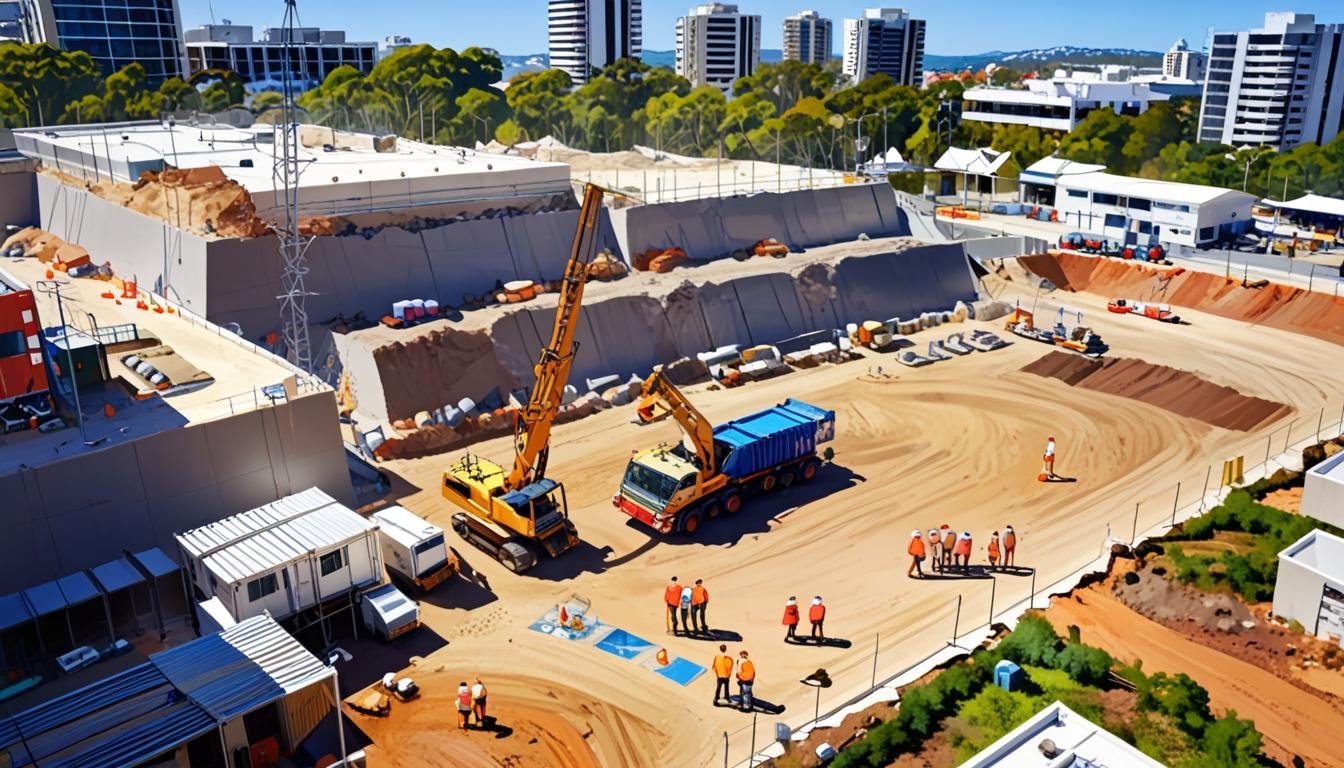
**Queensland**: The Queensland Major Contractors Association reports a transformative decade ahead for the state’s infrastructure sector, with over $200 billion in investment planned, focusing on diverse projects in health and education, amidst challenges and political reforms to enhance productivity and delivery for the upcoming 2032 Olympic Games.
Queensland is poised to experience a formidable period of growth in its infrastructure construction sector, according to the Queensland Major Contractors Association (QMCA) 2024 Queensland Major Projects Pipeline Report (QMPPR). The report, authored by Andrew Chapman, CEO of QMCA, signals a transformative decade ahead, with over $200 billion in committed and proposed investment earmarked for various critical sectors, including health, water, electricity, transport, and heavy industry, culminating in preparations for the 2032 Olympic and Paralympic Games.
The report outlines that the upcoming investment wave is notably more diversified compared to the previous boom between 2011 and 2015, which was heavily centred on resources and energy, notably through coal seam gas to liquefied natural gas projects and coal mines. Now, the focus is shifting to a wider array of infrastructure needs, reflecting a confidence in the stability and future of Queensland’s development and resource management.

Particular attention is given to the Wide Bay region, where significant projects like the Paradise Dam reconstruction and the Borumba Pumped Hydro scheme promise to boost investment figures substantially. Over the next five years, the infrastructure construction sector is projected to witness intense activity, including substantial advancements in health and education infrastructure alongside an anticipated increase in residential building activity.
However, this surge in infrastructure development is also expected to precipitate challenges, particularly concerning competition for skills and resources from other Australian states. Chapman emphasised the critical need for collaboration between government and industry, highlighting that effective planning, procurement, and skill targeting would be imperative for achieving value-for-money outcomes in this environment.
The landscape of the construction sector has been undergoing significant changes already in 2024. One of the most notable changes was the administration of the Construction, Forestry, Maritime, Mining and Energy Union (CFMEU) following an investigation by “60 Minutes” that revealed long-standing issues of bullying and intimidation within the union. This development offers a unique opportunity to reshape the culture within the industry, potentially fostering improved workplace conditions to attract fresh talent.
Political shifts have also recently impacted the industrial landscape, particularly with the election of a new Liberal National Party (LNP) government. Key policy reforms aimed at enhancing the construction sector include the abolition of Best Practice Industrial Conditions (BPIC), which had been critiqued for inflating project costs and hampering productivity. The newly re-established Productivity Commission will focus on exploring inefficiencies and optimising effective working days, which currently hover around two to three days per week.
Moreover, changes to right-of-entry provisions now mandate that all parties provide a 24-hour notice before accessing construction sites, further minimising potential misuse of entry rights for industrial purposes. These reform measures have garnered a positive reception from the industry, which anticipates enhanced productivity and improved certainty in infrastructure delivery.
As 2025 approaches, the QMCA envisions improved coordination of Queensland’s historically fragmented infrastructure pipeline through the Coordinator-General’s oversight, enabling a more strategic allocation of resources across health, housing, transport, water, and energy sectors. Concurrently, the Olympic Delivery Authority is revisiting the infrastructure plan for the 2032 Games, emphasising the need to ensure that Olympic preparations align with long-term regional development needs.
Despite recent challenges in the sector, including rising insolvencies linked to flawed procurement models, the industry sees significant opportunities for growth and efficiency improvements. Emphasis is placed on policy and procurement reforms that foster collaboration, along with technological advancements and workplace improvements necessary to cultivate a skilled workforce capable of meeting projected demands.
In conclusion, Queensland’s infrastructure sector stands at the threshold of a defining period characterised by ambitious investment and transformative projects. Provided with proper policy guidance, collaborative planning efforts, and a commitment to productivity enhancements, the QMCA believes that the state can successfully leverage this once-in-a-generation opportunity to deliver sustainable economic benefits and community outcomes.
Source: Noah Wire Services

