


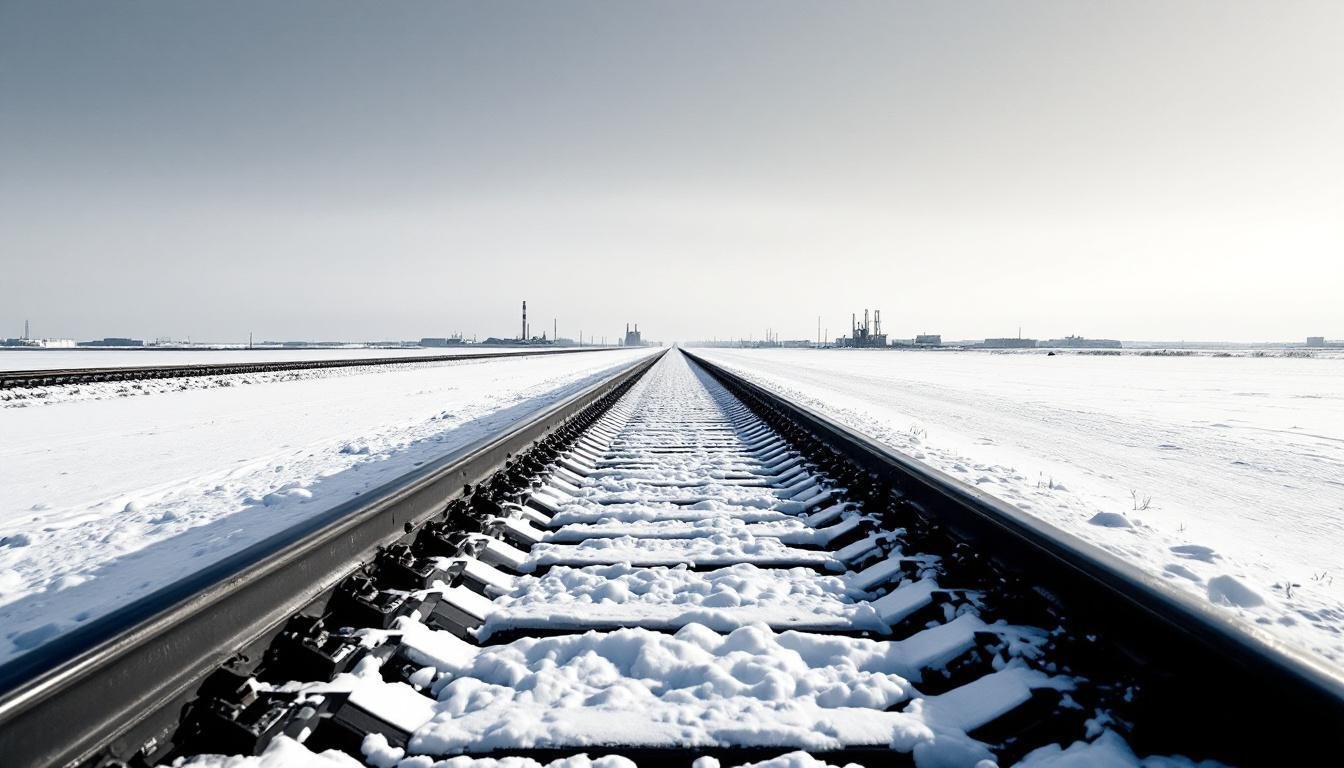
Russian President Vladimir Putin has highlighted the strategic importance of Russia’s high-speed railway projects for reinforcing the country’s role as a critical logistical hub on the Eurasian continent. Speaking on Railway Workers’ Day, Putin underscored ongoing and future railway developments, particularly the construction of the Moscow–Saint Petersburg high-speed rail line, which represents Russia’s first venture into high-speed rail technology.
The Moscow–Saint Petersburg project, currently under construction, is envisioned to significantly compress travel times between the two cities to roughly two hours and fifteen minutes. Stretching 679 kilometres and featuring 16 stations, this line is designed for speeds typically around 250 km/h, with potential to reach up to 400 km/h, according to project plans. Construction is scheduled to begin in 2025, with an anticipated service launch in 2028. Putin’s vision extends to developing a whole network of these high-speed lines in the future, aiming to enhance connectivity and economic growth.

In addition to new high-speed lines, Russia is committed to enhancing and expanding its major existing railway corridors, including the Baikal-Amur Mainline (BAM) and the Trans-Siberian Railway. These routes are linchpins in Russia’s rail infrastructure, crossing vast and challenging terrains to connect western Russia with the Far East, playing a vital role in freight transportation and regional development. The BAM, running parallel to the Trans-Siberian route, is notable for its technical complexity, including 21 tunnels and over 4,200 bridges, and its unique electrification system tailored to freight needs. Improvements such as the Severomuysky Tunnel have already enhanced its operational efficiency by reducing route length.
Putin also mentioned upgrades to access routes for seaports and terminals in strategic areas like the Kola Peninsula and the Russian Far East, along with plans to develop rail infrastructure in Russia’s northern Arctic regions including the Komi Republic and Yamal Peninsula. The Northern Latitudinal Railway, a proposed line designed to connect key gas-producing regions such as Yamal with broader rail networks, is an example of efforts aimed at facilitating resource exports, boosting industrial efficiency, and supporting the Northern Sea Route.
However, Russian Railways has been facing significant operational challenges amid shifting trade dynamics and geopolitical pressures. In 2024, cargo volumes dropped to their lowest in 15 years due to redirected trade flows from Europe to Asia, labour shortages, sanctions impacting supply chains and spare parts availability, and military-related transport priorities. These issues have particularly affected eastern corridors like the BAM and Trans-Siberian lines, which are essential for connecting Siberia and the Russian Far East markets. The coal industry has also felt the pinch from sanctions and logistical hurdles, exacerbating the sector’s difficulties. In response, the Russian government, led by Deputy Prime Minister Alexander Novak, has initiated anti-crisis measures, including steps to improve network efficiency and address workforce shortages by increasing wages.
Despite these headwinds, the ambitious rail infrastructure projects signify a forward-looking strategy by Russian authorities to strengthen the country’s economic infrastructure and bolster its geopolitical standing through enhanced connectivity. By investing in cutting-edge high-speed rail while upgrading historic rail arteries and expanding capacity in the resource-rich Arctic and Far East regions, Russia aims to position itself as a pivotal transit hub bridging Europe and Asia, and embracing emerging Arctic transport corridors. The success and pace of these initiatives will be crucial in determining how effectively Russia can convert its vast geographical expanse into a competitive advantage in Eurasian logistics.
Source: Noah Wire Services

