


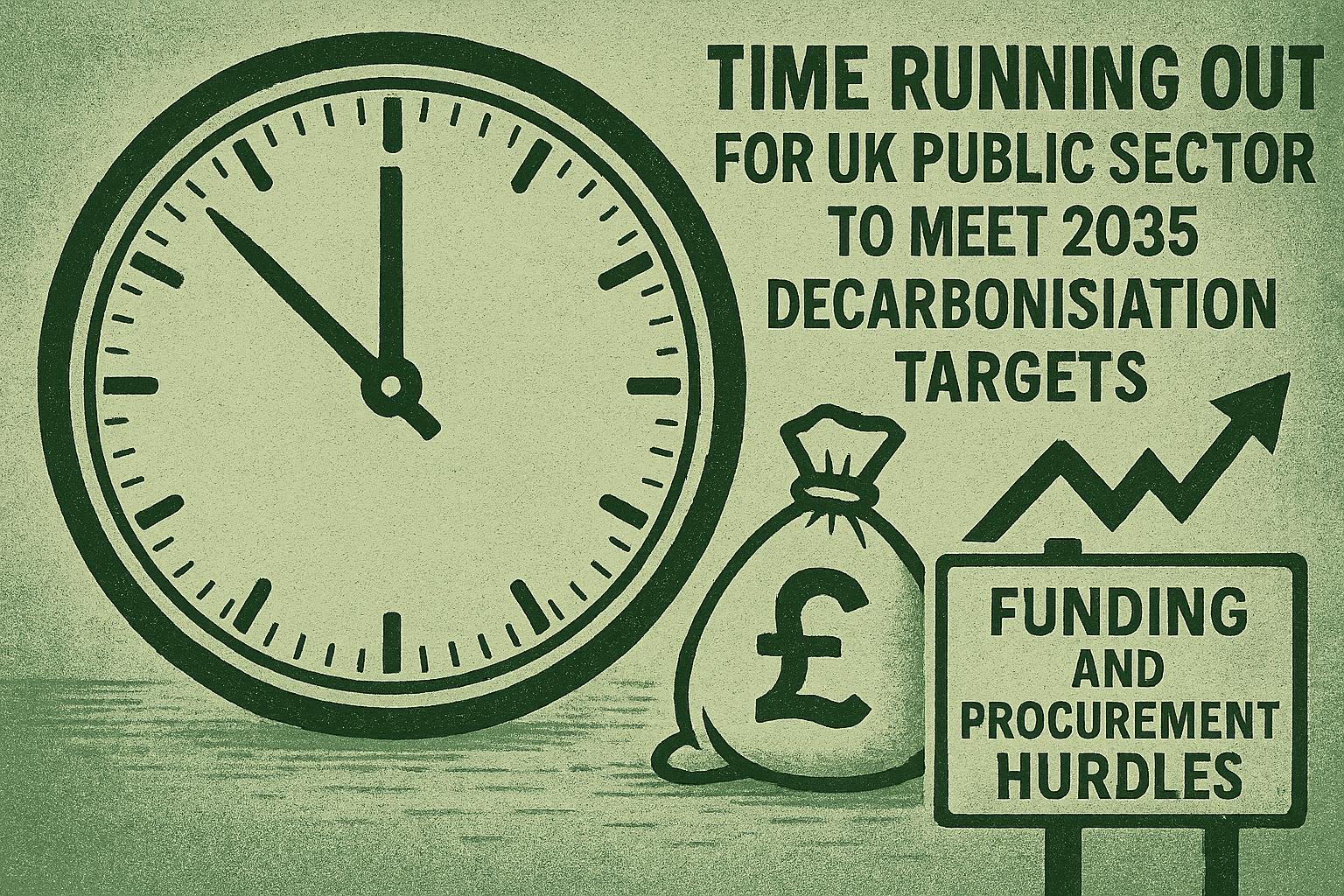
As the UK commits to an 81% emissions reduction by 2035, new analysis reveals that funding complexities and procurement challenges threaten to slow progress in the public sector’s climate ambitions, highlighting urgent need for strategic reform.

When the UK Prime Minister announced an ambitious target at COP29 to reduce emissions by 81% by 2035, the public sector was positioned as a critical driver of this climate commitment. Representing around 10% of the nation’s building emissions and exerting significant influence across vital areas such as housing, education, healthcare, and local infrastructure, the public sector’s role is undeniably pivotal. However, recent analysis from national procurement specialist Pagabo underscores that despite well-intentioned strategies, the sector faces substantial hurdles, most notably around funding and procurement, that threaten to derail progress.
According to Pagabo’s whitepaper, Driving Decarbonisation in the Public Sector, only a quarter of public sector stakeholders genuinely believe the 2035 target is achievable within the current timeframe. Over a third think the deadline must be extended, and more than a quarter doubt its feasibility entirely. This reticence is not due to a lack of will; more than half of organisations surveyed feel they made meaningful progress in 2024/25, with many having formal decarbonisation strategies or action plans in place.
The core challenge, though, lies in funding , or rather, how funding is structured and accessed. Eighty percent of public sector professionals identify lack of funding as their foremost obstacle, yet the issue is less about total available monies and more about its distribution, accessibility, and the restrictive delivery timelines attached to it. Fragmented funding streams, short application windows, complex administrative requirements, and fierce competition for limited grants heavily disadvantage smaller local authorities and overstretched NHS trusts. Nearly 70% of applicants report difficulties such as inadequate awards, rejected bids, or misaligned project scopes, while almost half remain uncertain about what funding options are actually available.
This dispersed and often short-term approach undermines long-term planning, with many bodies forced into reactive, stop-start projects rather than coherent, strategic programmes that would achieve impactful emissions reductions across estates. Delivery windows add another layer of complexity. One-year timeframes for expenditure, commonly attached to funding pots, fail to align with the reality of large capital projects like heating system replacements or fabric improvements whose procurement and construction cycles naturally extend beyond 12 months. Councils and NHS bodies alike have highlighted the impracticality of these compressed deadlines, especially given seasonal workforce availability and existing procurement bottlenecks.
The linkage between funding and procurement emerges as a critical intersection. Pagabo emphasises that while cost considerations often dominate tender processes, sustainability is too frequently relegated to an afterthought once bids are issued. This imbalance hinders meaningful progress towards net zero goals despite stated ambitions. Innovative procurement models that embed sustainability and social value from the outset, provide access to pre-approved specialist suppliers, and enable aggregated demand could unlock efficiencies, reduce costs, and help contracting authorities move from reactive expenditure to strategic investment. Early engagement with contractors and consultants through flexible frameworks can mitigate bid wastage, accelerate delivery, and maximise the impact of limited funds.
Public sector organisations have already implemented many “easy wins” such as energy-efficient lighting and solar panel installations, but advancing to more complex and costly solutions, like heat pumps and comprehensive fabric upgrades, requires procurement processes that foster collaboration, innovation, and scale. Aggregated procurement across councils, NHS trusts, and educational institutions can leverage purchasing power and strengthen supply chains. Specialist frameworks are pivotal in addressing intricate challenges like retrofitting heritage buildings or managing grid connections, projects that one-off tenders struggle to handle.
Alignment between government policy, funding timelines, and public sector delivery is also crucial. The Pagabo survey found that while 84% of respondents feel government decisions substantially influence their approaches, more than half believe the government is not doing enough to back net zero commitments. Conflicting policy priorities, such as emphasis on housebuilding, defence, and infrastructure, risk diluting focus on decarbonisation. Councils meanwhile grapple with statutory duties and emergency financial pressures, often pushing sustainability down their agenda.
This policy-funding disconnect is further complicated by recent government decisions. Notably, the Public Sector Decarbonisation Scheme (PSDS), which since 2020 had channelled over £3.5 billion into upgrading heating systems and improving energy efficiency across schools, hospitals, and local authority buildings, was axed in June 2025. Salix Finance confirmed no new funding will follow beyond existing awards, with ongoing projects continuing only until their respective completion dates in 2026 and 2028. Analysts and public sector leaders have expressed concern that ending such a significant funding stream at this critical juncture further jeopardises the sector’s ability to meet decarbonisation targets.
Adding to the broader challenges, recent reports highlight soaring electricity costs in the UK , driven largely by high wholesale gas prices setting market rates , placing additional strain on energy-intensive industries and public sector bodies alike. This cost pressure limits the capacity to invest in greener infrastructure and raises fears about losing subsidies tied to strict energy usage thresholds. Consequently, energy price dynamics may indirectly hinder progress towards net zero goals.
Given this context, experts argue that increasing funding pots alone will not suffice. Instead, urgent reform of the funding landscape is needed to create consistent, multi-year, ring-fenced programmes aligned with procurement cycles and realistic delivery timelines. Clearer communication on eligibility and simpler application processes will enable public bodies to better plan and invest strategically, reducing the waste and delays currently plaguing projects.
Ultimately, reframing procurement as a strategic enabler rather than a bureaucratic hurdle is essential for unlocking meaningful decarbonisation in the public sector. Sustainable procurement frameworks that embed environmental and social criteria from project inception, leverage specialist expertise, and facilitate collaboration can help turn existing funding into measurable outcomes. While the 2035 emissions reduction target may seem daunting now, a smarter, more coordinated approach to procurement and funding flows offers a pathway to accelerating the pace of change and achieving transformational impacts. As Pagabo’s director of national delivery Karen Carter notes, ensuring funding is not just plentiful but accessible, fair, and supported by robust procurement infrastructure is key to translating ambition into tangible progress on the UK’s net zero journey.
Source: Noah Wire Services

