


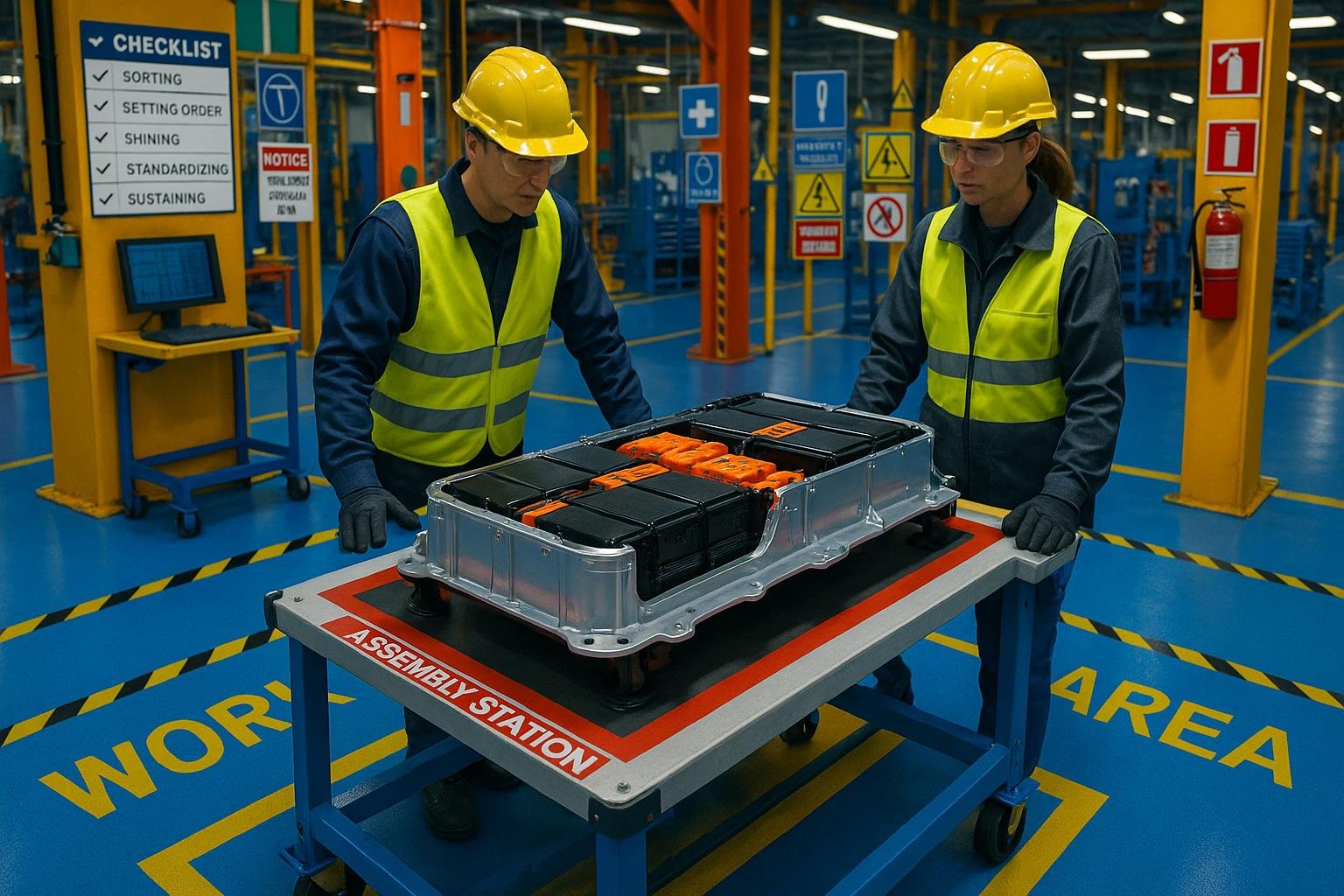
In a press statement republished by CleanTechnica, Proterra says a battery chief operating officer must do far more than run production — owning strategy, culture, quality, safety, supply‑chain resilience and workforce development while embedding lean, “automotive‑grade” manufacturing practices. The account is a company release and its claims about ramp‑up, supplier qualification and safety require independent verification.

When Proterra’s chief operating officer recently set out what the job really entails, the company framed the role as far broader than overseeing production lines. In a press statement published on 8 August 2025 and republished by CleanTechnica, Proterra argues that manufacturing excellence is only the starting point for a battery COO; the remit, the company says, extends through strategy, culture, quality, supply‑chain resilience, safety, sustainability and people development.
Proterra positions precision manufacturing as the firm’s foundation. The company says it combines automation, tight quality controls and engineering rigour to produce “automotive‑grade” battery systems for heavy‑duty applications, and that manufacturing standards are translated into a Production System rooted in lean methods such as 5S, standardised work and continuous improvement. That approach, Proterra claims, is designed to create a durable operating culture that outlasts individual leaders and supports consistent, measurable improvement on safety, quality and delivery.
What Proterra describes in its statement reflects practices long promoted across advanced manufacturing. The Lean Enterprise Institute, for example, defines 5S (Sort, Set in order, Shine, Standardise, Sustain) as a systemic set of workplace routines aimed at reducing waste, improving safety and enabling visual management — tools that, when sustained, help embed standardised work and faster problem solving. Proterra presents those techniques not as discrete programmes but as the backbone of a people‑centred production culture: accountability, skills development and daily kaizen are central to the COO’s agenda.
But establishing culture and systems on paper is only one side of industrialisation. Proterra highlights the function that translates design into repeatable, scalable production: manufacturing engineering and industrialisation teams that run prototype and trial builds to ensure new products meet safety, cost and quality targets first time. That bridge between laboratory concept and factory output is precisely the challenge researchers and manufacturers warn about. Argonne National Laboratory, in profiling its Materials Engineering Research Facility, has emphasised the need for pilot‑scale facilities and process research to avoid the “valley of death” between promising chemistries and commercial manufacturing — demonstrating that industrialisation requires disciplined scale‑up, appropriate facilities and industry collaboration.
Proterra’s statement also underlines the centrality of people. The company says it assesses candidates with hands‑on tests, invests deliberately in training and manages talent pipelines so that new technicians become capable, safety‑focused operators — an approach that mirrors recent federal efforts to professionalise battery manufacturing workforces. The U.S. Department of Energy’s Battery Workforce Challenge, managed by Argonne, was set up to create regional training hubs, industry‑aligned curricula and apprenticeship pathways precisely to help employers recruit, train and retain technicians who can operate high‑volume, safety‑critical lines.
Safety and regulatory compliance are threaded through Proterra’s description of operations. The company claims environmental, health and safety teams handle everything from floor‑level safeguards to hazardous‑materials management and wastewater controls. Those claims sit alongside established regulatory guidance: the Occupational Safety and Health Administration’s battery‑manufacturing resources make clear the particular risks of lead and lithium‑ion technologies and the employer responsibilities to assess exposure, implement engineering controls, provide appropriate personal protective equipment and train workers to manage chemical, electrical and physical hazards.
Supply‑chain orchestration and sourcing are presented in Proterra’s account as strategic imperatives rather than back‑office tasks. The firm says sourcing works with R&D to qualify supplier partners from development through long‑term supply, and that production control builds delivery commitments backwards into component ordering and plant scheduling to minimise inventory while meeting customer dates. The COO’s narrative acknowledges geopolitical and lead‑time pressures and describes continuous risk analysis and scenario modelling to preserve on‑time deliveries — a timely reminder that scaling electrification hardware depends as much on resilient, qualified suppliers as it does on in‑house capacity.
There is, however, an important editorial caveat: the material originates as a company press release. Proterra’s portrayal of its operating model, culture and capabilities should therefore be read as a statement of intent and of corporate positioning. Independent perspectives on performance, production ramp rates, supplier qualifications and safety records are necessary to evaluate how fully those intentions translate into practice on the factory floor and across supply chains.
Taken together, the pieces of the wider ecosystem sketched around the statement suggest a practical reality for the battery COO: success depends on synchronising engineering, operations, sourcing, safety and human resources; sustaining lean practices beyond pilot projects; and linking employer training with public‑sector or laboratory resources to close skill gaps. It also means treating quality as a system‑level outcome rather than an end‑of‑line checkbox — a stance Proterra summarises in its “three nevers”: never accept, produce or pass a defect.
As manufacturers and policymakers push to electrify heavy transport and industrial equipment, the COO role described by Proterra highlights the blending of technical, operational and human‑capital challenges that must be solved. Federal and national laboratories that scale promising chemistries into manufacturable processes, workforce programmes that build technicians who can operate complex, high‑voltage lines, and regulatory guidance that enshrines worker safety are all parts of the same story. For companies that promise reliable, durable battery systems, the test will be whether those promises are borne out at volume over time — and whether the systems, culture and partnerships the COO claims to be building are resilient enough to deliver them.
Source: Noah Wire Services

